
What Are Benefits of Geothermal Energy
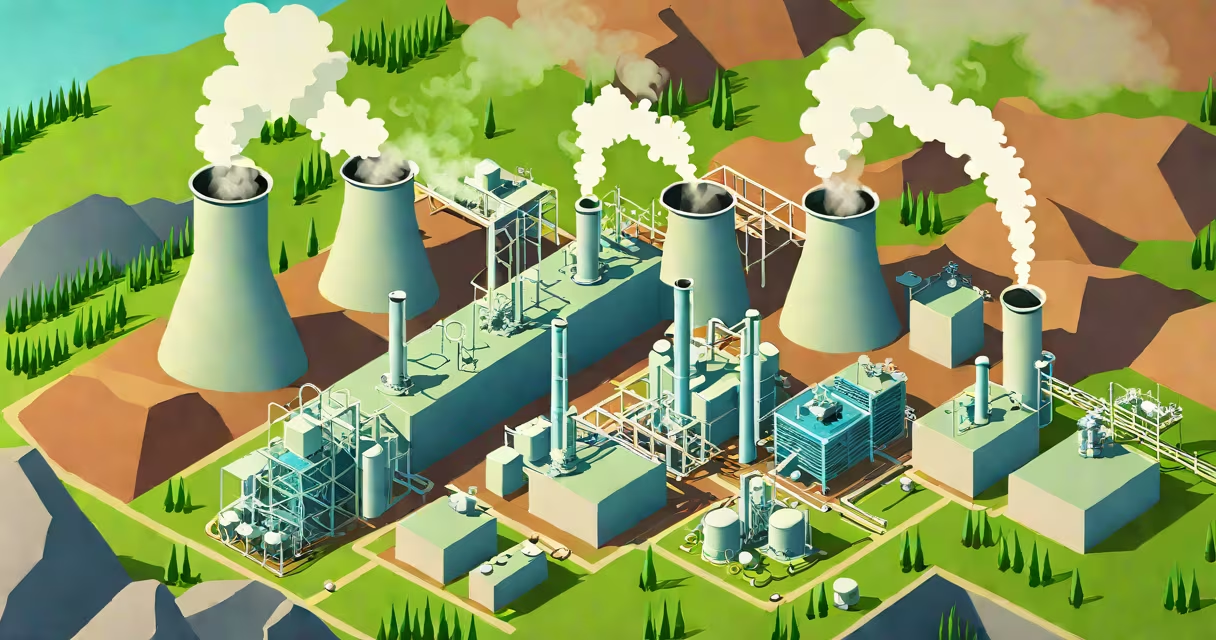
Geothermal energy harnesses heat from deep within the Earth to generate electricity and provide direct heating, offering consistent, low-emission power with minimal land use. This natural heat source remains available 24/7, unlike solar or wind, and produces less than 5% of the CO₂ emissions per kilowatt-hour compared to fossil fuels.
Geothermal systems draw heat from underground reservoirs or hot rock formations, typically located 1 to 3 kilometers below the surface. The heat warms water or fluid, which rises through wells to drive turbines and produce electricity. In direct-use applications, heated water circulates through buildings for space heating or industrial processes.
The U.S. Department of Energy reports that geothermal plants operate at capacity factors above 90%, meaning they run near full output most of the time. This contrasts sharply with solar, which averages 20-25% capacity factor in most regions. Geothermal's stability makes it ideal for providing continuous base load power without relying on weather patterns.
How Geothermal Energy Works
Geothermal energy relies on the Earth's internal heat, generated primarily by radioactive decay of elements like uranium and thorium in the crust. Temperatures increase about 25°C per kilometer of depth, reaching 300-400°C at depths of 3 km. When water seeps into fractured rock at these depths, it becomes superheated and rises naturally through porous layers.
Power plants tap into these hydrothermal systems using injection and production wells. Steam or hot water extracted from the well drives a turbine connected to a generator. After passing through the turbine, the fluid is cooled and reinjected into the ground to maintain pressure and sustain the resource.
A closed-loop system uses a heat exchanger instead of direct fluid contact. A fluid circulates through buried pipes, absorbing heat from the soil or bedrock. This method is common in residential heating and cooling systems, especially in colder climates like Minnesota and Vermont.
Types of Geothermal Systems and Their Uses
There are three primary categories of geothermal systems based on temperature and application:
| Type | Temperature Range | Primary Use | Examples |
|---|---|---|---|
| Hydrothermal | 150-370°C | Electricity generation | Wairakei Plant (New Zealand), The Geysers (California) |
| Enhanced Geothermal Systems (EGS) | 150-300°C | Electricity generation in non-volcanic areas | Project in Soultz-sous-Forêts, France |
| Low-Temperature Direct Use | 20-90°C | Heating buildings, greenhouses, aquaculture | Reykjavík District Heating (Iceland), Boise City, Idaho |
Hydrothermal systems require naturally occurring hot water reservoirs, limiting deployment to tectonically active zones. EGS expands access by creating artificial reservoirs through hydraulic fracturing and injection. While still emerging, EGS could enable geothermal potential in regions like the Midwest U.S., where traditional hydrothermal resources are absent.
Low-temperature systems use ground-source heat pumps (GHPs) to transfer heat between buildings and the earth. These systems achieve 300-400% efficiency, delivering 3-4 units of heat for every unit of electricity consumed. The U.S. Environmental Protection Agency notes that GHPs reduce heating and cooling costs by 30-70% compared to conventional HVAC systems.
Why Geothermal Stands Out Among Renewables
Geothermal energy delivers consistent output regardless of weather or time of day. Solar and wind depend on sunlight and wind availability, requiring backup storage or fossil-fuel plants during lulls. Geothermal plants maintain steady output year-round, reducing strain on grid infrastructure.
Land footprint per megawatt is smaller than solar or wind farms. A typical geothermal plant occupies 1-2 hectares per megawatt, while solar farms need 5-10 hectares and wind farms 10-15 hectares. This compactness allows coexistence with agriculture and conservation zones.
Geothermal facilities emit fewer greenhouse gases than any other major electricity source. According to the International Renewable Energy Agency (IRENA), average emissions are 37 grams of CO₂ equivalent per kWh-less than half the average of natural gas plants (500 g/kWh) and a fraction of coal (1,000 g/kWh).
One overlooked advantage is resilience to climate change. Unlike hydropower, which suffers from droughts, or solar, which declines under heavy cloud cover, geothermal performance remains stable even during extreme weather events. During the 2021 Texas freeze, geothermal plants maintained output while many wind and solar installations failed due to ice accumulation and grid instability.
Common Misconceptions and Corrections
Many assume geothermal energy is limited to volcanic regions. While the largest existing plants are in tectonic zones like California's Geysers or Iceland's Reykjanes, Enhanced Geothermal Systems (EGS) can be deployed anywhere with sufficient subsurface heat. Research from Stanford University shows that EGS could supply 10% of U.S. electricity demand by 2050, even in non-volcanic states.
Another myth is that geothermal plants cause significant earthquakes. While fluid injection can trigger microseismic events, these are rarely felt and pose no structural risk. The U.S. Geological Survey confirms that induced seismicity from geothermal operations is typically below magnitude 2.0 and occurs at depths too deep to affect surface structures.
Some believe geothermal systems are expensive to install. Initial capital costs average $2,500-$5,000 per kilowatt for power plants and $10,000-$20,000 for residential ground-source heat pumps. However, lifetime operating costs are among the lowest of all energy sources. The U.S. Department of Energy estimates that geothermal systems pay for themselves in 5-10 years through reduced energy bills and maintenance savings.
Real-World Example: The Geysers, California
The Geysers complex in Northern California generates 725 megawatts of electricity-enough for over 700,000 homes. Since 1983, it has supplied clean power to the San Francisco Bay Area. The site uses steam from naturally occurring hydrothermal reservoirs, with reinjection of spent fluids to preserve pressure and extend resource life.
By 2000, declining steam pressure threatened long-term viability. Operators began injecting treated wastewater from nearby cities into the reservoir. This practice increased steam production by 20% and extended the field's operational lifespan beyond 2050. The project demonstrates how integration with urban infrastructure enhances sustainability.
As of 2023, The Geysers produces 1.5 million metric tons of CO₂-equivalent annually-equivalent to removing 300,000 cars from the road. Its consistent output supports grid reliability during peak demand periods, particularly in summer when air conditioning loads spike.
Final Thoughts
Geothermal energy provides reliable, low-carbon power with minimal environmental disruption. Its ability to deliver baseload electricity and direct heating makes it a critical component of decarbonization strategies. For communities seeking stable, local energy sources, geothermal offers a proven alternative to fossil fuels and intermittent renewables.