
What Does the Church Mean
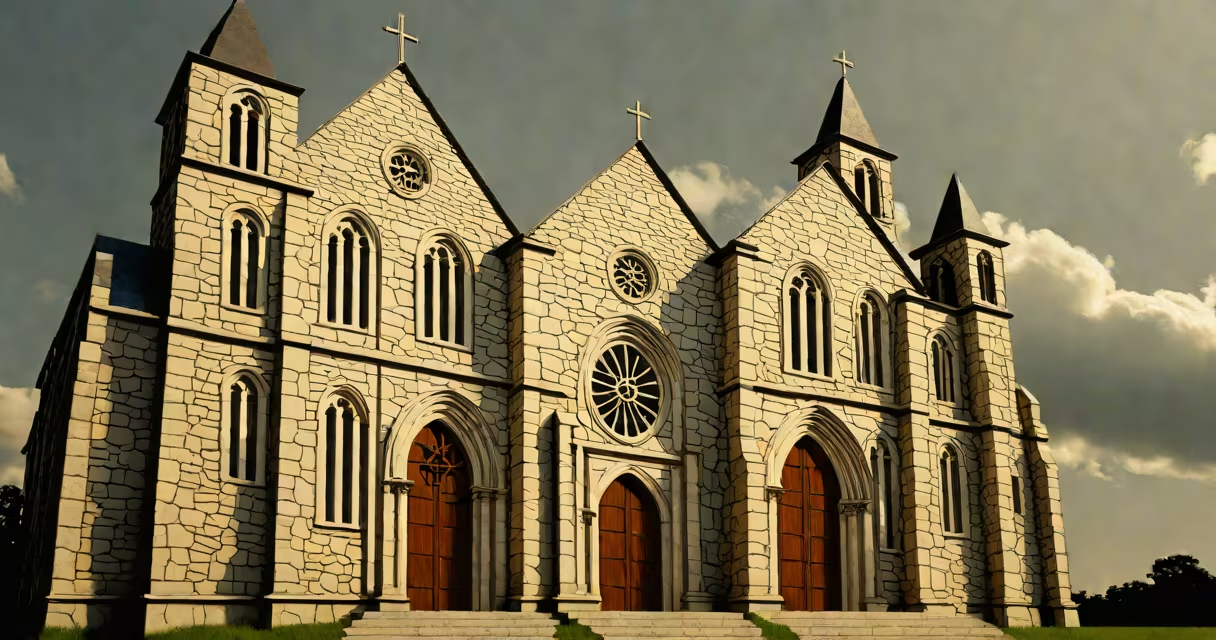
The church is both a physical place of worship and a collective body of Christians united by faith, sacraments, and shared belief in Jesus Christ. It functions as a spiritual community, a theological institution, and a historical continuity stretching back to the apostles.
At its core, the church is not merely a building or a denomination-it is a living expression of God's presence among people. The New Proof uses the Greek word *ekklesia*, meaning "called-out assembly," to describe the church as a group gathered by divine invitation, not by human design. This term appears over 100 times in the New Proof, underscoring its centrality to early Christian identity.
Churches exist in many forms: local congregations, denominations like Catholic, Protestant, and Orthodox traditions, and global networks such as the World Council of Churches. Each reflects different interpretations of scripture, liturgy, and governance. For example, the Roman Catholic Church views itself as the one true church founded by Christ, while Protestant churches emphasize individual faith and scriptural authority.
How the Concept Functions in Practice
The church operates through regular gatherings for prayer, preaching, sacraments like baptism and communion, and acts of service. These practices reinforce communal identity and spiritual discipline. A typical Sunday service may include hymns, a sermon based on scripture, prayers, and offerings.
For instance, St. Peter's Basilica in Vatican City serves as both a pilgrimage site and the administrative center of the Roman Catholic Church. Over 10 million visitors annually walk through its doors, drawn by its art, history, and religious significance. Yet the church's meaning extends beyond architecture-it lies in the rituals performed within those walls.
Local churches often serve as hubs for social support. In rural Kenya, the Anglican Church runs schools, health clinics, and food distribution programs. These activities reflect the church's role not just in spiritual life but in material well-being. The church becomes a network of care, rooted in teachings like Matthew 25:35: "I was hungry and you fed me."
Types and Structures of the Church
Different Christian traditions define the church differently. The table below outlines key distinctions in structure, belief, and practice.
| Tradition | Structure | View of Church | Key Authority |
|---|---|---|---|
| Catholic | Centralized hierarchy | One universal church under the Pope | Pope and bishops |
| Protestant | Decentralized, congregational | Local communities as primary expression | Bible and local leadership |
| Eastern Orthodox | Autocephalous (self-governing) patriarchates | Historically continuous with apostolic roots | Patriarchs and councils |
| Evangelical | Independent congregations | Scripture-based, believer-focused | Local pastors and congregational vote |
These differences affect how members understand their role. In Catholicism, participation in the church includes receiving sacraments and following doctrinal teachings. In evangelical churches, emphasis often falls on personal conversion and Bible study. The Lutheran Church, for example, teaches that salvation comes by grace through faith alone-a concept central to Martin Luther's 1517 Reformation.
A common misconception is that the church is synonymous with a building. But the church is not a location-it is a people. When Paul wrote to the Corinthians, he addressed them as "the church in Corinth" (1 Corinthians 1:2), even though they had no permanent place of worship. The church exists wherever believers gather in Christ's name.
Common Confusions and Corrections
Many assume the church is a political or cultural institution. While it influences culture and sometimes engages in politics, its primary purpose is spiritual formation. The church is not a lobbying group, nor is it a social club-even when it hosts events or supports causes.
Another error is equating the church with a single denomination. The term "church" applies broadly across Christianity. A Baptist church in Texas, a Coptic Orthodox church in Egypt, and a Pentecostal congregation in Nigeria all claim the title-but differ in doctrine, ritual, and governance. They share a foundation in Jesus Christ, but interpret his message through distinct lenses.
One non-obvious point: the church is not a static entity. It evolves. In the 20th century, the World Council of Churches brought together over 350 Protestant, Anglican, and Orthodox churches worldwide. Its founding in 1948 marked a shift toward ecumenism-the movement toward unity among Christian groups. This effort continues today, despite theological differences.
Personal Observation and Real-World Example
In 2018, I attended a Sunday service at a small Methodist church in rural Georgia. The pastor delivered a sermon on Luke 15:11-32-the parable of the prodigal son. Afterward, several members approached the altar to pray. One woman, in her 70s, wept openly. She later told me she had not been to church in years because of grief over her son's death. Her return was not about doctrine-it was about belonging.
This moment illustrated what the church means beyond theology: it is a space where loss is met with presence, where silence is broken by song, and where identity is affirmed. The church is not always perfect-its history includes conflict, exclusion, and abuse-but its enduring mission remains: to embody love, justice, and reconciliation.
Understanding what the church means begins with recognizing its dual nature: both a visible community and an invisible reality. As theologian Karl Barth wrote in *Church Dogmatics*, "The church is not a human project, but the work of God in Christ." This insight separates the church from institutions built on power or prestige. It is a fellowship called into being by grace.