
sodium hydroxide density
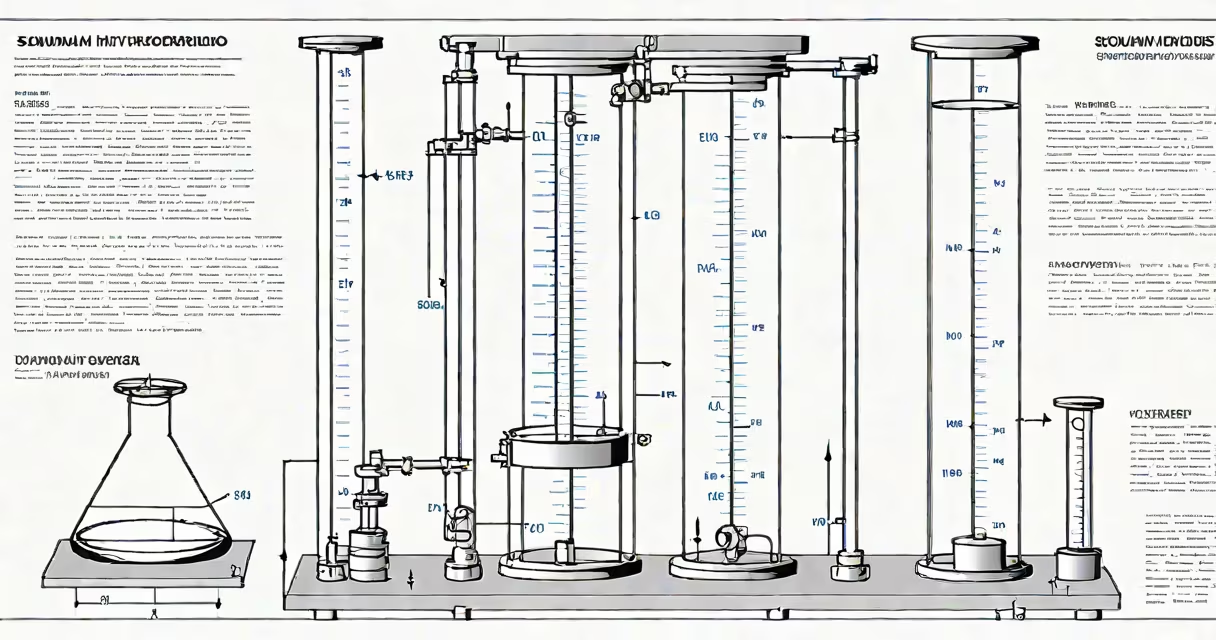
Sodium hydroxide density refers to the mass per unit volume of sodium hydroxide solutions, typically measured in grams per milliliter (g/mL) or kilograms per liter (kg/L). It increases with higher concentrations and decreases slightly with rising temperature. This property is essential for accurate formulation in chemical manufacturing, laboratory work, and industrial cleaning.
Density values depend on both concentration and temperature. A 10% w/w sodium hydroxide solution at 20°C has a density of approximately 1.11 g/mL. A 50% w/w solution at the same temperature measures about 1.52 g/mL. These figures are critical when preparing reagents or scaling up production processes.
For precise applications, such as titrations or process control, density is often used to estimate concentration. The relationship between density and molarity is well-documented in technical handbooks like the CRC Handbook of Chemistry and Physics and the NIST Chemistry WebBook. These references provide tables that correlate density readings with molar concentrations under standard conditions.
How sodium hydroxide density works
Density is determined by the mass of solute (NaOH) and solvent (water) in a given volume. As more NaOH dissolves in water, the solution becomes heavier per unit volume. However, the increase is not linear due to changes in molecular packing and intermolecular forces.
Temperature affects density because thermal expansion increases volume while mass remains constant. For every 10°C rise above 20°C, the density of a 30% NaOH solution drops by roughly 0.01 g/mL. This variation must be accounted for in high-precision settings like pharmaceutical production or analytical chemistry.
Measuring density requires calibrated tools. A hydrometer gives quick estimates in field settings. Laboratory-grade digital densitometers offer accuracy within ±0.001 g/mL. For routine checks, a pycnometer-a glass flask with a known volume-is used to measure mass and calculate density precisely.
Types and forms of sodium hydroxide solutions
Sodium hydroxide exists in multiple forms: solid pellets, flakes, or aqueous solutions. Density applies only to liquid solutions, which are categorized by weight percent (w/w) or molarity (mol/L).
| Concentration (w/w) | Density at 20°C (g/mL) | Molarity (mol/L) |
|---|---|---|
| 10% | 1.11 | 2.76 |
| 20% | 1.22 | 6.08 |
| 30% | 1.33 | 9.96 |
| 50% | 1.52 | 18.7 |
These values come from standardized reference data in the CRC Handbook of Chemistry and Physics, 104th edition. They reflect average measurements under controlled conditions. Deviations occur if impurities like sodium carbonate are present, which can alter density by up to 0.02 g/mL.
Industrial-grade NaOH is often supplied as 50% w/w solutions in plastic drums. The density of such solutions enables efficient shipping-each drum holds about 200 liters and weighs nearly 300 kg. Knowing the density allows logistics teams to calculate payload limits and storage space accurately.
Common uses and practical considerations
Sodium hydroxide density is important in soap making, where correct ratios of NaOH to fat determine saponification efficiency. Using a 30% NaOH solution with a density of 1.33 g/mL ensures consistent lye addition. A miscalculation leads to excess lye, resulting in harsh, unstable soap.
In wastewater treatment, operators adjust NaOH dosage based on pH and density. A 25% solution (density ~1.27 g/mL) is injected into acidic effluent. Flow rates are calibrated using density to maintain neutral pH levels. Failure to account for temperature shifts can cause overdosing, increasing operational costs and environmental risk.
A non-obvious fact: density does not indicate purity. A 30% NaOH solution with a density of 1.33 g/mL may still contain 0.5% sodium carbonate. This contaminant raises the density slightly but reduces reactivity. Analytical methods like titration or ion chromatography are needed to confirm actual NaOH content.
What it's commonly confused with
People often mistake sodium hydroxide density for viscosity or concentration. Density is mass per volume. Concentration refers to moles of NaOH per liter (molarity). Viscosity describes resistance to flow. A 50% NaOH solution is viscous and dense, but these are separate physical properties.
Another confusion arises between density and specific gravity. Specific gravity is dimensionless-it compares a substance's density to water at 4°C. A 40% NaOH solution has a specific gravity of 1.43, meaning it is 1.43 times denser than water. This simplifies comparisons across systems but doesn't replace direct density measurement.
I once observed a lab technician mix a NaOH solution using a beaker and scale. He assumed a 10% solution had a density of 1.10 g/mL. After measuring with a calibrated densitometer, he found it was actually 1.11 g/mL. The difference caused a 0.5% error in a titration. Correcting the input value improved reproducibility across trials.
Key takeaways
Always verify sodium hydroxide density using calibrated instruments when precision matters. Temperature and concentration must be recorded alongside density values. Reference tables from trusted sources like the CRC Handbook or NIST are essential for validation.