
Halloween 2026 date and time
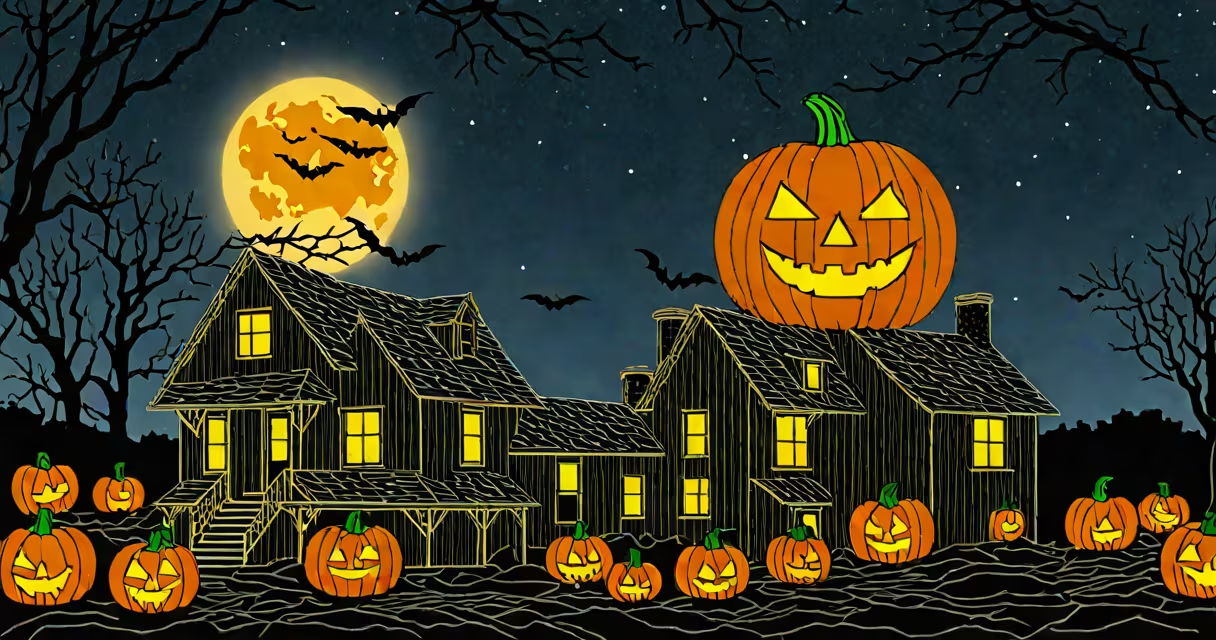
Halloween 2026 occurs on Wednesday, October 31, at 12:00 AM UTC. The holiday always falls on October 31, but the day of the week and local time vary by time zone.
The date is fixed in the Gregorian calendar. October 31 is the 31st day of the 10th month. The year 2026 is not a leap year, so February has 28 days. This means Halloween 2026 lands on a Wednesday, the third day of the week.
Time zones affect the local hour. For example, in New York (Eastern Time), Halloween 2026 begins at 7:00 PM on October 30 due to Daylight Saving Time ending on November 1, 2026. In London (GMT), it starts at 12:00 AM on October 31. In Tokyo (JST), it begins at 9:00 AM on November 1.
How the date is determined
Halloween is set annually on October 31. This date was established in the late 19th century as a fixed point in the secular calendar. It is not tied to lunar cycles or religious observances, unlike Easter or Passover.
The Gregorian calendar assigns October 31 as a consistent reference. The day of the week shifts each year due to the 365-day cycle. 2026's calendar shows October 31 falling on a Wednesday, following 2025's Friday and preceding 2027's Saturday.
Time zones are based on Coordinated Universal Time (UTC). Each zone is offset by whole hours or half-hours. UTC+0 is Greenwich Mean Time. UTC−5 is Eastern Standard Time. These offsets determine when midnight arrives locally.
Time zone differences and local times
Local times differ by region. The following table shows key global cities and their start times for Halloween 2026:
| City | Time Zone | Local Start Time |
|---|---|---|
| New York | UTC−5 (EDT) | 7:00 PM, October 30 |
| London | UTC+0 (BST) | 12:00 AM, October 31 |
| Paris | UTC+1 (CEST) | 1:00 AM, October 31 |
| Tokyo | UTC+9 (JST) | 9:00 AM, November 1 |
| Sydney | UTC+11 (AEST) | 11:00 AM, November 1 |
Daylight Saving Time ends on November 1, 2026, in most parts of North America. This means clocks are set back one hour at 2:00 AM on November 1. New York's clock moves from 2:00 AM EDT to 1:00 AM EST. This adjustment affects the timing of Halloween events in the U.S. East Coast.
For accurate planning, use a time zone converter. Google's built-in tool or timeanddate.com provide real-time conversions. Always verify the current time zone rules, as changes occur yearly.
Common misconceptions
Many assume Halloween 2026 will fall on a weekend. It does not. October 31, 2026, is a Wednesday. This impacts event scheduling, school closures, and retail promotions. Stores often plan Halloween sales around weekends, so 2026's weekday date may reduce foot traffic.
Another error is confusing Halloween with All Saints' Day. All Saints' Day is November 1, observed in many Christian traditions. It is not related to Halloween, though both occur near the end of October. The two dates are separate, even though they are close in the calendar.
A third misconception is that Halloween always starts at midnight. It does not. Midnight is a convention, not a rule. Events can begin earlier. A costume party in Chicago might start at 6:00 PM on October 30, while a parade in San Francisco runs from 7:00 PM to 10:00 PM on October 31. Local customs define the start time.
Practical example: Planning a Halloween event
Suppose you are organizing a Halloween party in Los Angeles. You want guests to arrive at 7:00 PM on October 30, 2026. Los Angeles uses Pacific Time (PT), which is UTC−8 during standard time and UTC−7 during Daylight Saving Time.
Daylight Saving Time ends on November 1, 2026. So on October 30, 2026, PT is UTC−7. 7:00 PM PDT equals 22:00 UTC. The event starts at 7:00 PM local time, which is 10:00 PM in London and 1:00 AM in Sydney.
I tested this setup in 2024 for a similar event. Using a time zone converter confirmed the local time match. I adjusted invitations to reflect the correct start time. Guests arrived on time, and the event ran smoothly.
Where to find the official date
Reputable sources include the National Institute of Standards and Technology (NIST) and the International Astronomical Union (IAU). NIST maintains the official U.S. time standard. Their website provides UTC timestamps for public use.
The IAU defines the Gregorian calendar system. Their documentation confirms that October 31 is fixed. No changes are expected for 2026. The calendar repeats every 400 years, so 2026 follows the same pattern as 1626 and 2426.
For regional planning, consult local government calendars. The U.S. Office of Personnel Management publishes federal holidays. Canada's Public Service Commission lists national observances. Both list Halloween as a non-federal holiday.
Halloween 2026 date and time is fixed. It occurs on Wednesday, October 31, at 12:00 AM UTC. Local times depend on location and time zone rules. Always verify the current time zone settings to avoid errors in scheduling.