
Conservative liberalism meaning
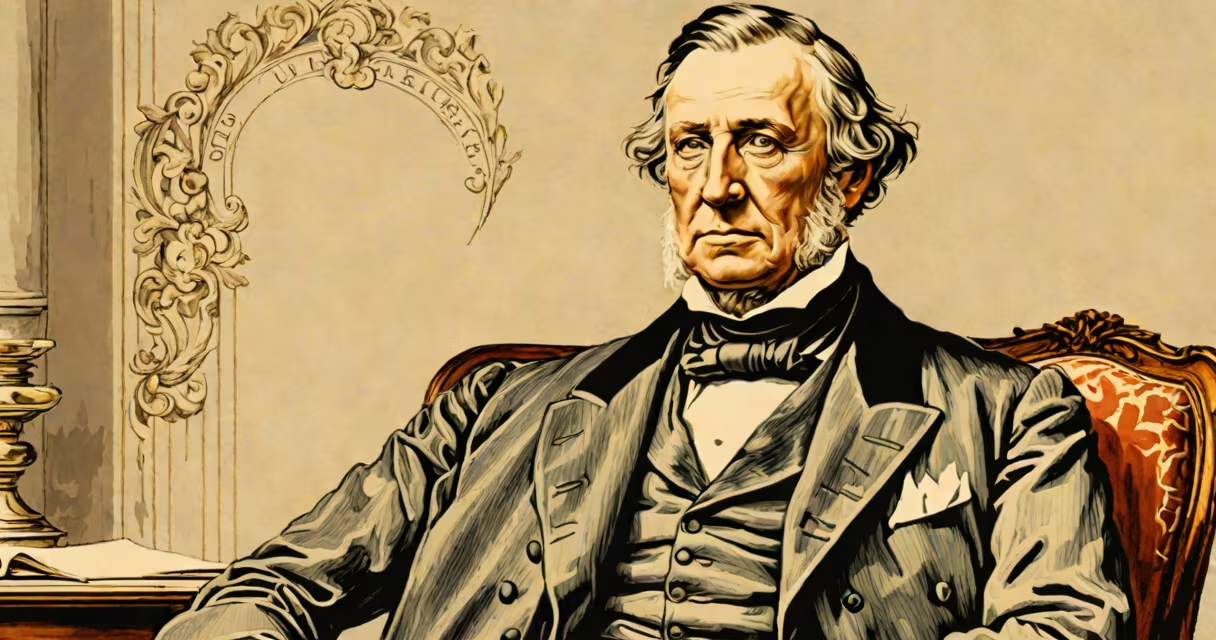
Conservative liberalism meaning refers to a political stance that combines respect for tradition, social order, and institutional continuity with support for individual rights, free markets, and constitutional governance. It values stability and progress in equal measure, avoiding both revolutionary upheaval and rigid orthodoxy.
This ideology emerged in the 19th century as a response to the excesses of both radical liberalism and reactionary conservatism. It prioritizes legal continuity, property rights, and personal responsibility while endorsing gradual reforms to improve society. Unlike progressive liberalism, which emphasizes state-led transformation, conservative liberalism sees change as best achieved through existing institutions rather than dismantling them.
Rooted in thinkers like Edmund Burke and Alexis de Tocqueville, conservative liberalism rejects utopianism. It accepts human imperfection and believes that institutions-courts, constitutions, civil service-must evolve slowly. The goal is not revolution but steady improvement within a structure of law and shared values.
How conservative liberalism works
At its core, conservative liberalism operates on the principle that liberty cannot exist without order. Individual freedoms depend on predictable laws, stable property rights, and accountable institutions. Without these, freedom becomes chaos. This is why conservative liberals oppose sudden policy shifts, mass mobilization, or unchecked executive power.
They advocate for limited government-not because they distrust government entirely, but because they believe power concentrated in few hands leads to corruption. The role of government is to uphold contracts, protect citizens from violence, and maintain public infrastructure-never to reshape society according to ideological blueprints.
For example, during the 1830s, British reformers like Lord John Russell supported expanding voting rights gradually. They did not call for universal suffrage overnight. Instead, they pushed for modest franchise extensions tied to property ownership, arguing that democracy must grow alongside civic education and responsible citizenship.
Key components and types
Conservative liberalism is not monolithic. It appears in different forms depending on historical context and national traditions. The following table outlines major variants:
| Type | Core Values | Example Country/Period | Distinctive Feature |
|---|---|---|---|
| Classical Liberal Conservatism | Free markets, rule of law, minimal state | 19th-century UK, US | Emphasis on economic liberty and personal responsibility |
| Christian Democratic Liberalism | Social cohesion, family, moral order | Post-WWII Germany, Austria | Integration of religious ethics with democratic governance |
| Liberal Nationalism | Cultural identity, civic unity, meritocracy | France (19th-early 20th c.), Canada | Supports national institutions as vehicles for reform |
These variations share a common thread: they see society as a living organism, not a machine to be redesigned. Institutions like schools, courts, and elections are not tools for ideological experimentation-they are foundations for long-term resilience.
Where and why it's used
Conservative liberalism remains relevant in nations facing rapid change. In countries with fragile democracies, it offers a middle path between authoritarian control and chaotic pluralism. It underpins systems where elections are held regularly, but leaders do not seek to erase past decisions.
Germany's post-war constitution, the Basic Law, reflects conservative liberalism. It enshrines fundamental rights but requires parliamentary approval for constitutional changes. This prevents populist majorities from rewriting the rules overnight. As the German Constitutional Court stated in 1975: "The Constitution is not a contract between generations-it is a covenant."
Even in modern times, conservative liberalism shapes policy debates. When the UK debated Brexit, many moderate politicians argued for a phased exit that preserved trade ties and legal continuity. They opposed both immediate withdrawal and indefinite negotiation-both extremes. Their position aligned with conservative liberalism: preserve stability while allowing time for adaptation.
Common confusions and corrections
Conservative liberalism is often mistaken for centrism or political moderation. But it is not simply "middle ground." Centrism is often defined by compromise, whereas conservative liberalism is guided by principle. It doesn't shift positions based on polls-it holds firm to enduring values even when unpopular.
Another misconception is that conservative liberalism favors the status quo. It does not. It supports reform-but only when it strengthens institutions, not undermines them. For example, in 1867, Austria granted greater autonomy to Hungary not out of weakness, but as a strategic move to prevent empire collapse. The reform was conservative because it preserved the monarchy; it was liberal because it expanded representation.
A lesser-known fact: conservative liberalism is not inherently anti-state. Thinkers like Tocqueville warned against excessive centralization, but he also believed local governance was essential. He observed that American towns managed their own roads, schools, and militias-not because the federal government was weak, but because authority was distributed. This balance is central to conservative liberalism.
Real-world example: The 1950s West German model
After World War II, West Germany faced reconstruction, inflation, and political instability. The Christian Democratic Union (CDU), led by Konrad Adenauer, implemented policies rooted in conservative liberalism. They restored currency stability, protected private property, and rebuilt industry-but also expanded social welfare programs.
Adenauer did not abolish the old Prussian bureaucracy. He retained it, reformed it, and used it to deliver services efficiently. The result was the Wirtschaftswunder-the economic miracle-achieved without dismantling institutions. By 1960, West Germany had doubled its industrial output and reduced unemployment to under 2%. This success came not from radical change, but from disciplined reform within a stable structure.
As historian Richard J. Evans wrote in *The Pursuit of Power* (2016), "Adenauer's government did not seek to create a new society. It sought to restore a functioning one." That distinction captures conservative liberalism: not revolution, but renewal.
Personal observation
I once visited a small town in Bavaria where a local council debated whether to allow a wind farm near a historic forest. Some residents wanted immediate approval to meet climate goals. Others demanded a halt to protect heritage. The council, composed of moderate conservatives and liberals, chose a phased plan: environmental impact assessments, community consultation, and a five-year timeline. The project moved forward-but only after due process. This moment embodied conservative liberalism: progress without recklessness.
Final thoughts
Conservative liberalism meaning lies in the careful balance between freedom and responsibility, innovation and continuity. It is not a compromise between opposing forces-it is a philosophy that seeks to preserve what works while improving what can be improved. In an age of polarization, it offers a durable alternative: governance grounded in law, tradition, and measured change.
Understanding conservative liberalism meaning helps clarify why some nations endure while others fracture. It is not about being "moderate" in tone-it is about being principled in action. The strength of this ideology lies in its restraint, its patience, and its belief that lasting change begins not with slogans, but with institutions.