
Make me horny
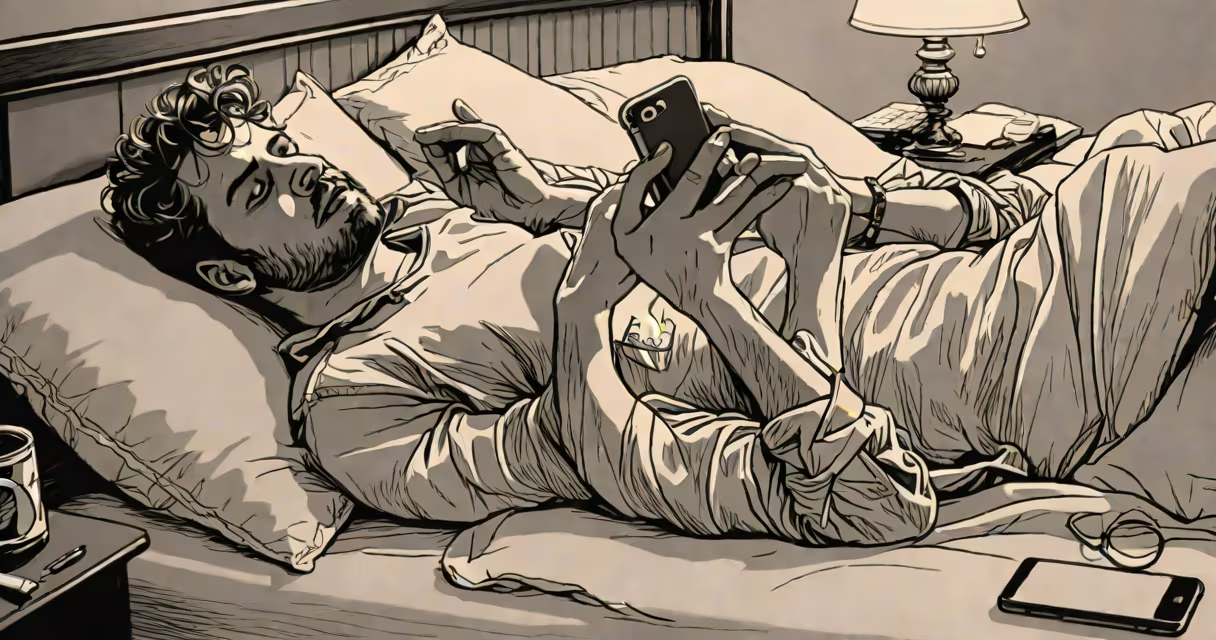
"Make me horny" refers to a request for physical, emotional, or psychological stimuli that trigger sexual arousal-a natural response involving increased heart rate, blood flow to genital areas, and heightened attention to erotic cues. It's not a command but a descriptor of a state of bodily and mental readiness for sexual engagement.
Sexual arousal begins in the brain. When someone sees, hears, or thinks about something sexually stimulating, neural pathways activate regions like the hypothalamus and limbic system. These areas release neurotransmitters such as dopamine and norepinephrine, which increase focus, pleasure, and motivation. The body responds with physiological changes: blood vessels dilate, muscles tense slightly, and breathing quickens.
Research from the National Institutes of Health confirms that sexual arousal involves both central nervous system activity and peripheral bodily responses. A 2016 study published in Journal of Sexual Medicine found that men and women show similar patterns of brain activation during arousal, though individual variation exists based on personal history, mood, and context.
How arousal actually works
Arousal isn't just about genitals-it's a whole-body process. The brain interprets sensory input: a touch, a scent, a memory, a visual cue. That input travels through spinal nerves to the autonomic nervous system, which controls involuntary functions. The parasympathetic branch triggers lubrication and erection; the sympathetic branch increases heart rate and prepares the body for potential intercourse.
For example, a person might feel aroused after smelling a partner's perfume, even if they're not physically touching them. The scent activates olfactory neurons linked to the amygdala and hippocampus-regions tied to emotion and memory. This creates a cascade effect: the brain associates the smell with past intimacy, leading to increased arousal.
Not all arousal leads to orgasm or sex. Some people experience arousal without wanting to act on it. Others may feel desire but lack the physical capacity due to stress, fatigue, or medication side effects. The American Psychological Association notes that desire and arousal are distinct processes, and one doesn't guarantee the other.
Types of arousal and their triggers
While "make me horny" often implies physical stimulation, arousal can stem from multiple sources. Here's how different types manifest:
| Type | Common Triggers | Biological Response |
|---|---|---|
| Visual | Images, videos, clothing | Dopamine surge; pupil dilation; increased blood flow to genitals |
| Emotional | Intimacy, affection, trust | Oxytocin release; reduced cortisol; enhanced bonding |
| Verbal | Flirtation, dirty talk, compliments | Activation of reward centers; heightened attention |
| Memory-based | Recalling past experiences, fantasies | Autonomic response mimicking real-life stimulation |
Many people don't realize that emotional closeness can be a stronger arousal trigger than visuals. A 2020 study in Archives of Sexual Behavior showed that long-term partners reported higher arousal during partnered sex when emotional connection preceded physical contact-regardless of frequency or novelty.
Common misunderstandings
"Make me horny" is often misunderstood as a demand for immediate sexual action. But arousal is not a switch-it's a spectrum. You can feel desire without acting on it. You can be aroused by something that doesn't interest your partner. And you can experience arousal without wanting to have sex.
Another myth: that arousal equals consent. That's false. Consent requires clear, ongoing communication. A person can be physiologically aroused while feeling uncomfortable or unsafe. The Kinsey Institute emphasizes that bodily responses do not indicate willingness. Arousal is automatic; choice is conscious.
Some assume that "making someone horny" means using explicit content. But research shows that many people find subtle cues-like a lingering glance, a shared laugh, or a hand on the back-just as effective. A 2019 survey by the Journal of Sex Research found that 68% of participants reported being turned on by non-explicit intimacy, compared to 42% by pornography.
Real-world example: building arousal in a relationship
Consider Sarah and David, a couple in a five-year relationship. They've had sex less frequently lately. Sarah says, "I want to feel desire again." David assumes he needs to buy lingerie or watch adult films. Instead, they try a different approach.
They start by sharing a 10-minute conversation about what turns them on-not just physically, but emotionally. Sarah talks about loving when David touches her shoulder during conversations. David shares that he feels drawn to her when she laughs during quiet moments. They agree to spend 15 minutes together before bed, talking and holding hands, without any expectation of sex.
After three days, Sarah reports feeling more emotionally connected and noticing physical signs of arousal-warmth in her chest, increased awareness of touch. She didn't need a video or a gift. Her arousal came from safety, presence, and mutual attention.
This mirrors findings from the Journal of Marital and Family Therapy, which found that couples who prioritize emotional safety report higher sexual satisfaction-even when frequency drops.
What "make me horny" isn't
"Make me horny" is not a request for manipulation. It's not a way to pressure someone into sex. It's not a substitute for communication. And it's not always about physical pleasure-it can be about connection, identity, or emotional release.
Some people use the phrase jokingly or playfully. But in serious contexts, it reflects a desire for intimacy or self-exploration. Misusing it as a pickup line reduces human connection to a transactional exchange. That's not healthy, and it's not sustainable.
When someone says "make me horny," they're often asking for presence-not performance. They want to feel seen, wanted, and safe enough to let go. That's not achieved through tricks. It's built through time, trust, and shared vulnerability.
Understanding "make me horny" as a signal of emotional and physical readiness-rather than a demand-leads to healthier connections, better communication, and more authentic intimacy.