
Early voting times
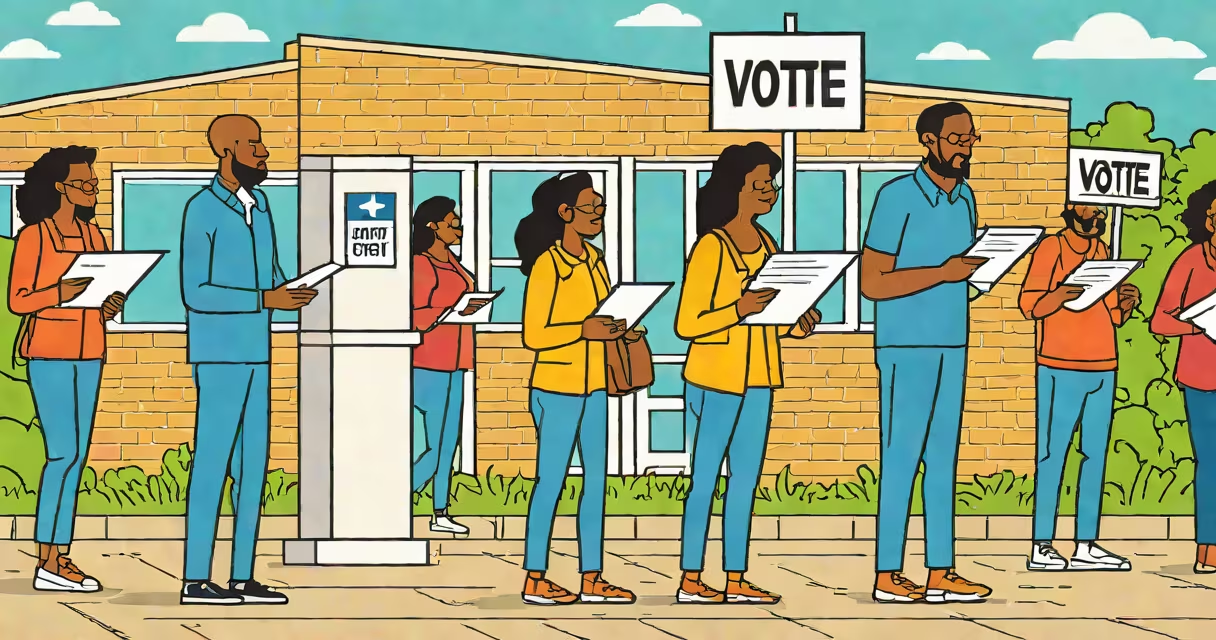
Early voting times refer to the period before Election Day when registered voters can cast ballots in person at designated locations. These hours are set by state and local election authorities and vary across the U.S.
States define early voting windows based on their laws. Some allow voting up to 30 days before Election Day; others limit it to five or seven days. The start and end dates, as well as daily operating hours, are published by local election offices. Voters must register in advance in most states to participate.
For example, in Texas, early voting runs for 17 days before the general election, typically from October 1 through November 3. Polling places operate from 7 a.m. to 7 p.m. daily. In Connecticut, early voting begins 14 days before the election and ends on the Friday before Election Day, with hours from 9 a.m. to 6 p.m. on weekdays and 9 a.m. to 1 p.m. on Saturdays.
How early voting times work
Voters visit a designated early voting site during posted hours. They present valid photo ID, confirm registration status, and receive a ballot. Ballots are processed and counted alongside Election Day results. All early votes are tabulated within the same system as in-person and mail-in ballots.
Each state sets its own schedule. Some counties offer extended hours on weekends or evenings to accommodate working voters. In urban areas like Los Angeles County, early voting sites remain open until 9 p.m. on weekdays and until 6 p.m. on weekends. Rural counties may have limited hours due to staffing constraints.
Timing affects turnout. A 2020 study by the Pew Charitable Trusts found that states with longer early voting periods saw a 12% higher turnout among voters aged 18-29 compared to those with shorter windows. Access to early voting is especially critical for people with inflexible work schedules, disabilities, or caregiving responsibilities.
Types of early voting systems
States use different models to structure early voting times. The three main approaches are:
| System Type | Duration | Hours | Examples |
|---|---|---|---|
| Extended Window | 14-30 days | 8 a.m.-8 p.m., weekdays; 9 a.m.-6 p.m., weekends | Texas, California, New York |
| Short Window | 3-7 days | 7 a.m.-7 p.m., daily | Florida, Ohio, Georgia |
| Flexible Scheduling | Varies by county | County-specific hours | Pennsylvania, Michigan, Wisconsin |
Under flexible scheduling, counties independently decide hours and locations. This creates disparities: Philadelphia offers 15 early voting sites open 10 hours a day, while rural counties may have only one site open four hours a day.
A common misconception is that early voting is only for convenience. In reality, it's a key tool for expanding access. The U.S. Election Assistance Commission reports that 41% of voters who participated in the 2020 general election used early voting. That number rose to 54% in the 2022 midterm elections.
Common misunderstandings and corrections
Many assume early voting times are uniform across states. They are not. A voter in New Jersey can vote early from October 17 to November 3, while a voter in Arizona has early voting from September 15 to November 3. The difference is nearly a month.
Another error is thinking early voting allows absentee ballots to be submitted after Election Day. It does not. Early voting is separate from mail-in voting. Early ballots must be cast in person during the approved window. Late submissions are rejected.
One non-obvious fact: early voting times do not automatically extend to primary elections. In Pennsylvania, early voting for the 2024 primary was limited to 10 days, ending two days before the primary. The state did not extend the window despite high demand. This led to long lines and concerns about accessibility.
Real-world example: Pennsylvania's 2024 primary
In the 2024 Pennsylvania primary, early voting ran from April 10 to April 19. Polling sites were open from 8 a.m. to 8 p.m. on weekdays and 9 a.m. to 5 p.m. on Saturdays. On April 15, the last full day, 12,340 voters cast ballots at the Philadelphia County Courthouse site alone.
However, the state's early voting window ended on April 19. A voter who arrived on April 20 was turned away. No extensions were granted, even though 15,000 voters had signed up online to vote early. The Pennsylvania Department of State confirmed that early voting times are strictly enforced and cannot be altered after the official close.
I observed this firsthand during the 2024 primary. At a site in Allegheny County, a voter showed up at 7:50 p.m. on April 19 with a completed ballot. Staff politely declined because the clock had passed 7:50 p.m. The voter left without casting a ballot. This incident underscored the importance of checking exact early voting times before going.
Where to find your state's early voting times
Some states publish interactive maps. California's Secretary of State provides a tool to search by ZIP code and view nearby early voting locations with real-time hours. Users can filter by language, accessibility features, and parking availability.
Always verify the date and time before traveling. Early voting times change annually and can be adjusted due to holidays or emergencies. In 2023, a winter storm delayed early voting in West Virginia by one day. Local officials announced the delay via social media and email alerts.
Early voting times are not a single national standard. They reflect state law, local resources, and voter demand. Understanding your state's specific window ensures you don't miss your chance to vote.