
History of food
The history of food documents how humans have obtained, prepared, and consumed sustenance from prehistoric gathering to modern industrial systems. It tracks dietary shifts driven by climate, geography, technology, and cultural exchange.
Food is not just nourishment-it's a record of survival, innovation, and identity. The earliest humans hunted animals and gathered wild plants, relying on seasonal availability. Around 10,000 years ago, in regions like the Fertile Crescent and Mesoamerica, people began cultivating crops such as wheat, barley, maize, and potatoes. This shift marked the Neolithic Revolution-the foundation of settled life, population growth, and eventually cities.
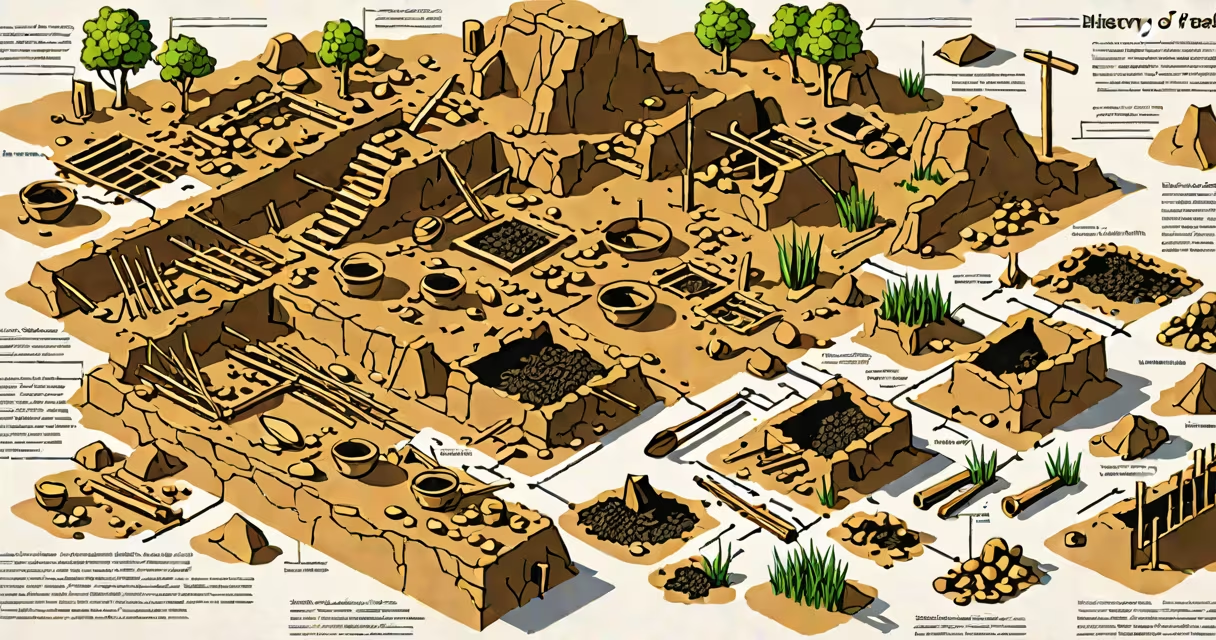
Archaeological evidence from Çatalhöyük in modern-day Turkey shows early farming communities storing grain in clay bins and grinding wheat using hand stones. Radiocarbon dating confirms that by 7000 BCE, people were growing emmer wheat and raising sheep and goats. These developments allowed surplus production, enabling social specialization and the rise of complex societies.
How the history of food evolved through major transitions
Three key shifts define the trajectory of food history: the domestication of plants and animals, the spread of trade networks, and the industrialization of food systems.
Domestication began independently in multiple regions. In East Asia, rice cultivation emerged around 6500 BCE in the Yangtze River basin. In the Andes, potatoes were domesticated by 8000 BCE. These transitions weren't sudden-they took thousands of years of trial, selection, and adaptation. Plants that produced larger seeds or resistant tubers were replanted repeatedly, leading to genetic changes that made them dependent on human care.
Trade routes expanded food access across continents. The Silk Road connected China to the Mediterranean, moving spices like cinnamon and black pepper from Sri Lanka to Roman markets. By the 15th century, European explorers brought chili peppers from the Americas to India and Southeast Asia, transforming regional cuisines. Tomatoes, originally rejected in Europe due to fears they were poisonous, became staples in Italian cooking by the 18th century.
Industrialization reshaped food systems after 1800. Mechanized farming increased yields. Refrigeration enabled long-distance transport of meat and dairy. Canned goods and processed foods became common during World War II, with governments promoting preserved rations. Today, over 60% of global calories come from just nine crops: wheat, rice, maize, potatoes, soybeans, sugar cane, oil palm, bananas, and cassava.
Key types and phases in the history of food
Food history unfolds across distinct eras, each defined by dominant methods of food acquisition and processing.
| Era | Timeframe | Primary Food Source | Technological Marker |
|---|---|---|---|
| Prehistoric | Before 10,000 BCE | Wild plants, game | Stone tools, fire use |
| Neolithic | 10,000-3000 BCE | Cultivated cereals, livestock | Plows, irrigation, storage pits |
| Classical | 3000 BCE-500 CE | Grains, legumes, fish, wine | Writing, road networks, salt preservation |
| Medieval | 500-1500 CE | Barley, oats, pork, dairy | Monastic gardens, windmills, fermentation |
| Early Modern | 1500-1800 CE | Maize, potatoes, sugar, coffee | Transoceanic trade, plantations |
| Industrial | 1800-present | Processed grains, factory meat, synthetic additives | Refrigeration, mass production, GMOs |
Each phase reflects adaptations to environmental constraints and demographic pressures. For example, the adoption of maize in Mesoamerica led to dense populations in Maya and Aztec civilizations. Its high yield per acre supported urban centers, though reliance on a single crop contributed to vulnerability during droughts.
A lesser-known fact: the spread of bread-making predates written language. Archaeologists discovered 14,000-year-old flatbreads made from wild grasses in Jordan. These were baked on hot stones, not ovens. The discovery challenges the assumption that baking required advanced kilns or centralized kitchens.
Common misunderstandings about the history of food
People often assume that traditional diets were inherently healthy or that modern food systems are entirely new. Both views misrepresent the record.
Traditional diets varied widely in nutritional quality. The Inuit diet, rich in animal fat and protein, sustained health in Arctic conditions but lacks vitamin C-leading to scurvy in winter months. Conversely, some ancient agricultural societies suffered from nutrient deficiencies. In parts of sub-Saharan Africa, iron-deficiency anemia was documented in skeletal remains from 2000 BCE, linked to diets dominated by millet and sorghum.
Modern food processing is not a recent invention. Ancient Romans used fermented fish sauce (garum) as a flavor enhancer. Egyptians preserved meat by salting and drying. The difference lies in scale and ingredients-not in the concept itself. Industrial food systems amplified preservation techniques and standardized recipes, but the principles date back millennia.
I once visited a museum exhibit in Rome displaying amphorae filled with garum. The scent, even after centuries, lingered faintly in the air. That moment confirmed: the desire to improve flavor through fermentation is deeply human-and ancient.
Why understanding the history of food matters today
Knowledge of the history of food informs current debates on sustainability, equity, and health. It reveals patterns in how societies respond to scarcity, technological change, and migration.
For example, the global reliance on monocultures-especially wheat, rice, and corn-mirrors the risks seen in past civilizations. When a single crop fails due to disease or climate stress, entire regions face hunger. The Irish Potato Famine of 1845-1852, caused by a fungal blight, killed over a million people and triggered mass emigration. It remains a cautionary tale about overdependence on one variety.
Today, researchers are reviving ancient grains like einkorn wheat and teff to improve resilience and nutrition. These crops grow in poor soils, require less water, and offer higher protein content than modern hybrids. Their resurgence is part of a broader movement toward diversified, regionally adapted food systems.
Understanding the history of food also clarifies cultural identity. Dishes like Japanese ramen or Ethiopian injera are not just meals-they are living archives of migration, trade, and adaptation. Ramen, originally a Chinese noodle soup, evolved in Japan through local ingredient substitutions and seasoning blends. Its popularity today reflects both historical exchange and modern reinvention.
The history of food is not a static timeline. It's a changing story of adaptation, loss, and recovery. From the first fire-heated tuber to the lab-grown meat of today, every meal carries echoes of the past.