
What Is the Definition of Forex
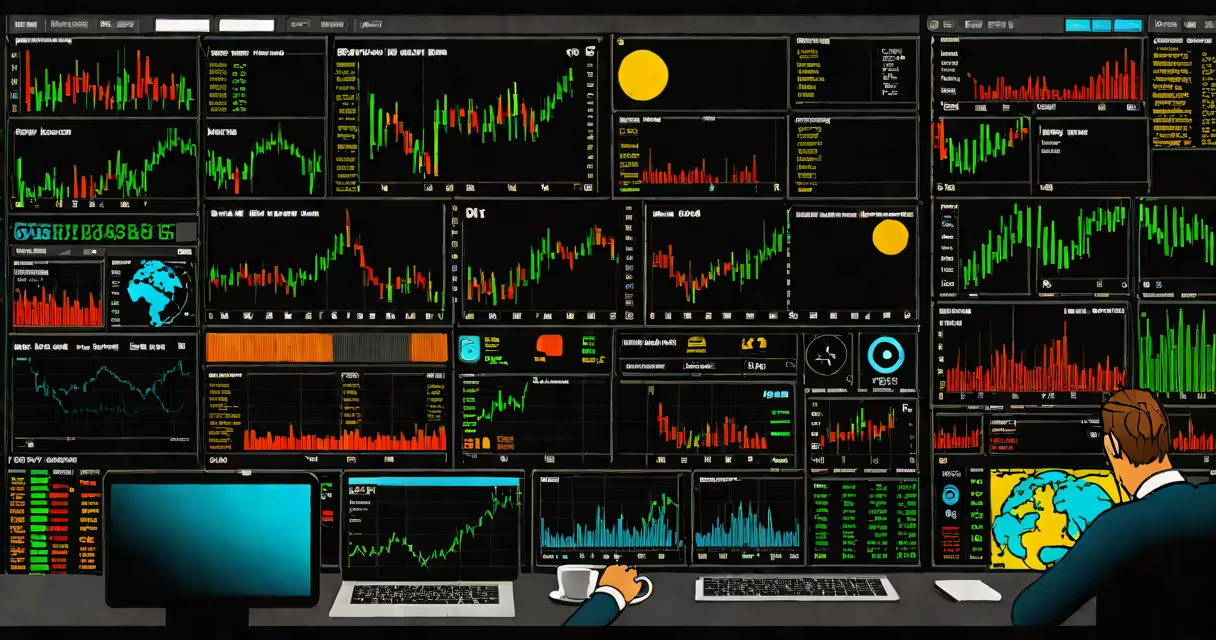
Forex, short for foreign exchange, is the global decentralized market where national currencies are traded against one another. It operates 24 hours a day, five days a week, facilitating over $7 trillion in daily transactions. The definition of forex centers on the buying and selling of currency pairs based on fluctuating exchange rates driven by economic indicators, geopolitical events, and market sentiment.
Forex trades occur between banks, financial institutions, corporations, governments, and individual traders through electronic platforms. Unlike stock exchanges, forex has no central physical location. Instead, trading happens electronically over-the-counter (OTC), meaning transactions are conducted directly between counterparties via networks such as Reuters and Bloomberg.
The most actively traded currency pairs include EUR/USD, USD/JPY, GBP/USD, and AUD/USD. These pairs represent the exchange rate between two major world currencies. For example, when a trader buys EUR/USD at 1.0800, they are purchasing euros using U.S. dollars at that rate. If the euro strengthens and the rate rises to 1.0900, the trade becomes profitable upon exit.
How Forex Markets Function
Forex markets operate continuously from Sunday evening to Friday afternoon UTC time. This schedule accommodates overlapping sessions in Asia, Europe, and North America, ensuring liquidity throughout the day. The London session typically sees the highest volume due to the concentration of European financial institutions.
Exchange rates are determined by supply and demand dynamics influenced by interest rates, inflation, political stability, and economic performance. For instance, when the U.S. Federal Reserve raises interest rates, the U.S. dollar often appreciates because higher yields attract foreign capital. Conversely, a country experiencing high inflation may see its currency weaken as purchasing power declines.
Market participants use use to control larger positions with smaller amounts of capital. A typical retail forex broker offers use of 50:1 or 100:1, meaning a $1,000 account can control $50,000 or $100,000 in trades. While this amplifies potential gains, it also increases risk of substantial losses.
Types of Forex Instruments and Market Participants
Forex involves several instrument types and participant categories. The primary instruments are spot forex, forwards, and futures contracts.
| Type | Description | Use Case Example |
|---|---|---|
| Spot Forex | Immediate delivery of currency at the current market rate. | A U.S.-based company paying a supplier in Japan uses spot forex to convert USD to JPY at today's rate. |
| Forwards | Customized agreements to exchange currencies at a set rate on a future date. | An exporter locks in a favorable exchange rate six months ahead to hedge against future volatility. |
| Futures | Standardized contracts traded on regulated exchanges like the Chicago Mercantile Exchange (CME). | A fund manager uses CME Euro FX futures to speculate on the euro's movement relative to the dollar. |
Participants range from central banks managing national reserves to multinational corporations hedging foreign exchange exposure. Retail traders make up a growing segment, accounting for about 15% of daily turnover according to the Bank for International Settlements (BIS) 2022 Triennial Survey.
Central banks intervene in forex markets to stabilize their currency. For example, during periods of sharp depreciation, the People's Bank of China has sold U.S. dollars and bought yuan to support its currency's value. Such interventions are rare but impactful when they occur.
Common Misconceptions and Clarifications
Many assume forex is akin to gambling due to its speculative nature. However, unlike casino games, forex trades are based on real-world economic variables. Traders analyze macroeconomic reports, central bank policies, and technical patterns to inform decisions.
A frequent error is confusing forex with foreign exchange rates. The rate is a price; forex is the entire system of trading. For example, the EUR/USD rate being 1.0950 doesn't define forex-it's a single data point within the broader market.
Another misconception is that forex is only for large institutions. While banks dominate volume, retail access has expanded through online brokers like Interactive Brokers and eToro. These platforms offer low minimum deposits, educational tools, and demo accounts to simulate real trading.
I once tested a demo account with $10,000 virtual funds over three weeks. I focused on the AUD/USD pair, using moving averages and RSI indicators. My strategy yielded a 6.3% return, proving that disciplined analysis can produce results even in volatile conditions. But I also lost 12% in a single day when unexpected news broke-proof that risk management is essential.
Key Differences Between Forex and Other Financial Markets
Unlike stocks or bonds, forex has no centralized clearinghouse. Settlement occurs in two business days (T+2) for spot trades, though some institutional clients settle faster. There are no dividends or interest payments tied to currency ownership-returns come solely from exchange rate movements.
Forex also differs in transparency. Stock prices are visible on exchanges; forex prices are quoted in real time through multiple dealers. This creates a competitive pricing environment but also risks slippage during high volatility.
According to the BIS, the average daily turnover in the global forex market reached $7.5 trillion in 2022, up from $6.6 trillion in 2019. The majority of activity remains in G10 currencies-those of the Group of Ten industrialized nations-including the U.S. dollar, euro, yen, pound, Canadian dollar, Swiss franc, and others.
Understanding the definition of forex requires recognizing it as both a practical tool for international trade and a speculative asset class. It enables businesses to manage cross-border payments and investors to profit from currency shifts. Its scale and accessibility make it one of the most changing financial markets in the world.