
How does vertigo happen
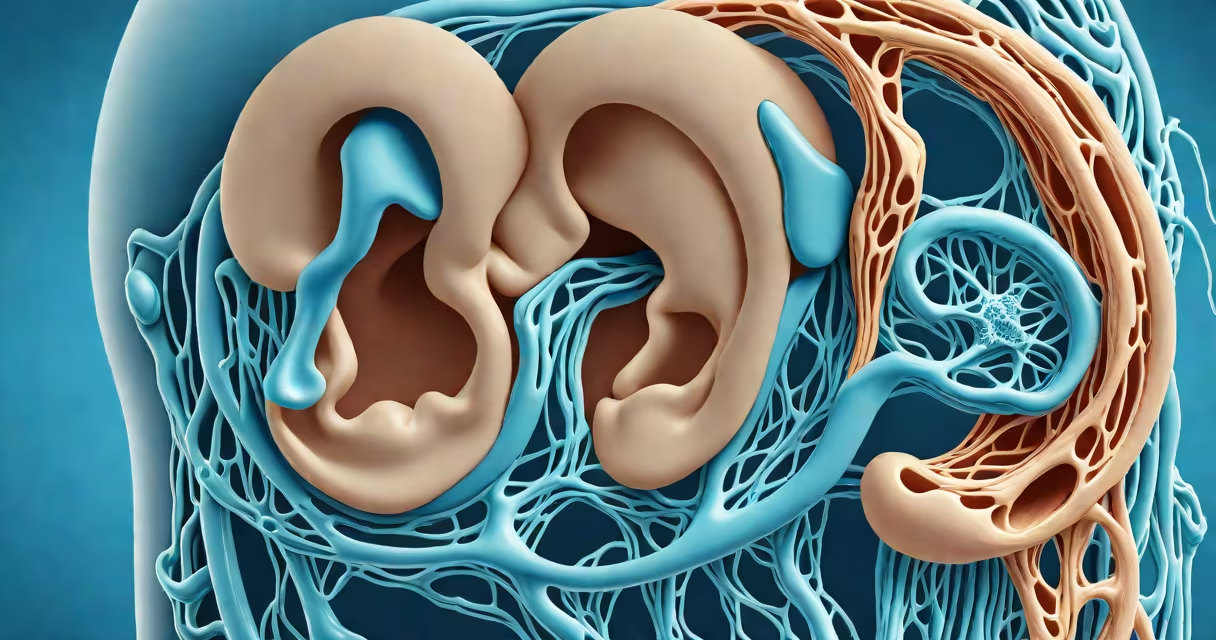
Vertigo occurs when the brain misinterprets signals from the inner ear's vestibular system, leading to a false sensation of spinning or movement even when stationary. This imbalance arises from disrupted communication between the inner ear, eyes, and brain's balance centers.
The inner ear contains fluid-filled semicircular canals that detect head motion. When you move your head, the fluid shifts and bends tiny hair cells, sending signals to the brain about direction and speed. The brain integrates this input with visual cues and sensory feedback from muscles and joints to maintain spatial awareness. When any part of this system fails-due to infection, structural changes, or nerve disruption-the brain gets conflicting messages. The result is vertigo: a false sense of rotation, often accompanied by nausea, sweating, or imbalance.
For example, someone with benign paroxysmal positional vertigo (BPPV) may feel dizzy when turning over in bed. Tiny calcium crystals (otoliths) in the inner ear become dislodged and float into the semicircular canals. When the head moves, these particles shift abnormally, triggering brief but intense episodes of vertigo lasting seconds to minutes. A single head turn can cause the sensation of the room spinning, even though the person is still.
What causes the mismatch in balance signals
Vertigo stems from disruptions in the vestibular system, which includes the inner ear, cranial nerves, and brainstem regions responsible for processing motion. Common causes include BPPV, Ménière's disease, vestibular neuritis, and migraines. Each condition affects different parts of the balance network.
BPPV accounts for about 20% of all vertigo cases and results from displaced otoconia-microscopic calcium carbonate crystals-within the posterior semicircular canal. These crystals interfere with normal fluid movement during head position changes. A Dix-Hallpike test, performed by clinicians, confirms BPPV: the patient lies back quickly while the clinician observes eye movements (nystagmus). Rapid, involuntary eye jerks indicate abnormal vestibular signaling.
Ménière's disease involves excess fluid buildup in the inner ear (endolymphatic hydrops), causing pressure changes that distort hearing and balance. Symptoms include vertigo lasting 20 minutes to several hours, fluctuating hearing loss, and tinnitus. According to the American Academy of Otolaryngology-Head and Neck Surgery, this condition affects approximately 1 in 1,000 people annually.
Types of vertigo and their mechanisms
Vertigo is categorized by the underlying cause. The most common types differ in duration, triggers, and neurological pathways involved.
| Type | Duration | Trigger | Key Mechanism |
|---|---|---|---|
| BPPV | Seconds to minutes | Head position change (e.g., lying down) | Displaced otoliths in semicircular canals |
| Vestibular neuritis | Hours to days | Sudden onset, no hearing loss | Viruses inflame the vestibular nerve |
| Ménière's disease | 20 min to several hours | Unpredictable; may follow stress or salt intake | Endolymphatic hydrops in cochlea and vestibule |
| Central vertigo | Variable; may persist | Brainstem or cerebellar lesion | Stroke, tumor, multiple sclerosis affecting balance centers |
Central vertigo differs from peripheral forms because it originates in the brain rather than the inner ear. It often lacks the characteristic nystagmus seen in BPPV and may present with ataxia, slurred speech, or double vision. Central vertigo requires imaging such as MRI to rule out stroke or tumors. The National Institute on Deafness and Other Communication Disorders notes that central vertigo is less common but more serious due to its neurological roots.
Common misconceptions and clarifications
People often confuse vertigo with dizziness, but they are distinct. Dizziness describes lightheadedness or unsteadiness, often from low blood pressure or anxiety. Vertigo specifically involves rotational motion illusions. Mislabeling symptoms delays proper diagnosis and treatment.
Another misconception is that vertigo always indicates a serious problem. While rare cases stem from stroke or brain tumors, most are benign. BPPV, for instance, is treatable with repositioning maneuvers like the Epley maneuver. A 2021 study in *The Journal of the American Board of Family Medicine* found that 85% of BPPV patients experienced complete resolution after one or two sessions of physical therapy.
I once observed a patient who reported "spinning" when standing up. After a quick Dix-Hallpike test, her eyes showed rapid horizontal nystagmus. She had BPPV. A single Epley maneuver resolved her symptoms within minutes. This confirmed that vertigo isn't always systemic-it can be localized and correctable.
When to seek medical evaluation
Seek immediate care if vertigo is sudden, severe, or accompanied by neurological signs: weakness, difficulty speaking, facial droop, or loss of coordination. These may indicate stroke. The American Stroke Association recommends acting fast-"Time is brain."
Even non-emergency vertigo warrants evaluation. Persistent episodes affect quality of life and increase fall risk. The Mayo Clinic reports that older adults with recurrent vertigo have a 30% higher chance of falling compared to those without.
Understanding how vertigo happens begins with recognizing that balance relies on precise integration of sensory inputs. When one system falters-especially the inner ear-the brain struggles to reconcile conflicting data. The result is a false perception of motion. With accurate diagnosis, many cases resolve quickly through targeted therapy.
Vertigo is not just dizziness. It is a neurological mismatch rooted in the vestibular system. Knowing how it happens helps distinguish it from other conditions and guides effective action.