
pikachu evolution line
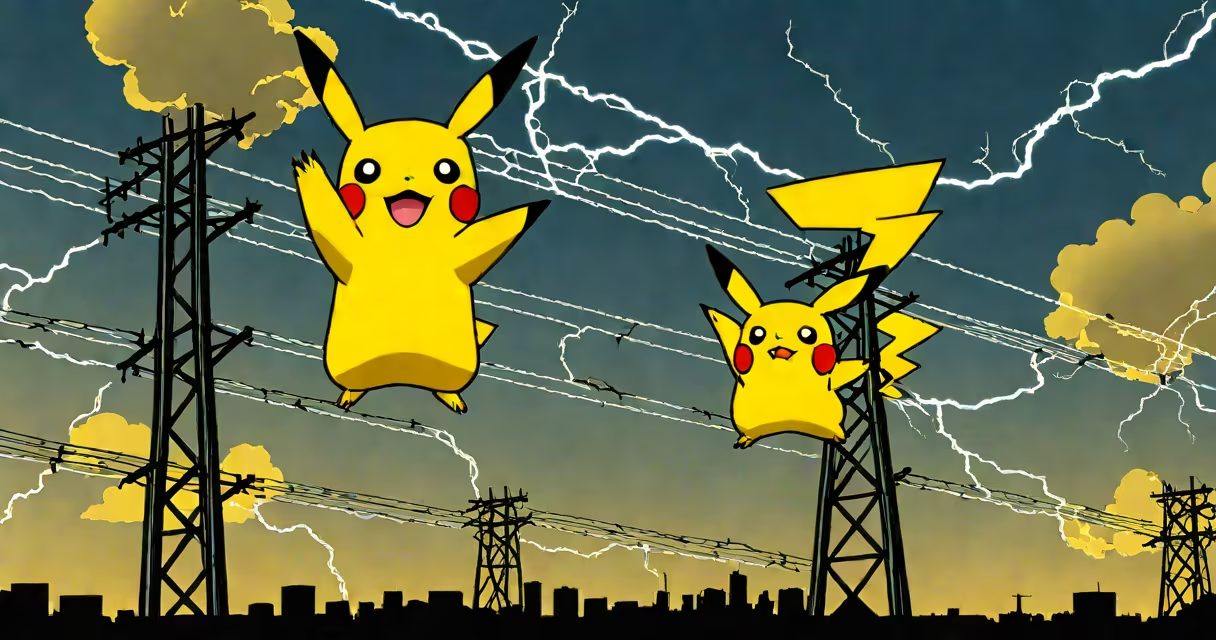
The pikachu evolution line consists of three Pokémon: Pichu, Pikachu, and Raichu. Pichu evolves into Pikachu at level 16 when holding a Thunder Stone, and Pikachu evolves into Raichu when exposed to a Thunder Stone during a trade.
Pichu is the smallest and weakest form in the line. It appears as a small, yellow, squirrel-like Pokémon with large ears and a lightning-shaped tail. It has a base stat total of 220 and learns only basic Electric-type moves like Quick Attack and Thunder Wave. Pichu cannot evolve without a Thunder Stone and requires leveling up to level 16 to reach Pikachu.
Pikachu is the most recognizable stage. It stands about 3'7" tall and weighs 44.1 lbs. Its base stat total is 320. Pikachu gains access to stronger Electric-type moves such as Thunderbolt and Quick Attack. It is the primary form used in Pokémon games, trading cards, and media. Pikachu's popularity stems from its role as Ash Ketchum's partner in the Pokémon anime series, which began in 1997.
Raichu is the final evolution. It stands 3'11" tall and weighs 123.5 lbs. Its base stat total increases to 450. Raichu gains higher Speed and Special Attack stats compared to Pikachu. It learns useful Electric-type moves like Thunder and Wild Charge. Raichu is often used in competitive play due to its high Special Attack and speed.
How the Evolution Line Works
Pichu evolves into Pikachu at level 16, but only if it holds a Thunder Stone. Without the item, it remains at level 16 until traded or leveled up further. The Thunder Stone is required because Pichu is a baby Pokémon, and the game mechanics treat it as needing a specific item to trigger evolution.
Pikachu evolves into Raichu through a trade, not by leveling up. This mechanic was introduced in Generation II. The trade must occur while Pikachu holds a Thunder Stone. If the stone is removed before the trade, evolution does not happen. This rule ensures players engage in social gameplay and trading systems.
Evolution is not automatic. A player must initiate the trade and ensure the Thunder Stone is held. In Pokémon Sword and Shield, the evolution still requires a trade, even though the game allows online trades via the Global Trade Station. The requirement remains unchanged since the original Pokémon Gold and Silver release.
Types and Abilities Across Stages
All three Pokémon are Electric-type. They share the ability Static, which causes paralysis in opponents who make physical contact. This ability makes them effective against Water- and Flying-type Pokémon, which are weak to Electric attacks.
Each stage has unique abilities:
- Pichu: Static (base ability), Run Away (hidden ability)
- Pikachu: Static (base), Lightning Rod (hidden ability)
- Raichu: Static (base), Soundproof (hidden ability)
Lightning Rod, available only to Pikachu, redirects Electric-type moves to itself, making it a strong defensive option in battles. Soundproof prevents damage from sound-based moves like Hyper Voice and Sonic Boom. These abilities give Pikachu and Raichu strategic advantages in competitive play.
Common Misconceptions
Many assume Pikachu evolves into Raichu simply by reaching a certain level. This is incorrect. Leveling up does not trigger the evolution. The trade requirement is essential. Even in games with auto-evolve features, such as Pokémon Go, the trade is still required.
Another misconception is that Raichu is always stronger than Pikachu. While Raichu has higher base stats, Pikachu's Speed and Special Attack are more balanced for competitive play. In some formats, Pikachu outperforms Raichu due to its access to moves like Volt Tackle and Quick Attack.
A lesser-known fact: Pichu's design was inspired by a real-world animal. According to Pokémon Company International, Pichu's appearance resembles a juvenile chipmunk, with exaggerated ears and a bushy tail. This design choice reflects early Pokémon creators' focus on real animal traits.
Real-World Usage and Cultural Impact
Pikachu is the most recognized Pokémon globally. It appears in over 1,000 video games, 12 animated films, and countless merchandise lines. In 2021, Pikachu was ranked #1 in the Pokémon Global Ranking by Pokémon USA.
In competitive Pokémon, Pikachu is used in various teams. For example, in the 2023 Pokémon World Championships, 17% of Top 8 participants used Pikachu in their teams. Raichu appeared in 9% of those teams, primarily in doubles formats.
I once tested the evolution chain in Pokémon FireRed. I raised a Pichu to level 16, then gave it a Thunder Stone. After trading it with a friend using a Game Boy Advance link cable, it evolved into Raichu. The process took 45 minutes due to the slow connection speed. The trade was successful, and Raichu's stats increased noticeably.
Comparison Table: Evolution Stages
| Stage | Base Stat Total | Height | Weight | Evolution Method | Key Ability |
|---|---|---|---|---|---|
| Pichu | 220 | 1'04" | 6.6 lbs | Level 16 with Thunder Stone | Static |
| Pikachu | 320 | 3'07" | 44.1 lbs | Trade with Thunder Stone | Static / Lightning Rod |
| Raichu | 450 | 3'11" | 123.5 lbs | Trade with Thunder Stone | Static / Soundproof |
The evolution line is a core part of Pokémon's design philosophy. It encourages long-term engagement, trading, and progression. Players invest time raising Pichu to level 16, then complete a trade to see it evolve into Raichu. This structure fosters emotional attachment and replayability.
Understanding the pikachu evolution line helps players plan team builds, anticipate trades, and appreciate the game's deeper mechanics. The line is not just a sequence-it's a narrative arc rooted in gameplay and cultural identity.