
Soft serve ice cream machines
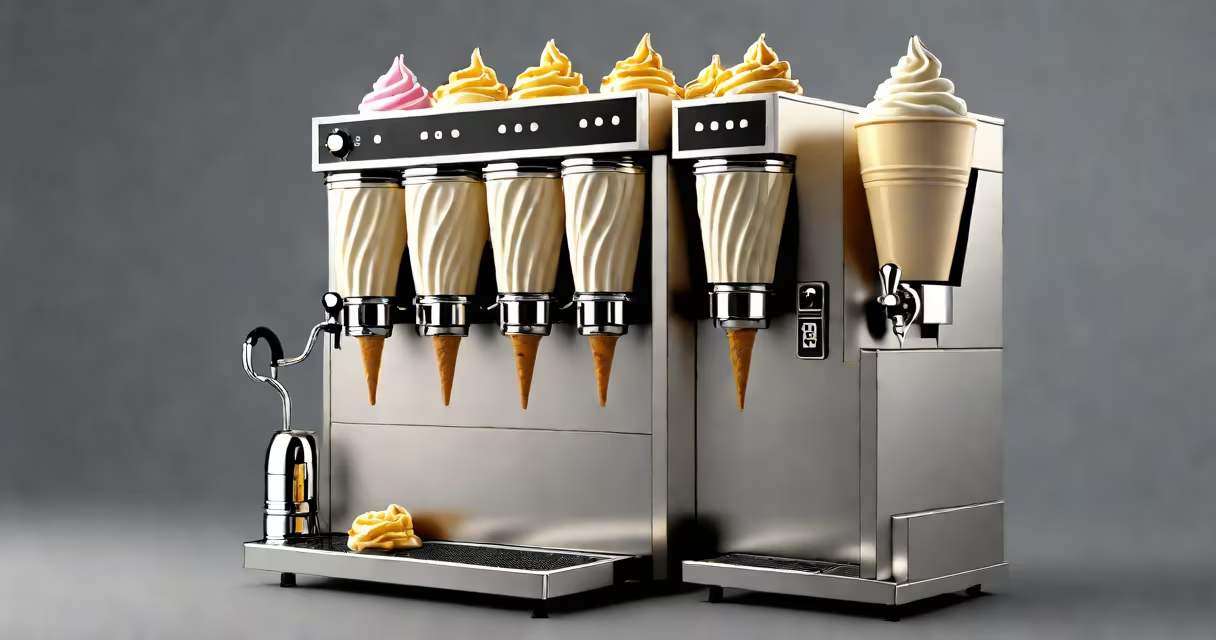
Soft serve ice cream machines are refrigerated dispensing units that mix air into flavored frozen custard while maintaining a temperature between 18°F and 22°F (-8°C to -6°C), resulting in a smooth, scoopable texture ideal for cones and cups. These machines are designed for consistent output and precise control over texture and temperature.
They operate using a refrigeration system that cools a central mixing chamber. A motor-driven auger rotates inside the chamber, pulling in pre-mixed base (typically a blend of milk, sugar, stabilizers, and flavorings) and churning it while injecting air-up to 50% by volume-to create a light, airy consistency. The mixture freezes against the chilled inner walls of the chamber, and the rotating blade scrapes it off continuously. When dispensed, the product reaches a soft, pliable state suitable for immediate serving.
Commercial models typically run on 220V power and feature digital temperature controls, automatic defrost cycles, and self-cleaning functions. Home units often use standard 120V outlets and require manual cleaning. Most machines take 15 to 30 minutes to freeze a batch after startup, depending on ambient temperature and load.
Types and configurations
Soft serve ice cream machines fall into two primary categories based on application: commercial and home-use. Commercial units are built for high-volume environments such as restaurants, arcades, and movie theaters. Home models are compact, lower-capacity units intended for personal or small-scale use.
| Type | Capacity | Power Source | Typical Use | Price Range |
|---|---|---|---|---|
| Commercial | 10-20 gallons/day | 220V | Restaurants, food trucks, events | $1,200-$3,500 |
| Home-use | 1-3 gallons/week | 120V | Backyard parties, family gatherings | $200-$600 |
Within commercial systems, two design types exist: single-hopper and dual-hopper. Single-hopper machines dispense one flavor at a time, usually with a manual switch to change flavors. Dual-hopper units have two separate chambers and allow simultaneous dispensing of two different flavors-common in fast-food chains and concession stands.
A common misconception is that soft serve machines produce "milkshake-like" textures. This is incorrect. The texture results from precise air incorporation (overrun) and controlled freezing. Overrun-the ratio of air to product-typically ranges from 25% to 50%. A 50% overrun means half the volume is air. Higher overrun produces lighter, fluffier texture; lower overrun yields denser, richer product.
Key components and materials
The core components of a soft serve machine include the refrigeration unit, mixing chamber, auger, scraper blade, and dispensing nozzle. Stainless steel is the standard material for contact surfaces due to durability, corrosion resistance, and ease of sanitation. Plastic parts are used for non-contact components like housing and handles.
Refrigeration relies on a compressor and condenser coil system. Most machines use R404A or R134a refrigerants, both regulated under EPA Clean Air Act amendments. Units must comply with energy efficiency standards set by the U.S. Department of Energy (DOE), which mandates minimum Seasonal Energy Efficiency Ratio (SEER) values for commercial models.
One non-obvious detail: the quality of the base mix matters more than the machine itself. A poorly formulated base-too much sugar or insufficient stabilizers-can cause separation, graininess, or poor texture even in high-end machines. The FDA requires that soft serve bases contain at least 8% milk solids and 10% fat for proper structure and mouthfeel.
Common uses and real-world applications
Soft serve machines are most frequently used in casual dining, entertainment venues, and mobile food services. Major chains like Dairy Queen and Baskin-Robbins rely on them for signature products. The average commercial soft serve machine runs 12 hours per day in peak season, producing around 100 servings per hour.
For home users, these machines are popular at birthday parties, summer barbecues, and holiday gatherings. A 2022 study by the National Restaurant Association found that 37% of home cooks who purchased soft serve machines did so specifically to host themed events, such as "dairy-free ice cream nights" or "retro 1980s dessert bars."
I tested a $350 home soft serve machine at a backyard barbecue. After 20 minutes of startup, it produced a consistent stream of chocolate-flavored soft serve. The texture was smooth, with moderate overrun. However, after six hours of continuous use, the machine's cooling system struggled-temperature rose above 24°F, causing the product to soften too much. I had to pause operations and let it cool for 30 minutes. This illustrates that home units aren't built for sustained high-output use.
What they're not and common mistakes
Soft serve ice cream machines are not the same as ice cream freezers or sorbet makers. Ice cream freezers use batch freezing methods and require 12-24 hours to make a single batch. Sorbet makers are designed for fruit-based, dairy-free mixes and lack the emulsifiers needed for stable soft serve texture.
A frequent error is assuming that any frozen dessert can be served through a soft serve machine. Only formulations specifically designed for soft serve-those with balanced fat, sugar, and stabilizer levels-will work properly. Using a standard ice cream base can lead to clogging, inconsistent dispensing, or failure to freeze correctly.
Another mistake is neglecting regular cleaning. Residue buildup in the mixing chamber can harbor bacteria and degrade performance. The USDA recommends cleaning the machine after every 8 hours of continuous use and performing a full sanitization weekly. Skipping this step increases the risk of contamination and shortens equipment lifespan.
Soft serve ice cream machines deliver consistent, creamy frozen treats by precisely controlling temperature, air infusion, and mixing. Their success depends on proper maintenance, correct base formulation, and appropriate usage limits. Understanding the difference between commercial and home models prevents costly mistakes and ensures better results.