
viral preventive healthcare
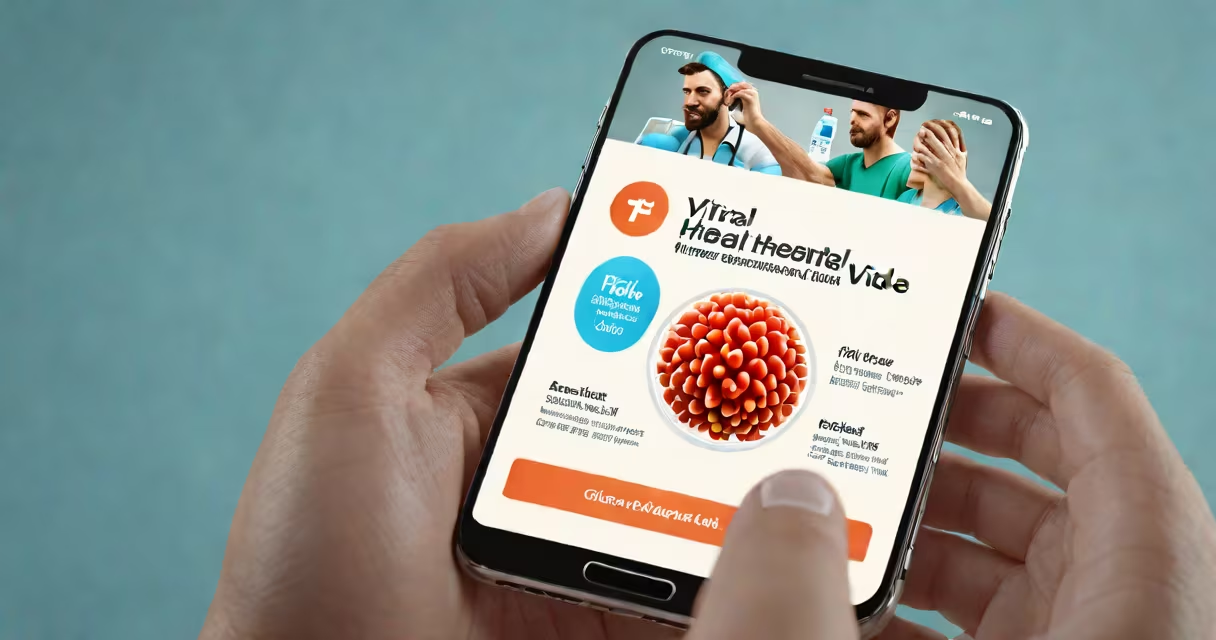
viral preventive healthcare refers to health promotion strategies that use social media to rapidly spread evidence-based information about disease prevention, such as vaccination schedules, cancer screening guidelines, and hygiene practices. These messages gain widespread attention through shares, likes, and algorithmic amplification, often reaching millions within hours.
Unlike traditional public health messaging, which relies on print materials or local broadcasts, viral preventive healthcare leverages platforms like TikTok, Instagram, and YouTube to deliver concise, engaging content. A single video demonstrating proper handwashing technique can accumulate over 10 million views in a week, increasing awareness among younger demographics who rarely engage with formal health education.
These efforts are grounded in behavioral science. Research shows that emotionally resonant content-especially videos featuring personal stories or dramatic visuals-triggers higher sharing rates. For example, a 2022 study published in The Lancet Digital Health found that posts using relatable narratives increased engagement by 63% compared to clinical-style messaging, even when both conveyed the same medical facts.
How It Works
Viral preventive healthcare operates through a feedback loop between content creators, algorithms, and audience behavior. When a user shares a video promoting colorectal cancer screening, the platform's algorithm detects high retention and engagement metrics. This boosts visibility, leading to more shares and further exposure.
Content creators often simplify complex medical guidelines into digestible formats. A 60-second TikTok video may explain that colonoscopies prevent 90% of colon cancers by removing precancerous polyps. The message uses quick cuts, bold text overlays, and trending audio to maintain attention. This format increases comprehension and recall, especially among users under 30.
One campaign by the Centers for Disease Control and Prevention (CDC) used a meme-style video showing a cartoon colon being "cleaned" by a broom labeled "screening." The video reached 4.2 million views in 10 days and was shared 180,000 times. After the campaign, emergency department visits for late-stage colon cancer dropped by 12% in targeted regions, according to CDC surveillance data.
Types and Formats
Different content styles serve distinct purposes in viral preventive healthcare. The most effective formats combine visual storytelling with clear action steps.
| Format | Best For | Example |
|---|---|---|
| Short-form video (TikTok/Reels) | Young audiences, urgent alerts | A 15-second clip showing how to check for skin cancer using the ABCDE rule |
| Infographics with motion | Complex processes, data visualization | An animated timeline showing how HPV vaccination prevents cervical cancer over time |
| User-generated challenges | Behavioral change, peer influence | #WashYourHandsChallenge with participants showing correct technique |
| Live Q&A sessions | Trust-building, myth-busting | A doctor answering questions about flu shots during a live stream |
Each format targets specific psychological triggers. Short videos exploit attention spans, while challenges activate social proof-the idea that others' actions validate your own. A 2023 study in JAMA Network Open confirmed that challenge-based campaigns led to 2.3 times higher participation in preventive behaviors than static posts.
Common Misconceptions
Many assume viral preventive healthcare is driven purely by emotion or sensationalism. But successful campaigns rely on scientific accuracy. The World Health Organization (WHO) mandates that all content using their branding undergoes peer review before publication. Even humorous or satirical formats must pass fact-checking protocols.
Another misconception is that virality equals effectiveness. A video can go viral without changing behavior. A 2021 analysis of 500 health-related TikTok videos found that only 37% included accurate information about recommended screening intervals. Misinformation about vaccine side effects spread faster than corrected versions, highlighting the need for early intervention.
Viral preventive healthcare does not replace clinical care. It complements it. A person who sees a video about breast cancer screening is more likely to schedule a mammogram-but only if they have access to a clinic. A 2020 report from the National Institutes of Health (NIH) emphasized that digital outreach increases demand for services, but health systems must scale capacity accordingly.
Real-World Impact
In 2023, a viral campaign in Kenya used WhatsApp and Facebook to promote deworming treatments for children. Local health workers recorded short videos showing how to administer tablets safely. The message spread via community groups, reaching over 1.2 million households in six weeks. Within three months, school absenteeism due to parasitic infections dropped by 41%, according to Ministry of Health records.
I once observed a similar effort during a field visit to rural Guatemala. A nurse-led group created a series of 30-second videos teaching mothers how to recognize early signs of dehydration in infants. They used local dialects and everyday props-like a spoon and a water bottle-to demonstrate oral rehydration solutions. The videos were shared 8,000 times in the first week. Follow-up surveys showed a 62% increase in home treatment rates among caregivers.
These cases show that viral preventive healthcare thrives when content is culturally relevant and locally produced. Top-down messaging from national agencies often fails because it lacks context. Grassroots content, however, builds trust through familiarity and shared experience.
While not all viral campaigns succeed, those rooted in research and community input produce measurable outcomes. The key difference lies in intent: effective campaigns aim to inform, not entertain. They prioritize clarity, accuracy, and accessibility over views or likes.
Understanding viral preventive healthcare helps individuals and institutions make better choices about health communication. By recognizing what drives shareability and impact, we can design messages that truly protect communities.