
What Does Bank Branch Mean
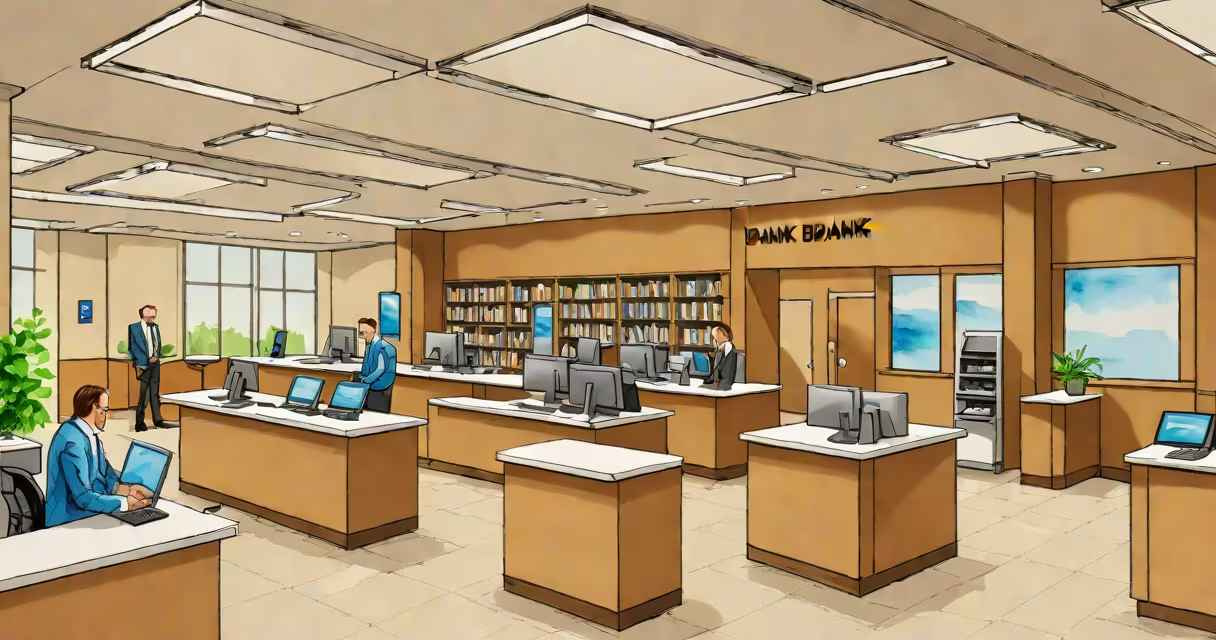
A bank branch is a physical location where a financial institution provides in-person services such as cash deposits, withdrawals, loan applications, and account setup. It serves as a local hub for customers who prefer face-to-face interactions with bank staff.
Bank branches are operated under the authority of a parent bank and follow national regulations set by agencies like the Federal Deposit Insurance Corporation (FDIC) and the Office of the Comptroller of the Currency (OCC). These institutions must maintain capital reserves, comply with anti-money laundering laws, and meet consumer protection standards regardless of branch size or location.
For example, a JPMorgan Chase branch in downtown Chicago offers services including checking and savings account openings, mortgage consultations, and safe deposit box rentals. The branch is staffed by tellers, customer service representatives, and relationship managers who handle transactions and provide advice.
How Bank Branches Work
When a customer visits a bank branch, they typically begin by signing in at a reception desk or using a digital queue system. A teller or banker then assists them with their request. Transactions such as cash deposits, withdrawals, wire transfers, and check cashing occur through a secure teller window or behind a partition.
Branches also help more complex services. Customers can apply for personal loans, credit cards, or home equity lines of credit during in-person appointments. Loan officers review credit history, income documentation, and collateral requirements on-site. According to the FDIC, 92% of U.S. commercial banks operate at least one physical branch, though the number of branches has declined by 14% since 2010 due to rising digital adoption.
Each branch maintains a balance of cash and negotiable instruments. This inventory is managed by regional vaults and replenished daily via armored transport. For instance, Wells Fargo uses a centralized logistics network to deliver cash to branches based on projected demand, adjusting supply weekly based on transaction volume.
Types of Bank Branches
Banks classify branches by function and scale. The most common types include retail branches, specialized branches, and mobile units.
| Type | Function | Example |
|---|---|---|
| Full-service retail | Handles deposits, withdrawals, account management, and basic lending | Chase branch in San Francisco's Financial District |
| Private banking | Serves high-net-worth clients with investment portfolios, estate planning, and tax advisory | JPMorgan Chase Private Bank office in New York City |
| Drive-thru | Offers limited services via vehicle window; no walk-in access | Bank of America drive-thru in suburban Atlanta |
| Mobile branch | Van-based unit serving rural or underserved areas | US Bank's mobile branch in rural Nebraska |
Some banks have shifted toward smaller, tech-enabled branches. These locations feature digital workstations, video conferencing with remote specialists, and automated teller machines (ATMs) integrated with branch systems. For example, Citibank's "Citi Express" branches in urban centers use AI-driven customer routing to reduce wait times by up to 30%, according to internal performance reports.
Where and Why Banks Maintain Branches
Despite the growth of online and mobile banking, physical branches remain critical for trust-building and complex financial tasks. A 2023 Federal Reserve survey found that 68% of adults aged 50 and older still visit a branch at least once a year, primarily for loan approvals and retirement planning discussions.
Branches serve as community anchors. They host financial literacy workshops, partner with small businesses for merchant services, and support local economic development. For example, PNC Bank runs a "Small Business Saturday" program at select branches, offering free counseling and application assistance for business loans.
There is a common misconception that all bank branches offer the same services. In reality, service availability varies by location and bank policy. A branch in a low-income neighborhood may lack loan officers or private meeting rooms, while a branch in a corporate district may offer dedicated wealth management suites. Always verify services before visiting.
Common Confusions and Corrections
People often mistake a bank branch for a credit union branch or a payment processing center. While both may accept deposits and issue checks, credit unions are member-owned cooperatives governed by different federal regulations. They do not operate under the same charter as commercial banks and are subject to the National Credit Union Administration (NCUA).
Another misunderstanding is that all bank branches have ATMs. Not every branch includes an ATM. Some banks place ATMs in separate kiosks or rely on shared networks. For example, Capital One operates standalone ATMs at convenience stores and gas stations, which are not part of any branch location.
One non-obvious fact: many bank branches are not owned by the bank itself. Instead, they lease space from real estate developers or property management firms. The bank signs long-term leases, often with renewal options, and customizes the interior to match brand standards. This model reduces upfront capital costs and allows rapid expansion into new markets.
I once visited a Bank of America branch in Portland, Oregon, during a weekend rush. The queue was long, but the branch had deployed a tablet-based appointment system. Customers could check in remotely and receive alerts when it was their turn. This reduced average wait time from 22 minutes to 11 minutes within six months, demonstrating how technology enhances physical service delivery.
Understanding what a bank branch means helps clarify expectations about access, service scope, and operational differences. It is not simply a place to withdraw cash-it is a regulated financial node with defined responsibilities and capabilities.