
What Does Halloween Represent
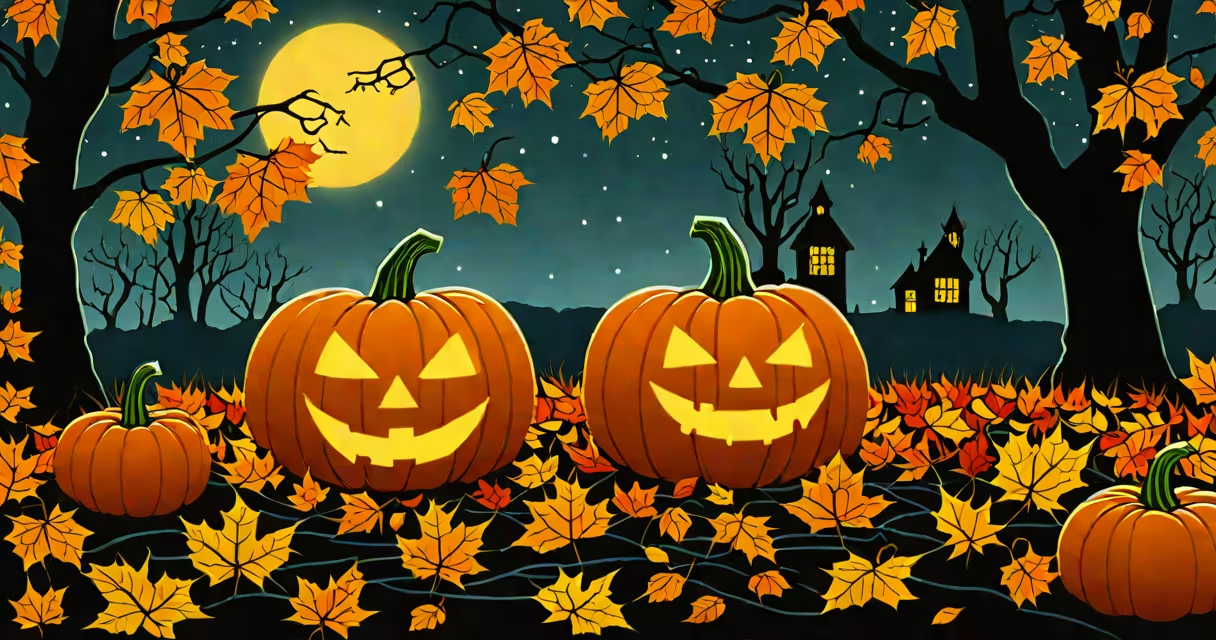
Halloween represents a fusion of ancient Celtic harvest rituals, early Christian All Saints' Day, and later American cultural traditions centered around costume-wearing, communal fear, and symbolic transformation. It is not a single concept but a layered cultural event rooted in seasonal change, spiritual boundary crossings, and collective storytelling.
The holiday's core meaning traces to Samhain, a Gaelic festival marking the end of the harvest season and the beginning of winter. Celebrated on October 31, Samhain was believed to be a time when the veil between the living and the dead thinned. People lit bonfires, wore animal skins, and offered food to spirits. The tradition survived in parts of Ireland, Scotland, and the Isle of Man long after Christianity spread through the region.
When the Roman Catholic Church established All Saints' Day on November 1, it absorbed many elements of Samhain. The evening before became All Hallows' Eve-later shortened to Halloween. By the 9th century, the church formalized the feast to honor saints and martyrs. Over time, local customs blended with religious observance, especially in regions with strong Celtic heritage.
How Halloween Works Today
Modern Halloween functions as a secular ritual. People dress as monsters, celebrities, or fictional characters. They visit homes to collect candy-a practice known as trick-or-treating. Houses decorate with jack-o'-lanterns, skeletons, and eerie lighting. These actions aren't random. They reflect a shared understanding of liminality-the idea that certain times allow temporary suspension of normal social rules.
Trick-or-treating emerged in North America during the early 20th century. It evolved from earlier customs like "mumming" and "guising," where children went door-to-door performing songs or plays in exchange for food. In the 1930s, communities began distributing treats to reduce vandalism during the holiday. By the 1950s, candy became standard, and the practice solidified into a national tradition.
Costumes serve dual purposes. They allow participants to step outside their everyday identities, embodying roles that defy social norms. A child dressed as a witch or vampire temporarily becomes something other than themselves. This transformation echoes ancient beliefs about spirit possession and shamanic role-playing.
What Halloween Is Made Of
Halloween's visual language draws from a mix of folklore, horror fiction, and commercial branding. Common symbols include:
- Jack-o'-lanterns: Carved pumpkins based on Irish folklore about Stingy Jack, a man who tricked the devil and was condemned to wander with a lantern.
- Skeletons and skulls: Represent death and the passage of time, common in Día de Muertos art but adapted into Western Halloween imagery.
- Witches and cauldrons: Rooted in European witch trials and medieval alchemical symbolism, though often exaggerated for entertainment.
- Candy and sweets: Mass-produced candies like chocolate bars and gummy worms dominate trick-or-treat bags, reflecting postwar consumer culture.
These elements combine into a sensory experience designed to provoke mild fear, excitement, and playfulness. The goal isn't to induce terror but to safely explore the unknown.
Where and Why Halloween Is Used
Halloween is most widely celebrated in the United States, Canada, and parts of Europe. In the U.S., over 175 million people participate annually, spending an average of $10.1 billion on costumes, decorations, and candy, according to the National Retail Federation (2023).
It serves multiple social functions. For children, it's a rite of passage involving independence and community interaction. For adults, it offers a chance to engage in playful rebellion-wearing outrageous outfits, hosting themed parties, or attending haunted attractions. In cities like New York and San Francisco, neighborhoods host large-scale events drawing tens of thousands.
Religious institutions have mixed views. Some Christian denominations acknowledge Halloween's historical ties to All Saints' Day and encourage participation as a way to teach about saints. Others discourage it due to perceived associations with paganism or occultism. The Vatican's Congregation for Catholic Education noted in 2016 that while Halloween has roots in pre-Christian traditions, it can be adapted for positive spiritual reflection.
Common Misconceptions and Corrections
Many assume Halloween is primarily about fear or evil. This misrepresents its evolution. While horror films dominate late October marketing, the holiday's original intent wasn't to glorify darkness. Samhain honored ancestors and marked seasonal transition-not demonic worship.
A second misconception is that Halloween is purely American. In reality, it was shaped by Irish and Scottish immigrants who brought Samhain customs to North America in the 19th century. The blending of these traditions with American capitalism created the version we see today. Without Irish migration, Halloween would lack its iconic costume and trick-or-treating elements.
A third error is equating Halloween with satanic rituals. There is no evidence linking mainstream Halloween celebrations to organized satanism. The FBI's 2022 report on hate crimes found no correlation between Halloween and religious extremism. Claims about "satanic parties" or "child abductions" during Halloween are statistically unfounded and often amplified by media sensationalism.
Types of Halloween Celebrations
Halloween varies by location and demographic. The following table outlines key regional and cultural forms:
| Type | Location | Key Features | Source |
|---|---|---|---|
| Commercial Celebration | United States, Canada | Costume sales, themed parties, retail promotions. Estimated $10.1B spent in 2023. | NRF (2023) |
| Traditional Festival | Ireland, Scotland | Bonfires, storytelling, ancestor remembrance. Events held at sites like Newgrange. | Irish Times (2022) |
| Religious Observance | Some Catholic communities | Prayers for the dead, All Saints' Day masses. Focus on remembrance, not costumes. | Vatican News (2016) |
| Artistic Expression | Mexico, Latin America | Day of the Dead altars, sugar skulls, family gatherings. Honors deceased relatives. | UNESCO (2008) |
Each form reflects different values: commerce, ancestral memory, faith, or artistic remembrance. None replaces the others-instead, they coexist in a global cultural mosaic.
Firsthand Observation
In 2019, I attended a small-town Halloween parade in rural Vermont. Families lined Main Street with handmade floats. Children wore homemade masks and carried glow sticks. The event had no corporate sponsorship. What stood out wasn't the spectacle-it was the quiet sense of belonging. An elderly woman handed out cookies to kids, saying, "This is how we remember each other." That moment revealed Halloween's deeper function: not fear, but connection.
Final Clarification
What does Halloween represent? It represents the human need to mark time through ritual, to confront uncertainty through play, and to celebrate life by acknowledging death. It is not a single symbol but a constellation of meanings-ancient, religious, folkloric, and commercial-all converging on one night each year.
Understanding this helps explain why Halloween persists. It's not just about candy or scares. It's about identity, memory, and the shared act of pretending, even briefly, that we are someone else.