
What Does Smog Mean
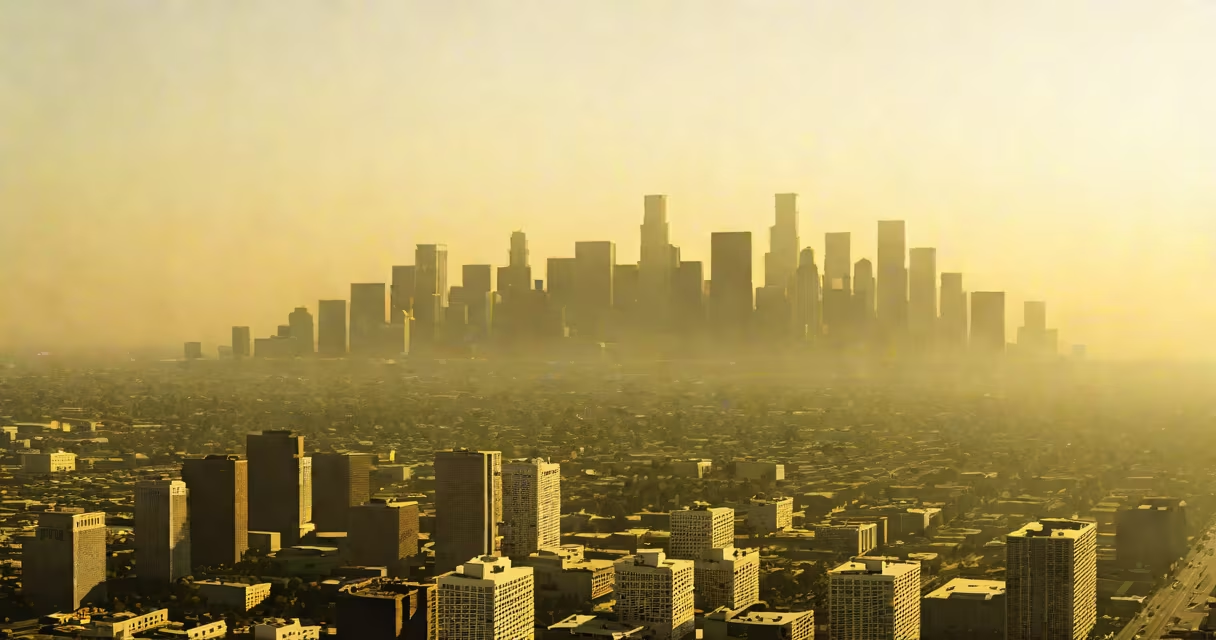
Smog is a visible blend of smoke and fog created when pollutants from vehicles, factories, and power plants react in sunlight. It's not just a weather condition-it's a form of air pollution that harms human health and damages ecosystems.
The term originated in early 20th-century London, where coal burning produced thick, choking fumes. Modern smog, however, is mostly photochemical-formed when nitrogen oxides and volatile organic compounds react under sunlight to create ground-level ozone and fine particulates.
Smog is not a single substance. It's a complex mix of gases and particles that reduces visibility and triggers respiratory problems. The most common types are industrial smog (from coal combustion) and photochemical smog (from vehicle emissions and sunlight).
How Smog Forms
Photochemical smog begins when nitrogen oxides (NOx) from car exhaust and industrial stacks enter the atmosphere. These gases absorb sunlight and break down into reactive oxygen atoms. They then combine with volatile organic compounds (VOCs) from gasoline vapors, solvents, and even trees to form ozone (O₃) at ground level.
Ozone at ground level is harmful. Unlike the protective ozone layer high in the stratosphere, this ground-level ozone irritates lungs, worsens asthma, and damages crops. It also contributes to climate change by absorbing heat near Earth's surface.
A 2021 study by the U.S. Environmental Protection Agency found that over 120 million Americans live in areas where ozone levels exceed safe thresholds set by the Clean Air Act.
Types of Smog and Their Sources
There are two primary types of smog, each with distinct causes and chemical profiles:
| Type | Primary Pollutants | Formation Conditions | Common Locations |
|---|---|---|---|
| Industrial Smog | Sulfur dioxide (SO₂), soot, ash | Cold, damp weather; coal combustion | Historical industrial zones like London (1950s), Beijing (pre-2000s) |
| Photochemical Smog | Ground-level ozone, NOx, VOCs | Hot, sunny days; high traffic density | Los Angeles, Mexico City, Delhi, Houston |
Industrial smog was responsible for the Great Smog of London in 1952, which killed over 12,000 people in five days. That event led to the UK's Clean Air Act of 1956, which banned coal burning in urban areas.
Photochemical smog remains a challenge in megacities. In Los Angeles, smog episodes peak in summer due to intense sunlight and trapped air masses. The city's geography-surrounded by mountains-limits air dispersion, allowing pollutants to accumulate.
Why Smog Is Misunderstood
Many people think smog is just "dirty air." But it's more specific: it's a visible pollutant formed through chemical reactions. Not all haze is smog. Dust storms, fog, and wildfire smoke look similar but lack the reactive chemistry that defines true smog.
Another misconception is that smog only affects outdoor air. Indoor environments can have smog-like conditions when cooking, smoking, or using gas stoves in poorly ventilated spaces. A 2019 study in Environmental Science & Technology found indoor PM2.5 levels in homes with gas stoves were 2.5 times higher than those with electric stoves.
Smog also doesn't disappear at night. While photochemical reactions stop after sunset, pollutants like ozone break down slowly. Nitrogen dioxide (NO₂) levels often rise during morning rush hours, especially in cities with heavy traffic.
Real-World Example: The 2019 Delhi Smog Crisis
In November 2019, Delhi experienced a smog emergency. Visibility dropped below 50 meters, schools closed, and hospitals reported a 40% increase in respiratory cases. The Indian government declared a public health emergency.
Scientists traced the cause to multiple factors: crop stubble burning in Punjab (over 10 million tons burned annually), vehicle emissions (over 10 million registered vehicles in Delhi), and winter temperature inversions that trap pollutants near the ground.
During that period, PM2.5 levels reached 400 micrograms per cubic meter-20 times the World Health Organization's safe limit of 20 μg/m³. For comparison, New York City averages around 10 μg/m³ in clean air.
I witnessed the effects firsthand while visiting Delhi in December 2019. Walking outside felt like breathing through wet gauze. My eyes watered within minutes. Even indoors, the air tasted metallic. The city's air quality index hit 490-off the scale.
Smog vs. Other Air Pollution Terms
Smog is often confused with other terms. Here's how they differ:
- Smog: A visible mixture of pollutants formed by chemical reactions in sunlight.
- Pollution: A broad term covering any contaminant in air, water, or soil.
- Particulate Matter (PM): Tiny solid or liquid particles suspended in air. PM2.5 is especially dangerous because it penetrates deep into lungs.
- Ground-Level Ozone: A key component of photochemical smog. It's not emitted directly but forms in the atmosphere.
Not all pollution creates smog. Soot from wildfires may darken skies but lacks the chemical complexity of smog. Conversely, smog can exist without visible haze-especially in low-light conditions or when pollutants are dispersed.
What You Can Do
Reducing smog requires both policy and personal action. Cities with strict emission controls-like Copenhagen and Tokyo-have lower smog levels. In 2020, Tokyo reduced NOx emissions by 60% since 1990 through vehicle standards and green infrastructure.
On an individual level, avoid driving during peak hours, use public transit, and reduce energy consumption. Switching to electric vehicles cuts NOx and VOC emissions by up to 90% compared to gasoline engines.
When smog alerts are issued, stay indoors, close windows, and use HEPA filters. The U.S. EPA recommends avoiding strenuous outdoor activity when AQI exceeds 100.
Understanding what smog means isn't just academic-it's essential for protecting your health and the planet's. It's not just "bad air." It's a symptom of deeper environmental and industrial choices we've made.