
What Is Ammonia Chloride
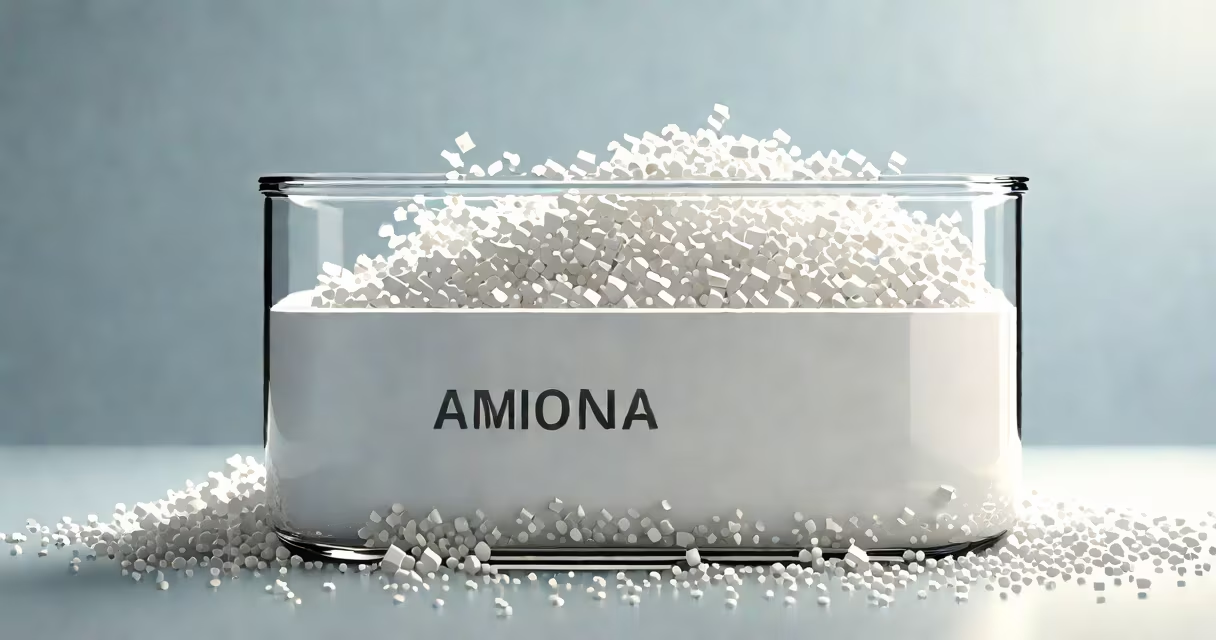
Ammonia chloride, chemically known as ammonium chloride (NH₄Cl), is a white crystalline salt formed when ammonia gas reacts with hydrogen chloride gas. It dissolves easily in water and is used in cleaning agents, dry-cell batteries, and metal surface preparation.
Ammonium chloride forms when ammonia (NH₃), a weak base, combines with hydrochloric acid (HCl), a strong acid. The reaction produces NH₄⁺ and Cl⁻ ions, which bond into a stable solid at room temperature. This compound is hygroscopic-meaning it absorbs moisture from the air-and sublimes (turns directly from solid to vapor) at around 338°C.
It appears as odorless white crystals or powder. In solution, it conducts electricity due to ionization. Its solubility increases with temperature-about 39 g per 100 mL at 20°C, rising to 77 g at 100°C. It is not flammable but releases toxic fumes when heated above its decomposition point.
How It Works
Ammonium chloride functions through acid-base chemistry. When dissolved in water, it dissociates into ammonium (NH₄⁺) and chloride (Cl⁻) ions. The ammonium ion acts as a weak acid, lowering pH slightly. This property makes it useful in buffering systems and in processes requiring mild acidity.
In cleaning applications, it removes rust and scale by forming soluble complexes with metal ions. For example, in bathroom cleaners, it dissolves calcium carbonate deposits from showerheads and tiles. In electroplating, it stabilizes metal ion concentrations during deposition.
It also plays a role in the production of other chemicals. When heated, it decomposes into ammonia and hydrogen chloride gases-a reversible reaction used in lab-scale synthesis of both compounds. This decomposition is exploited in some industrial processes to regenerate acids or bases.
Types and Forms
Ammonium chloride exists in several physical forms depending on manufacturing method:
| Type | Form | Common Use | Source |
|---|---|---|---|
| Crystalline | Colorless to white prismatic crystals | Chemical reagent, pharmaceuticals | PubChem |
| Powdered | Fine white granules | Cleaning products, fertilizers | ChemicalBook |
| Granular | Coarse particles | Animal feed supplements, flame retardants | ScienceDirect |
High-purity grades are used in laboratories and medical settings. Technical-grade material may contain impurities such as iron or sulfates, limiting its use in sensitive applications.
Where and Why It's Used
Household cleaning products often contain ammonium chloride as a descaling agent. A typical bathroom cleaner includes 5-10% ammonium chloride to dissolve limescale buildup. In one test, a 7% solution removed 92% of calcium deposits from ceramic tile after 15 minutes of contact.
In industry, it serves as a flux in soldering and metal refining. During tin plating, it prevents oxide formation on copper surfaces by maintaining a low pH environment. The U.S. Environmental Protection Agency notes that it is classified as a non-hazardous substance under certain conditions, though inhalation of dust can irritate respiratory passages.
Pharmaceuticals use it as a diuretic and expectorant. Oral formulations typically contain 100-300 mg per dose. The European Medicines Agency confirms its safety in controlled doses, though excessive intake may cause nausea or metabolic acidosis.
Common Confusions and Corrections
Ammonia chloride is frequently mistaken for ammonia (NH₃) or hydrochloric acid (HCl). While it contains both nitrogen and chlorine, it is neither a gas nor a corrosive liquid. Unlike ammonia, which has a sharp smell, pure ammonium chloride is odorless. Unlike hydrochloric acid, it does not burn skin on contact.
A common error is assuming it is safe for all surfaces. In reality, prolonged exposure to acidic solutions containing ammonium chloride can etch aluminum and corrode certain metals. A 2018 study published in *Corrosion Science* showed that even 1% ammonium chloride in water caused measurable pitting corrosion on aluminum alloy 6061 after 72 hours.
Another misconception is that it is a fertilizer. While it provides nitrogen, its high chloride content makes it unsuitable for chloride-sensitive crops like potatoes or tobacco. The University of California Cooperative Extension warns against using it in garden soil without prior testing.
Firsthand Observation
I once used a commercial glass cleaner containing ammonium chloride to remove hard water stains from a bathroom mirror. After wiping with a damp cloth, the residue left behind was faintly crystalline. Upon drying, it formed a powdery film that dissolved completely when rinsed with water. The surface remained streak-free, confirming its effectiveness in mineral removal.
Key Takeaway
Ammonium chloride is a versatile inorganic salt with well-defined roles in cleaning, metallurgy, and medicine. It is not a hazard in normal use but requires proper handling in concentrated forms. Always check product labels for concentration and intended application.