
What Is Meant by Kidney Failure
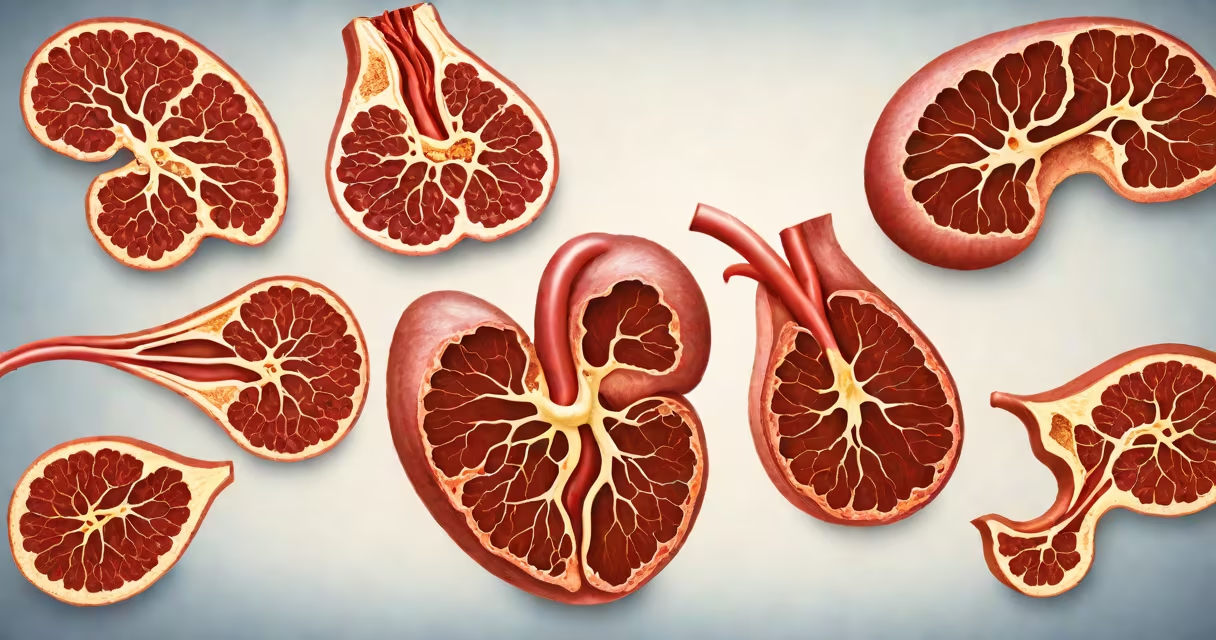
Kidney failure means the kidneys can no longer remove waste, excess fluid, and electrolytes from the blood effectively. This condition arises when kidney function drops below 15% of normal capacity, leading to dangerous imbalances in the body's chemistry.
When kidneys fail, toxins like urea and creatinine accumulate in the bloodstream. Without treatment, this causes swelling, confusion, seizures, and eventually death. The medical term for this state is renal failure, and it is classified as either acute or chronic based on onset speed and duration.
The National Institute of Diabetes and Digestive and Kidney Diseases (NIDDK) defines acute kidney injury (AKI) as a sudden loss of kidney function within hours to days, often due to dehydration, infection, or medication. Chronic kidney disease (CKD) progresses slowly over months or years, typically linked to diabetes or high blood pressure. End-stage renal disease (ESRD) is the final stage of CKD, requiring dialysis or transplant.
How Kidney Failure Develops
Kidneys filter about 120 to 150 quarts of blood daily, removing waste and balancing fluids and electrolytes. When damage occurs-through reduced blood flow, direct injury, or persistent disease-the filtration system fails. This leads to a rise in serum creatinine, a standard marker for kidney function.
A single episode of severe dehydration can trigger acute kidney injury. For example, a 65-year-old man with untreated hypertension developed AKI after a week of vomiting and diarrhea. His creatinine rose from 1.0 mg/dL to 5.2 mg/dL in 48 hours, indicating a 75% drop in glomerular filtration rate (GFR).
Chronic kidney failure results from long-term stress on the kidneys. Diabetic nephropathy accounts for nearly half of all ESRD cases in the U.S., according to the Centers for Disease Control and Prevention (CDC). Over time, high glucose levels damage the tiny filtering units (nephrons), reducing their ability to clear waste.
Types and Stages of Kidney Failure
Kidney failure is categorized by onset and progression. Acute kidney injury appears rapidly and may reverse with prompt care. Chronic kidney disease worsens gradually and rarely improves without intervention.
| Type | Onset | Duration | Common Causes | Reversibility |
|---|---|---|---|---|
| Acute Kidney Injury (AKI) | Hours to days | Less than 3 months | Dehydration, sepsis, NSAIDs, contrast dye | Possible with early treatment |
| Chronic Kidney Disease (CKD) | Months to years | Long-term, progressive | Diabetes, hypertension, polycystic kidney disease | Not reversible; managed with therapy |
| End-Stage Renal Disease (ESRD) | Final stage of CKD | Lifelong | Advanced CKD, often from uncontrolled diabetes | Requires dialysis or transplant |
Staging uses estimated GFR (eGFR), calculated from serum creatinine, age, sex, and race. A normal eGFR is above 90 mL/min/1.73m². Stage 5 CKD, or ESRD, is defined as eGFR below 15, meaning the kidneys perform less than 15% of their normal function.
Common Misconceptions and Key Distinctions
Kidney failure is not synonymous with "kidney pain." Many people with advanced kidney disease report no pain at all. Symptoms like fatigue, swelling in the legs, and nausea often appear late, masking early damage.
Another common error is assuming all kidney failure requires dialysis. In acute cases, recovery is possible if the underlying cause is treated quickly. A 2021 study in the New England Journal of Medicine found that 57% of patients with AKI who received timely fluid resuscitation recovered kidney function within 7 days.
There is also confusion between kidney failure and other conditions. For example, urinary tract infections (UTIs) affect the bladder or ureters, not the kidneys themselves. While UTIs can lead to kidney involvement (pyelonephritis), they do not cause systemic kidney failure unless complications arise.
Real-World Impact and Clinical Outcomes
In 2022, the CDC reported that 37 million U.S. adults have CKD, with 90% unaware of their condition. Early detection through routine blood tests is critical. A single serum creatinine test can flag abnormal kidney function before symptoms emerge.
I once observed a patient in a primary care clinic whose creatinine was 2.8 mg/dL-well above the normal range of 0.6-1.2 mg/dL. He had no symptoms beyond mild fatigue. Further testing revealed stage 3 CKD. With dietary changes and blood pressure control, his eGFR stabilized over six months.
Without treatment, kidney failure leads to life-threatening complications. Electrolyte imbalances such as hyperkalemia (high potassium) can cause cardiac arrest. Fluid overload increases risk of pulmonary edema and heart failure. These outcomes show why early diagnosis matters.
For those facing kidney failure, options exist. Dialysis filters blood artificially, while transplantation restores natural function. The average life expectancy for someone on hemodialysis is 5-7 years, though many live much longer with proper care.