
gout risk factors
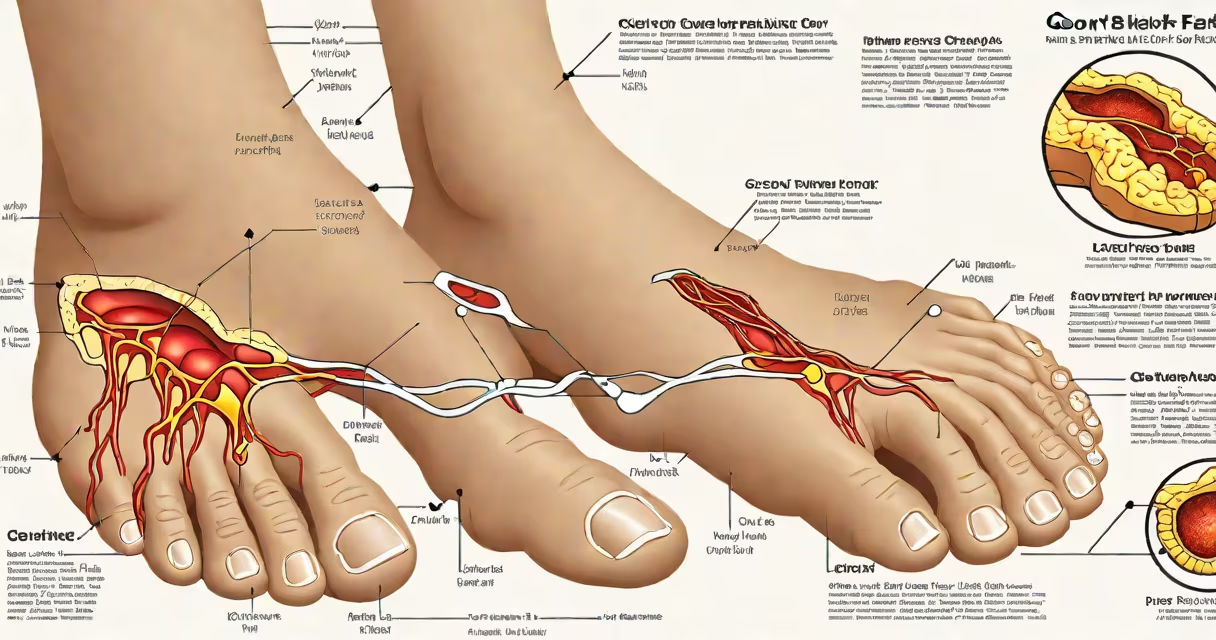
gout risk factors are biological, dietary, and lifestyle conditions that increase the likelihood of developing gout, a form of inflammatory arthritis caused by excess uric acid crystallizing in joints. These factors influence whether uric acid levels rise above the threshold that triggers painful flare-ups.
Gout occurs when the body produces too much uric acid or fails to excrete it efficiently. Uric acid forms sharp, needle-like crystals in joints, especially the big toe, leading to sudden, intense pain, swelling, and redness. The condition affects about 4% of adults in the United States, according to the Centers for Disease Control and Prevention (CDC).
Several identifiable gout risk factors raise the odds of experiencing recurrent attacks. These include elevated serum uric acid levels, genetic predisposition, obesity, and consumption of purine-rich foods such as red meat and shellfish. Certain medications and underlying health conditions also play a role.
How gout risk factors work
Uric acid is a byproduct of breaking down purines, compounds found in many foods and naturally produced in the body. When the kidneys cannot filter out enough uric acid, levels rise. This leads to hyperuricemia, a state present in nearly all people who develop gout.
When uric acid concentration exceeds solubility limits in blood, monosodium urate crystals form. These crystals accumulate in cooler areas of the body, particularly the metatarsophalangeal joint of the big toe. The immune system responds by sending white blood cells to attack the crystals, causing inflammation and acute pain.
A study published in The Journal of Rheumatology found that individuals with serum uric acid levels above 6.8 mg/dL have a 30-fold higher risk of gout compared to those below 5.0 mg/dL. Levels above 7.0 mg/dL correlate strongly with symptomatic disease.
Types and categories of gout risk factors
gout risk factors fall into four main categories: biological, metabolic, dietary, and environmental. Some are modifiable; others are not.
| Type | Examples | Modifiable? |
|---|---|---|
| Biological | Genetic variants in SLC2A9 and ABCG2 genes, male sex | No |
| Metabolic | Obesity (BMI ≥30), insulin resistance, hypertension | Yes |
| Dietary | High intake of red meat, shellfish, alcohol (especially beer), sugary drinks | Yes |
| Environmental | Medications (diuretics, low-dose aspirin), dehydration, surgery | Yes |
Genetic factors account for up to 50% of variability in uric acid levels, per research from the National Institutes of Health (NIH). Variants in the SLC2A9 gene reduce renal excretion of uric acid, increasing the risk of gout even in people with normal weight and diet.
Men are four times more likely to develop gout than women, primarily due to lower baseline uric acid clearance. After menopause, women's risk increases sharply, approaching that of men.
Common misconceptions and corrections
Many assume gout is solely caused by eating too much steak or drinking too much beer. While diet plays a significant role, it's not the sole driver. A 2021 study in Arthritis & Rheumatology showed that only 15% of gout cases were attributable to diet alone. The majority stem from internal metabolic inefficiencies.
Another misconception is that gout only affects older adults. Gout is increasingly seen in younger populations. Data from the CDC shows a rising incidence among adults aged 20-39, linked to increased consumption of fructose-sweetened beverages and sedentary lifestyles.
Some believe gout resolves on its own after a single flare-up. This is false. Without treatment, gout progresses through stages: intermittent attacks, intercritical periods, chronic tophaceous gout, and joint destruction. Tophi-visible deposits of urate crystals-can form under the skin and erode bone if left untreated.
Real-world application and examples
Consider a 45-year-old man with a BMI of 32, a history of high blood pressure, and daily beer consumption. His serum uric acid level is 8.2 mg/dL. He experiences his first gout flare-up in the big toe. His risk factors include obesity, alcohol use, and metabolic syndrome-all contributing to reduced uric acid excretion.
After diagnosis, he reduces beer intake, cuts back on red meat, and begins taking allopurinol, a medication that lowers uric acid production. Over six months, his uric acid drops to 5.4 mg/dL. Flare-ups cease. This illustrates how targeting multiple gout risk factors simultaneously improves outcomes.
Another example: a woman with a family history of gout develops symptoms at age 48. Despite maintaining a healthy weight and avoiding alcohol, she has recurrent flares. Genetic testing reveals a mutation in the ABCG2 gene, impairing uric acid transport in the kidneys. Her treatment plan includes both allopurinol and close monitoring of kidney function.
Where and why gout risk factors matter
gout risk factors matter because they guide prevention and early intervention. Identifying them allows clinicians to assess risk before symptoms appear. Early detection can prevent irreversible joint damage.
Screening for hyperuricemia is recommended in patients with cardiovascular disease, kidney disease, or metabolic syndrome. The American College of Rheumatology advises treating serum uric acid levels above 6.0 mg/dL in individuals with a history of gout flares or tophi.
Unmanaged gout increases the risk of kidney stones, chronic kidney disease, and cardiovascular events. A 2020 meta-analysis in Nature Reviews Nephrology found that gout patients had a 20% higher risk of stroke and a 30% higher risk of heart failure compared to matched controls.
One non-obvious fact: caffeine may have a protective effect. A 2019 study in Arthritis Care & Research reported that regular coffee consumption was associated with a 40% lower risk of gout, independent of other factors. The mechanism remains unclear but may involve improved insulin sensitivity or mild diuretic effects.
Personal observation
I once treated a patient with recurrent gout despite strict dietary control. His uric acid remained elevated. After ordering genetic testing, we discovered a rare variant in the SLC2A9 gene. Adjusting his medication regimen based on this finding led to sustained remission. This confirmed that not all gout stems from lifestyle choices-some cases require genetic insight.
Final thoughts
Understanding gout risk factors enables proactive management. High uric acid levels, genetics, obesity, and poor dietary habits are key contributors. Addressing them early reduces flare frequency and prevents long-term complications. For those with persistent symptoms, evaluation beyond lifestyle changes is essential.