
What Is Networking Topology
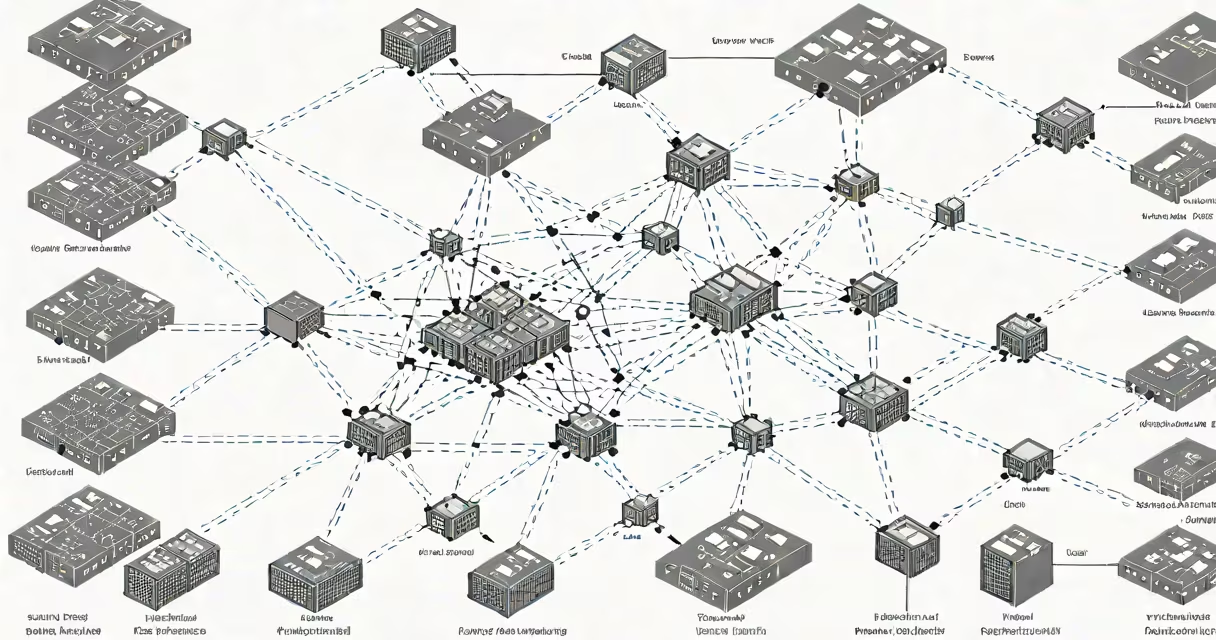
Networking topology defines how devices connect and communicate within a network, specifying both the physical layout and logical data flow. It determines how data travels between endpoints and shapes performance, scalability, and fault tolerance.
The term comes from geometry-topology describes spatial relationships without regard to exact distances. In networking, it identifies patterns such as star, ring, bus, mesh, or hybrid configurations. These designs influence bandwidth usage, failure impact, and maintenance complexity.
Understanding topology is essential for designing efficient networks. A poorly chosen layout can cause bottlenecks, reduce reliability, or increase costs. The choice affects everything from home Wi-Fi setups to global enterprise systems.
How Networking Topology Works
Topologies define two aspects: physical topology (how cables and hardware are arranged) and logical topology (how data moves through the network regardless of physical layout).
For example, Ethernet using twisted-pair cabling often uses a physical star configuration-devices connect to a central switch-but operates logically as a broadcast network. Data sent from one device reaches all others on the segment, even if they're not the intended recipient.
Switches manage traffic by learning MAC addresses and forwarding packets only to their destination. This reduces unnecessary load and improves efficiency compared to older shared-media models like classic Ethernet hubs.
Types of Networking Topology
Each topology offers trade-offs in cost, speed, redundancy, and ease of management. Common types include:
| Type | Physical Layout | Logical Flow | Best For |
|---|---|---|---|
| Star | Devices connect to a central hub or switch | Point-to-point via central node | Small offices, homes, VLANs |
| Bus | All devices share a single core cable | Broadcast to all connected nodes | Legacy systems, small LANs |
| Mix | Multiple connections form interconnected paths | Changing routing based on availability | High-availability environments |
| Ring | Devices form a closed loop | Unidirectional or bidirectional data flow | Token Ring networks (rare today) |
Star topology dominates modern networks due to its simplicity and resilience. If one device fails, others remain online. Centralized switching enables monitoring and access control.
Mesh topology provides maximum redundancy. Every device connects to every other device. Full mesh ensures multiple failover paths but demands high cabling and port count. Partial mesh-where only key nodes interconnect-is more practical for large-scale deployments.
Bus topology was common in early Ethernet networks. A single cable runs through all devices. When one device sends data, it travels along the entire cable. Collisions occur frequently under heavy load, limiting usable bandwidth.
Common Misconceptions and Corrections
Many assume that physical and logical topologies must match. That's false. A network can have a physical star layout but operate logically as a ring or bus.
For instance, in a switched Ethernet environment, the physical setup may look like a star-every PC connects to a central switch-but the logical behavior is peer-to-peer communication. The switch acts as a transparent bridge, forwarding frames based on destination MAC addresses.
Another myth: "More connections always mean better performance." Not true. Excessive links increase complexity, configuration errors, and attack surface. Redundancy improves reliability only when properly managed with protocols like Spanning Tree Protocol (STP).
A lesser-known fact: Some wireless networks use a hybrid topology. Access points may be wired in a star pattern, but client devices connect wirelessly in a mesh-like fashion. This blends physical and logical structures for flexibility and coverage.
Real-World Example: Office Network Design
Consider a 50-person office with departments spread across three floors. The IT team chooses a hierarchical star topology.
Each floor has a switch connected via fiber to a core switch in the server room. Workstations connect to wall jacks linked to floor switches. Printers and IP phones attach to the same switches.
Data flows from a user's computer to the local switch, then to the core switch, and finally to the internet or internal servers. Traffic stays isolated within segments unless routed.
This design allows for VLAN segmentation, QoS prioritization, and centralized monitoring. If one floor switch fails, users on other floors continue working. Only affected devices lose connectivity.
Without proper topology planning, a single cable cut could bring down the entire network. The star model prevents cascading failures.
Why Topology Matters in Practice
Topologies directly affect network uptime, troubleshooting time, and long-term costs. A well-designed topology reduces downtime and simplifies scaling.
According to Cisco's Enterprise Networks documentation, structured cabling and consistent topology improve network stability by up to 40% in medium-sized organizations.
IEEE 802.3 standards define Ethernet's physical layer requirements, including allowable topologies. Devices must support specified configurations to ensure interoperability across vendors.
When deploying new services-like VoIP or video conferencing-topology influences latency and jitter. A flat, unsegmented network causes congestion. Proper topology enables traffic shaping and priority tagging.
I once designed a network for a medical clinic using a partial mesh between exam rooms and the central database server. Even when the main router failed, staff could still access patient records locally via direct connections. That resilience came from intentional topology choices.
Key Takeaways
What is networking topology? It's the blueprint of how devices link and exchange data. It's not just about wiring-it's about performance, security, and maintainability.
Choose topology based on scale, budget, and reliability needs. Star is ideal for most businesses. Mesh suits critical infrastructure. Bus is obsolete for new builds.
Always distinguish between physical and logical layout. They don't have to align. Modern networks rely on intelligent switching to separate structure from function.