
What Is the Meaning of Computer
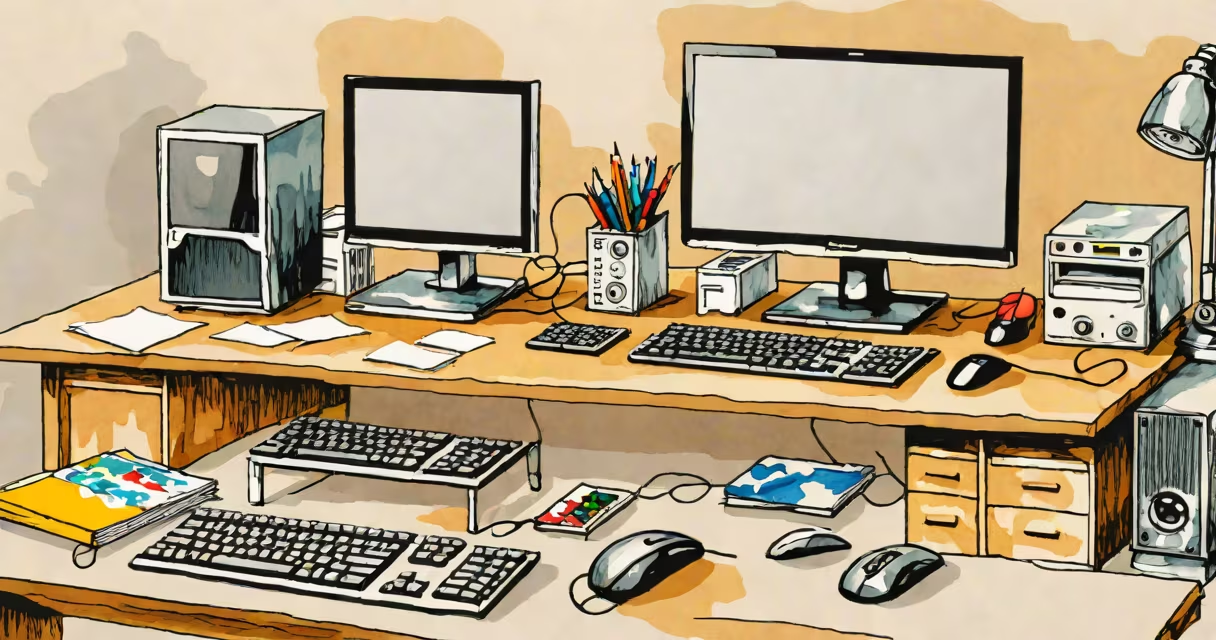
A computer is a programmable electronic device that processes data according to instructions stored in memory. It takes input, performs calculations or logical operations, and produces output. The term "computer" refers to both the physical machine and the system of components that enable automated problem-solving.
Computers execute tasks by interpreting binary code-sequences of 0s and 1s-through a central processing unit (CPU). This core function defines their purpose: to automate decision-making based on predefined rules. Modern computers range from handheld devices to supercomputers used in scientific research.
The meaning of computer extends beyond hardware. It includes software, user interfaces, networks, and data storage systems. A single device may serve as a personal workstation, a server, or part of a distributed network. Its function depends on configuration and programming.
How Computers Work
At its foundation, a computer operates through a cycle: input → processing → output → storage. When you type a letter on a keyboard, the input is converted into electrical signals. These signals travel to the CPU, which interprets them as commands. The CPU accesses memory to retrieve data, performs arithmetic or logic operations, and sends results to a display or file system.
For example, when you open a spreadsheet and enter "=SUM(A1:A10)" in a cell, the computer reads the formula, retrieves values from cells A1 through A10, adds them together, and displays the result. This process happens in milliseconds due to high-speed circuitry and optimized instruction sets.
Modern CPUs contain billions of transistors arranged in complex circuits. Each transistor acts as a switch that turns current on or off, representing binary states. The arrangement allows the CPU to perform millions of operations per second. Without this precision, even basic tasks like rendering text would take minutes.
Types of Computers and Their Functions
Computers vary widely in size, speed, and intended use. They fall into categories based on scale and application:
| Type | Use Case | Examples | Processing Power |
|---|---|---|---|
| Personal Computer | General-purpose tasks | Desktops, laptops | Low to medium |
| Server | Data hosting and network services | Web servers, database machines | Medium to high |
| Supercomputer | Scientific simulation and large-scale modeling | Frontier (ORNL), Fugaku (Japan) | Extremely high |
| Embedded System | Dedicated control functions | Car engine controllers, smart thermostats | Low |
Each type uses specialized hardware and software. Servers run operating systems like Linux or Windows Server to manage multiple users and secure data. Supercomputers rely on parallel processing across thousands of processors to solve equations in climate modeling or nuclear physics.
Embedded systems often go unnoticed. A washing machine's control board is a computer. It reads sensor inputs, runs a program to determine wash time and temperature, and activates motors and valves. Though limited in interface, it follows the same principles as a desktop PC.
Common Misconceptions About the Meaning of Computer
Many people equate "computer" with a desktop or laptop. But the term applies to any device capable of executing programmed instructions. A smartphone is a computer. So is a smartwatch, a traffic light controller, or a drone.
Another misconception is that computers think. They do not. They follow rules. A computer cannot understand the word "cat" unless it has been taught through code or data. It recognizes patterns based on training, not comprehension. This distinction matters in AI debates.
Even experts sometimes confuse "computer" with "software." Software is the set of instructions that tell a computer what to do. Hardware is the physical parts. A computer without software is inert. A program without a computer cannot run. Both are necessary.
Real-World Example: How a Computer Processes a Search Query
When you type "best restaurants in Chicago" into a search engine, your device sends the request to a network of computers. Here's how it unfolds:
- Input: You type the query. The keyboard registers keystrokes as digital signals.
- Transmission: Your device sends the data via Wi-Fi or cellular connection to a router, then to the internet.
- Processing: A server at Google or Bing receives the request. It parses the words, checks a database of indexed websites, ranks results by relevance using algorithms.
- Output: The top 10 results appear on your screen within 0.3 seconds.
- Storage: Your search history may be saved to a cloud database for future reference.
This entire sequence relies on interconnected computers. The original device, the router, the web server, and the database server-all are computers. Each performs a specific task in the chain.
According to the National Institute of Standards and Technology (NIST), a computer must have five essential components: input, output, processing, memory, and control. This structure remains valid since the 1940s and underpins all modern systems.
Why the Meaning of Computer Matters Today
Understanding the meaning of computer is critical in education, employment, and daily life. It enables informed decisions about privacy, security, and technology adoption. For instance, knowing that a computer stores data digitally helps explain why encryption is important.
I once built a simple calculator using an Arduino microcontroller. It took 24 hours to write the code, test inputs, and debug logic errors. The device responded instantly to button presses-calculating sums and displaying results. That experience confirmed that even a small embedded system embodies the full definition of a computer.
As artificial intelligence becomes widespread, distinguishing between human cognition and machine behavior grows urgent. A chatbot trained on millions of texts can mimic conversation but lacks intent or awareness. It processes language statistically, not semantically.
The meaning of computer is not static. It evolved from mechanical calculators to quantum prototypes. Yet its core remains unchanged: a tool for transforming data through logic. Whether in a pocket-sized phone or a data center, the principle holds.