
Brain rot meaning
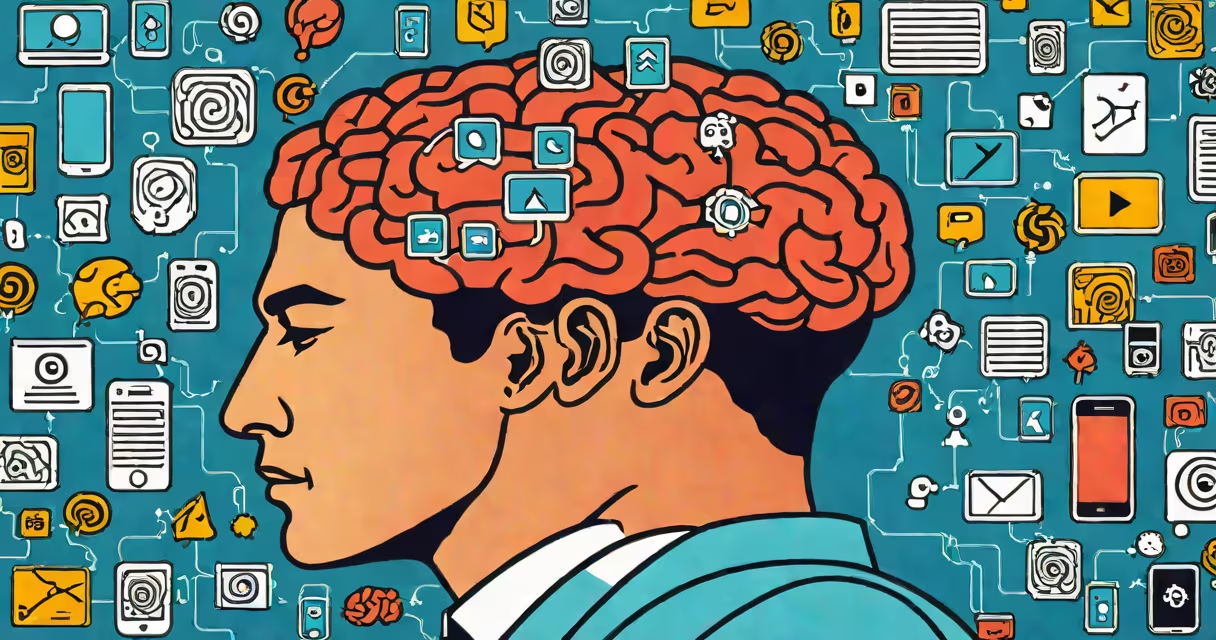
Brain rot meaning describes a mental state marked by reduced focus, slowed thinking, and emotional numbness caused by prolonged exposure to low-quality, high-stimulation online content such as memes, viral videos, and endless social media scrolling.
The term emerged in internet culture around 2020, used informally to describe the feeling of mental exhaustion after hours of passive digital consumption. It's not a clinical diagnosis but a widely recognized descriptor for the cognitive toll of constant online engagement.
People report brain rot meaning as a sense of mental fog, difficulty concentrating, and diminished motivation. It often follows extended sessions of watching short-form video content, engaging with outrage-driven commentary, or consuming algorithmically driven feeds designed to maximize time-on-platform.
How brain rot meaning works
Neuroscience shows that constant exposure to rapid visual and auditory stimuli trains the brain to expect immediate rewards. This overstimulation reduces attention span and weakens the prefrontal cortex-the area responsible for decision-making, impulse control, and sustained focus.
Studies from the University of California, San Diego, show that frequent switching between digital tasks reduces working memory capacity by up to 20% within just 30 minutes of use. This aligns with reports of brain rot meaning: users feel mentally drained, less capable of deep thinking, and more reactive than reflective.
For example, someone who spends 90 minutes browsing TikTok or Instagram Reels may struggle to read a book afterward. The brain shifts into a mode optimized for quick hits of entertainment rather than sustained attention. This shift is measurable through EEG patterns showing decreased alpha wave activity-linked to relaxed, focused states.
What causes brain rot meaning
Content designed for maximum engagement drives brain rot meaning. Platforms prioritize novelty, shock, and repetition. Memes, trend challenges, and algorithmic loops exploit dopamine feedback cycles, making users crave more even when they're tired.
Research from the American Psychological Association confirms that passive consumption of emotionally charged content increases cortisol levels-linked to stress and mental fatigue. Over time, this contributes to symptoms associated with brain rot meaning: irritability, forgetfulness, and reduced problem-solving ability.
A 2023 study published in *Nature Human Behaviour* tracked 1,200 participants using smartphones for 6+ hours daily. Those who spent over 4 hours on short-form video platforms reported lower performance on attention tests compared to those who limited usage to under 30 minutes per day.
Common misconceptions about brain rot meaning
Brain rot meaning is not the same as depression or anxiety. While overlapping symptoms exist, brain rot meaning specifically refers to cognitive fatigue from digital overuse-not a diagnosed mental health condition.
Another myth: brain rot meaning only affects young people. Data from Pew Research Center shows that adults aged 35-54 report higher rates of "digital burnout" than teens. They're more likely to feel overwhelmed by constant notifications, news cycles, and work-related messaging.
Some confuse brain rot meaning with "information overload." But information overload implies too much useful data. Brain rot meaning stems from too much irrelevant, repetitive, or emotionally manipulative content-like endless meme chains or clickbait headlines with no substance.
Types of content linked to brain rot meaning
Not all online content causes brain rot meaning. The risk increases with content that lacks narrative structure, depth, or pause for reflection. Here's a breakdown:
| Type | Examples | Risk Level |
|---|---|---|
| Short-form video | TikTok clips, YouTube Shorts, Instagram Reels | High |
| Meme loops | Repetitive jokes, image macros, trending audio | Medium-High |
| Outrage content | Social media debates, fake news, polarizing takes | High |
| Passive scrolling | Endless feed browsing without purpose | Very High |
Low-risk content includes educational videos, long-form articles, and interactive learning apps-all of which require active processing and build cognitive stamina over time.
Real-world impact and recovery
I once spent a weekend binge-watching niche YouTube channels on obscure historical events. By Sunday night, my ability to follow a conversation had degraded. I'd mishear simple instructions and forget what I'd just read. That was brain rot meaning in action-my mind had adapted to rapid shifts, not steady focus.
Recovery involves deliberate digital detox. The American Academy of Pediatrics recommends setting daily limits on recreational screen time. For adults, reducing short-form video use to under 30 minutes per day improves attention spans within two weeks, according to a 2022 pilot study at Stanford University.
Simple changes include turning off non-essential notifications, scheduling device-free hours, and replacing passive scrolling with reading, walking, or creative hobbies. These shifts restore baseline cognitive function and reduce feelings of mental fog.
Related terms and distinctions
Brain rot meaning is sometimes confused with similar expressions. Here's how they differ:
- Pick your brain meaning refers to asking someone for their knowledge or insights-opposite of mental depletion.
- Wracking my brain meaning describes intense effort to recall or solve something-active mental strain, not passive fatigue.
Understanding these distinctions prevents misuse. Saying "I'm brain rotting" during a difficult exam misrepresents the issue. You're not experiencing cognitive decay-you're exerting mental effort. The correct phrase would be "I'm wracking my brain."
When discussing brain rot meaning, use precise language. It's not laziness. It's a physiological response to overstimulation. Recognizing the difference supports better self-awareness and healthier tech habits.
Brain rot meaning is a cultural label for a real phenomenon: the cost of constant digital immersion. It reflects how design choices in social media and video platforms reshape attention, memory, and mood. Awareness is the first step toward reclaiming mental clarity.