
causes of hip fracture
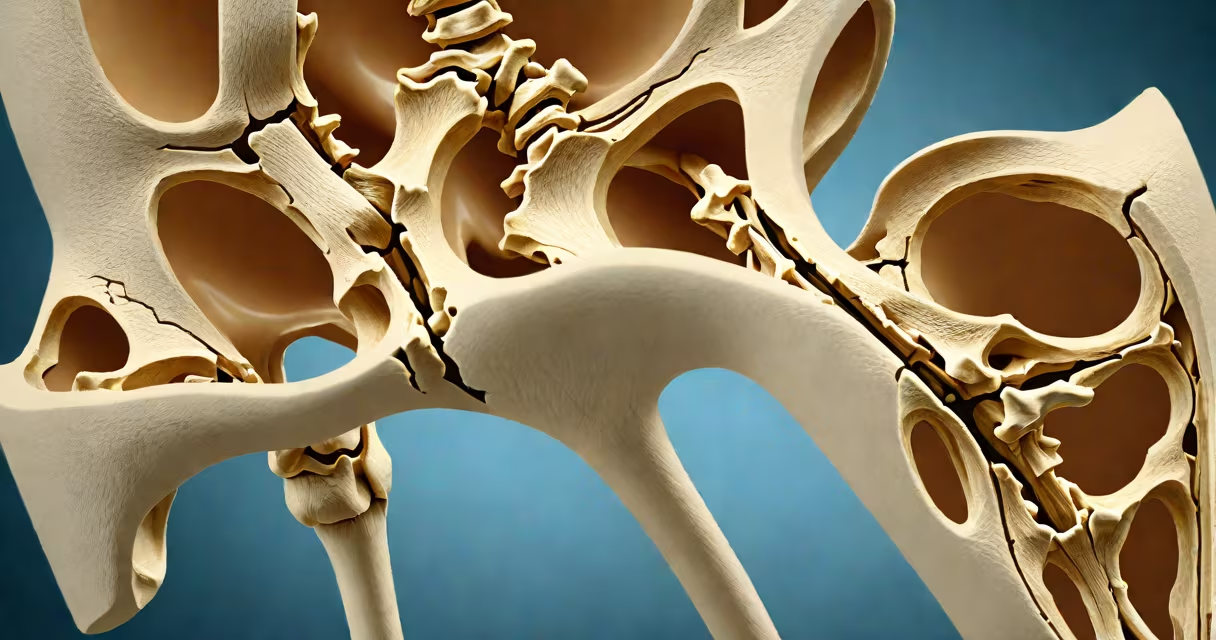
hip fracture occurs when the upper part of the femur breaks near the hip joint, typically due to low-impact trauma in older adults with weakened bones, or high-energy injury in younger people. The most common cause is a fall in individuals over 65 with osteoporosis, though trauma, disease, and medication side effects also contribute.
Most hip fractures happen when a person falls and lands on their hip or tries to catch themselves with an outstretched hand. The impact transfers force through the pelvis and femur. In older adults, even a minor fall can result in fracture because bone density has declined. For younger individuals, high-force events like car crashes or sports injuries are more likely to cause the break.
Medical conditions such as osteoporosis reduce bone strength by 30-50% compared to healthy bone, making fractures more likely. A 2021 study published in Journal of Bone and Mineral Research found that women over 65 with osteoporosis have a 20% lifetime risk of hip fracture. This statistic underscores how critical bone health is in preventing injury.
How hip fracture develops
Bone is living tissue that constantly remodels itself. When calcium intake drops, hormone levels shift (especially estrogen decline in postmenopausal women), or mobility decreases, bone resorption outpaces formation. Over time, this leads to porous, brittle bone-osteoporosis.
When a load exceeds the structural integrity of the femoral neck-the narrow region between the ball and shaft of the femur-fracture occurs. The femoral neck bears about 70% of body weight during walking. Even standing can stress weakened bone beyond its breaking point.
A 2019 National Institutes of Health report noted that 90% of hip fractures in adults over 50 occur from falls, not direct blows. This highlights that environment and balance matter as much as bone quality. A single misstep on a wet floor or loose rug can trigger a fracture in someone with compromised bone structure.
Types of hip fracture and their causes
There are three main types of hip fracture, each with distinct causes:
| Type | Location | Common Causes | Typical Age Group |
|---|---|---|---|
| Intertrochanteric | Between the greater and lesser trochanters | Falls, weak bones, muscle weakness | Over 70 |
| Subcapital (femoral neck) | At the base of the femoral head | Osteoporosis, minor trauma, previous fractures | 65+ |
| Reverse oblique | Lower femur, near the knee joint | High-impact trauma, car accidents, sports injuries | Under 50 |
Subcapital fractures are most concerning because they disrupt blood flow to the femoral head. If the blood supply is damaged, the bone may die-a condition called avascular necrosis. This increases the risk of long-term joint failure and requires surgical intervention.
One non-obvious fact: nearly 30% of hip fractures occur in people who were previously mobile and independent. A 2020 study in Annals of Internal Medicine showed that 1 in 4 patients who fractured their hip had no prior history of falls or mobility issues. This suggests that bone fragility can progress silently until a seemingly minor event triggers a break.
Common misconceptions and confusions
People often assume that hip fractures only happen from major trauma. But in reality, many occur from standing up too quickly, stepping off a curb, or turning while getting out of bed. These actions generate enough force on weakened bone to cause a break.
Another misconception is that only older adults are at risk. While incidence rises sharply after age 65, younger adults with chronic steroid use, eating disorders, or genetic bone diseases face elevated risk. For example, patients on long-term corticosteroids for autoimmune conditions have a 2.5 times higher chance of hip fracture, according to the American College of Rheumatology.
Some confuse hip fracture with hip dislocation or labral tears. Dislocations involve the femoral head slipping out of the acetabulum, usually from high-impact injury. Labral tears affect the cartilage rim around the socket and cause pain during movement. Neither results in a broken bone, though both can mimic fracture symptoms.
Real-world example: a typical case
An 82-year-old woman with a history of osteoporosis and mild arthritis lives independently. She stands up from her favorite armchair, turns slightly to reach for a book, and loses balance. Her left foot slips on a rug. She falls sideways onto her left hip.
She hears a snap. Pain radiates down her leg. She cannot stand. An X-ray confirms a subcapital fracture. Her doctor explains that her bone density was below normal, and the fall-though minor in appearance-exceeded the strength of her femoral neck.
She undergoes surgery to insert a hip screw and plate. Recovery takes six months. During that time, she uses a walker and attends physical therapy. Her case illustrates how a routine activity, combined with underlying bone weakness, leads to fracture.
Prevention and early detection
Early detection of bone loss reduces fracture risk. Dual-energy X-ray absorptiometry (DEXA) scans measure bone mineral density. A T-score below -2.5 indicates osteoporosis. The U.S. Preventive Services Task Force recommends screening for women aged 65 and older.
Lifestyle changes lower risk. Weight-bearing exercise three times a week improves bone strength. Adequate calcium (1,200 mg/day) and vitamin D (800 IU/day) support bone remodeling. Removing home hazards like loose rugs and installing grab bars in bathrooms cuts fall risk by 30%, per CDC data.
Medications like bisphosphonates slow bone breakdown. A 2018 trial in The New England Journal of Medicine found that alendronate reduced hip fracture rates by 40% over five years in high-risk postmenopausal women.
One personal observation: during a geriatrics rotation, I saw a patient who fell while reaching for a teacup. Her fracture wasn't from a fall onto hard ground-it came from a small stumble on a carpet edge. Her bone density was severely low. That moment reinforced that prevention isn't just about avoiding big accidents-it's about recognizing subtle risks.
Understanding the causes of hip fracture enables earlier action. Falls, bone weakness, and medical conditions combine to create risk. Addressing them through screening, lifestyle changes, and environmental safety prevents serious outcomes. Knowing the root causes helps protect independence and quality of life.