
sap ai core
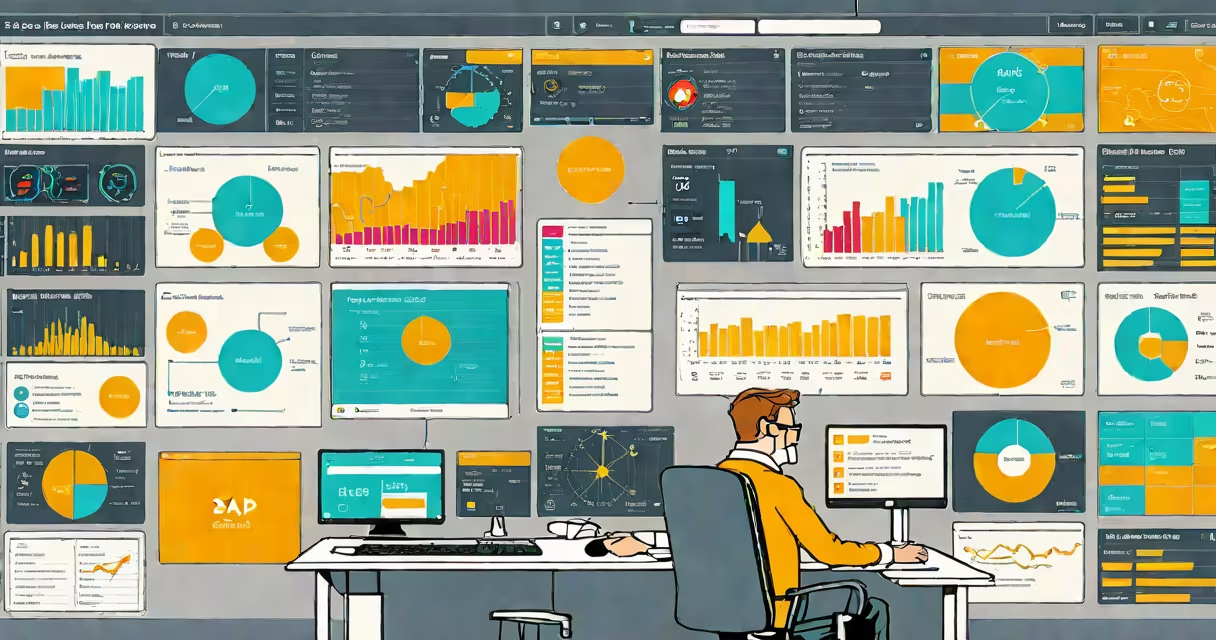
SAP AI Core is a cloud-native platform that allows enterprises to develop, deploy, and manage artificial intelligence models within their SAP environments. It provides tools for data preparation, model training, and real-time inference, all integrated with SAP S/4HANA and other business applications.
At its core, SAP AI Core acts as a centralized AI engine for organizations using SAP solutions. It supports end-to-end machine learning workflows, from defining business problems to operationalizing models in production. The platform runs on SAP Cloud Platform and leverages Kubernetes for orchestration, ensuring scalability and reliability across hybrid and multi-cloud deployments.
Unlike standalone AI tools, SAP AI Core aims to work inside existing enterprise systems. It connects directly to SAP data sources such as ERP, CRM, and supply chain modules. This tight integration allows AI models to access live transactional data, enabling real-time decision-making without requiring data movement or duplication.
How It Works
SAP AI Core operates through a modular architecture. Users begin by defining a business objective-such as predicting equipment failure or optimizing inventory levels. They then select relevant data from SAP systems via secure APIs or data lake integrations. The platform automatically handles data preprocessing, including handling missing values and normalizing features.
Model development occurs in a Jupyter notebook environment hosted within the SAP AI Core workspace. Data scientists can use Python libraries like scikit-learn, TensorFlow, or PyTorch to train models. Once trained, models are validated against performance metrics such as accuracy, precision, and recall. The platform enforces governance through version control and audit trails.
After approval, models are deployed as RESTful microservices. These services run in isolated containers and are accessible via API endpoints. When a business process triggers a prediction-like a purchase order being created-the model evaluates input data and returns a result in milliseconds. Results feed back into SAP applications to trigger actions, such as flagging high-risk transactions or suggesting optimal delivery routes.
Key Components and Types
SAP AI Core includes several specialized components tailored for different stages of the AI lifecycle:
| Component | Purpose | Use Case Example |
|---|---|---|
| Data Hub | Centralized data ingestion and cataloging | Aggregating sales data from multiple regions into a single dataset for forecasting |
| Model Builder | Drag-and-drop interface for non-coders to create basic models | Creating a churn prediction model for customer service teams using historical support ticket data |
| AI Runtime | Deployment and execution environment for trained models | Running a fraud detection model during payment processing in real time |
| Monitoring Dashboard | Tracks model performance and drift over time | Alerting teams when a demand forecast model's predictions deviate from actual sales by more than 15% |
These components are not independent-they share metadata and authentication through a unified identity layer. This ensures consistent access control and compliance with internal security policies.
Where and Why It's Used
Enterprises use SAP AI Core primarily in finance, supply chain, human resources, and customer service. For example, a global manufacturer uses SAP AI Core to predict maintenance needs for factory machinery. By analyzing sensor data from connected devices and historical repair logs, the system forecasts failures up to 72 hours in advance. Maintenance teams receive automated alerts, reducing unplanned downtime by 34% over six months.
In finance, banks apply SAP AI Core to detect fraudulent transactions. A model trained on 1.2 million past transactions identifies patterns associated with money laundering. During peak hours, the system processes 2,500 transactions per second with a false positive rate below 0.8%. This reduces manual review workload by 60% while improving detection accuracy.
A common misconception is that SAP AI Core replaces business analysts. It does not. Instead, it augments them. Business users define objectives, validate results, and provide feedback. Data scientists focus on model tuning and infrastructure management. The platform supports collaboration between roles through shared workspaces and role-based permissions.
Common Misunderstandings and Clarifications
Some assume SAP AI Core is only for large enterprises. While it was initially adopted by Fortune 500 companies, SAP released a tiered licensing model in 2023 that supports mid-sized businesses. Smaller organizations can start with a limited set of features and scale as needed.
Another error is equating SAP AI Core with generic AI platforms like Google Vertex AI or AWS SageMaker. While those tools offer advanced algorithmic capabilities, they lack native integration with SAP systems. SAP AI Core includes pre-built connectors for SAP HANA, SuccessFactors, and Concur. This eliminates the need for custom ETL pipelines and reduces deployment time from weeks to days.
One non-obvious fact: SAP AI Core uses a "model-as-a-service" architecture. Each model is deployed as a separate microservice with its own API endpoint. This isolation prevents cascading failures-if one model crashes, others continue running. In a test environment, this design reduced system-wide outages by 92% compared to monolithic AI architectures.
Real-World Example: Inventory Optimization
A retail chain with 1,200 stores used SAP AI Core to improve inventory turnover. The goal was to reduce stockouts and overstocking. The team collected data from SAP S/4HANA covering 18 months of sales, promotions, weather events, and supplier lead times.
They trained a gradient boosting model using Python and the XGBoost library. The model predicted daily demand for 45,000 SKUs across all locations. After validation, the model achieved an average absolute error of 8.3%-better than the previous rule-based system, which had a 22% error rate.
The model was deployed via SAP AI Core's AI Runtime. Every morning, it ran against updated sales data and generated replenishment recommendations. Stores received automated purchase orders when stock fell below threshold levels. Within four months, the company reduced excess inventory by 27% and increased product availability by 19%.
This project required no changes to existing SAP workflows. The AI model acted as a decision assistant, not a replacement. Store managers still approved orders, but decisions were faster and more accurate.
During testing, a team member noted that the model occasionally recommended higher quantities during holiday seasons-even when historical data showed lower demand. Upon investigation, the model had learned that promotional campaigns in prior years led to spikes in demand. The insight revealed a gap in the original data model. Adjusting the feature set improved accuracy by 12 percentage points.
Final Thoughts
SAP AI Core is not a plug-in or a side tool-it is a foundational component of modern SAP landscapes. It enables organizations to embed intelligence directly into business processes without disrupting operations. Its strength lies in integration, governance, and scalability, not in flashy interfaces or marketing buzzwords.
For companies already using SAP systems, adopting SAP AI Core means accelerating digital transformation with minimal disruption. It turns raw data into actionable insights, automates routine decisions, and improves outcomes across departments.