
What Are International Baccalaureate Courses
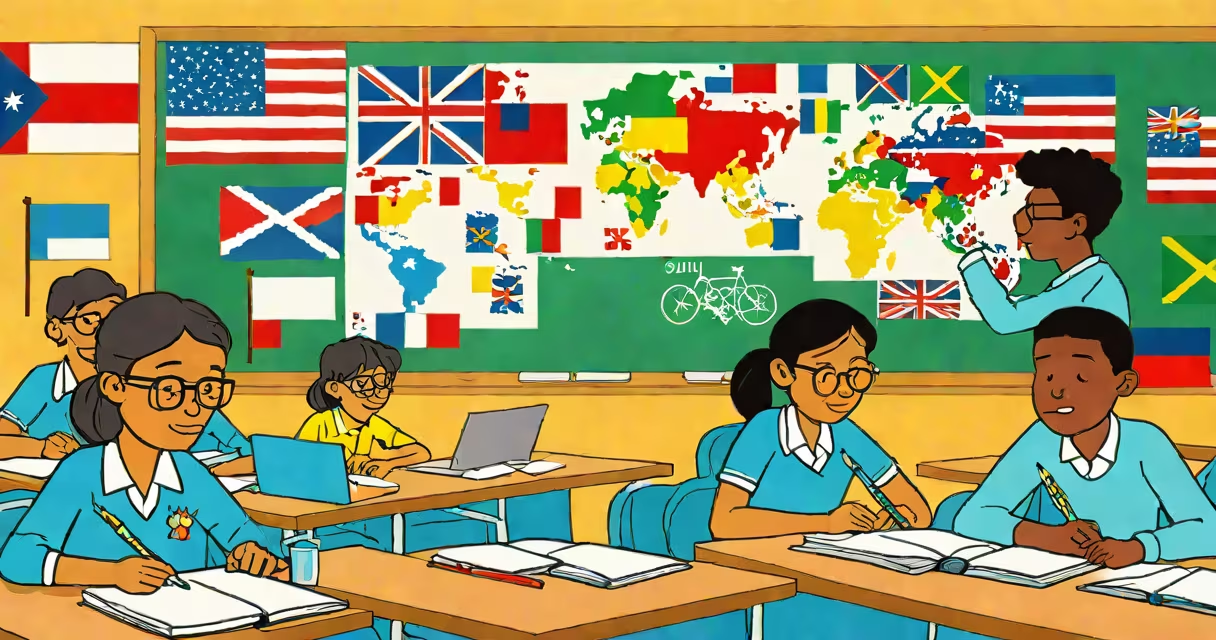
International Baccalaureate courses are a set of university-preparatory programs developed by the International Baccalaureate Organization (IBO) that emphasize critical thinking, interdisciplinary learning, and global awareness. Offered to students aged 11 to 19, these courses follow a standardized curriculum across 150 countries and are designed to meet the academic demands of higher education worldwide.
The IB program consists of three main components: the Primary Years Programme (PYP) for ages 3-12, the Middle Years Programme (MYP) for ages 11-16, and the Diploma Programme (DP) for ages 16-19. The DP is the most widely recognized form of IB education and includes six subject groups, a theory of knowledge course, a research paper, and community service hours. Students take exams at the end of their final year, and scores are reported on a scale of 1 to 7, with 4 being a passing score.
According to the IBO, over 5,000 schools in 159 countries offer IB programs, and more than 1.5 million students have participated since the program's inception in 1968. The curriculum is reviewed every five years to maintain alignment with global educational standards and evolving academic needs.
How International Baccalaureate Courses Work
Each IB course follows a structured structure centered on inquiry, critical analysis, and real-world application. Teachers receive specialized training to deliver content aligned with the IB's philosophy of complete development. Assessment is continuous and includes internal assessments (teacher-marked work submitted to the IBO) and external examinations administered under strict conditions.
For example, in an IB Biology course, students complete lab experiments, write scientific reports, and sit for written exams covering topics like cellular respiration and genetic variation. Internal assessments account for 20-30% of the final grade, depending on the subject. External exams are held twice yearly-May and November-and are marked by trained international examiners.
A key feature is the emphasis on process over memorization. A student studying IB History might analyze primary sources such as wartime speeches or diplomatic correspondence, then construct arguments supported by evidence. This method builds analytical skills valued in university admissions and professional settings alike.
Types of International Baccalaureate Programs
The IB offers four distinct educational pathways tailored to different age groups and learning goals:
| Program | Age Range | Key Features | Outcome |
|---|---|---|---|
| Primary Years Programme (PYP) | 3-12 | Thematic, inquiry-based learning; focus on social-emotional development | Foundation for lifelong learning |
| Middle Years Programme (MYP) | 11-16 | Interdisciplinary units; personal project in Year 5 | Prepares for the Diploma Programme |
| Diploma Programme (DP) | 16-19 | Six subjects (one from each group), Theory of Knowledge, Extended Essay, Creativity, Activity, Service (CAS) | IB Diploma; accepted by universities worldwide |
| Career-related Programme (CP) | 16-19 | Combines IB courses with vocational qualifications; includes professional internships | Pathway to employment or further technical study |
While the DP is the most academically rigorous and widely recognized, the CP is gaining traction among students seeking applied learning paths. For instance, a student in the CP might take IB Business Management alongside a nationally accredited IT certification, completing a workplace internship during their studies.
Why Schools and Students Choose IB Courses
Universities in the United States, Canada, the UK, Australia, and Europe often give preference to IB Diploma holders. A 2022 report by the University of California system found that IB graduates were 22% more likely to enroll in selective institutions compared to non-IB peers. This advantage stems from the program's emphasis on independent research, time management, and complex problem-solving.
Students in IB courses consistently perform well on standardized tests. Data from the College Board shows that IB DP students average 110 points higher on the SAT than non-IB peers in the same demographic. This performance gap reflects the program's focus on deep understanding rather than test-taking strategies.
One common misconception is that IB courses are only for elite private schools. While many IB schools are private, public schools in districts like New York City, Los Angeles, and Toronto also offer the program. In 2023, over 1,200 public schools in the U.S. had IB authorization, including schools serving low-income communities. These schools often report higher graduation rates and increased college enrollment among IB participants.
Common Misunderstandings About IB Courses
Many assume IB courses are simply harder versions of Advanced Placement (AP) classes. While both are college-prep curricula, they differ in structure and philosophy. AP courses are subject-specific and allow students to earn college credit through exams. IB courses integrate interdisciplinary learning and require students to complete a research paper and community service component.
Another myth is that IB students are uniformly high achievers. In reality, the program attracts a diverse range of learners. A 2021 study by the University of Melbourne found that 40% of IB students came from non-traditional academic backgrounds, including those with learning differences. The program's emphasis on metacognition and personalized support helps students succeed even when traditional methods fail.
I once observed a student with dyslexia thrive in an IB English course because the curriculum encouraged multiple modes of expression-written essays, oral presentations, and multimedia projects. The student earned a 6 on the final exam, a score that qualified them for a scholarship at a top-tier university. This outcome underscores how the IB model accommodates varied learning styles while maintaining academic integrity.
International Baccalaureate courses are not merely academic tracks-they are frameworks for developing responsible global citizens. They prepare students not just for university entrance, but for ethical decision-making, cross-cultural communication, and lifelong curiosity. The program's success lies in its balance between intellectual challenge and human development.