
What Does Chevy Stand For
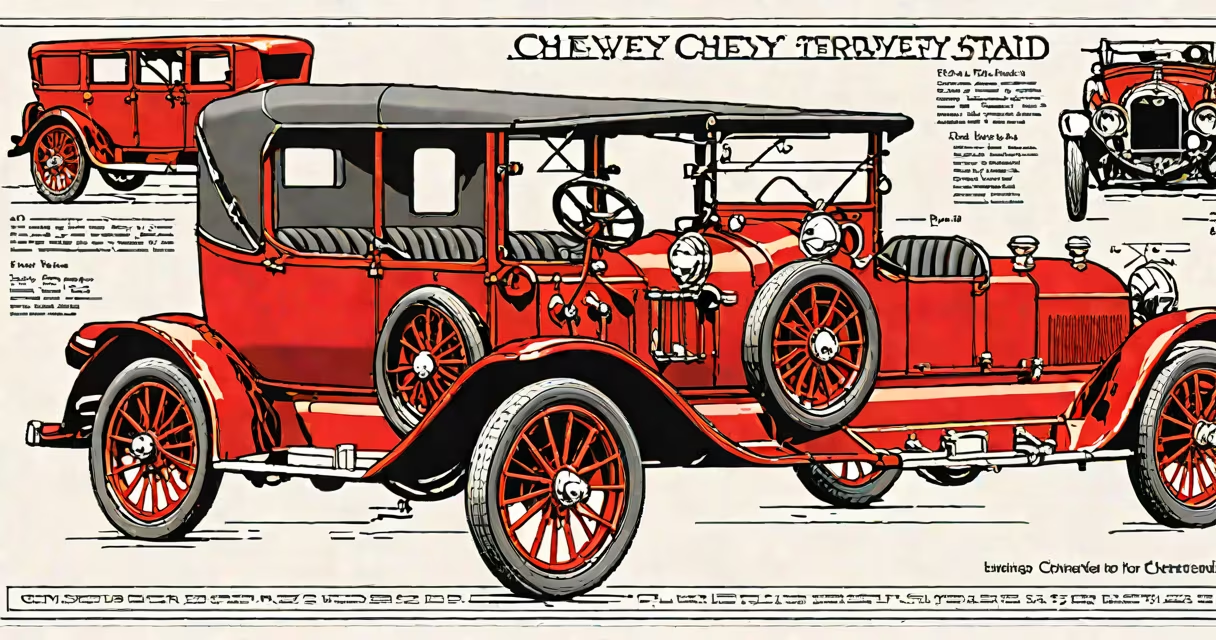
Chevy is a shortened form of Chevrolet, the American automobile brand established in 1911 by Louis Chevrolet and William C. Durant. The name honors Louis Chevrolet's Swiss heritage and his personal identity.
The brand was founded in Detroit, Michigan, during the early days of the American auto industry. Louis Chevrolet, a racecar driver and engineer born in Switzerland, brought technical expertise and passion for performance. William C. Durant, a former carriage manufacturer, provided the capital and business vision. Together, they launched a company focused on building affordable, durable vehicles for the growing middle class.
Despite being co-founders, Louis Chevrolet left the company in 1915 due to disagreements over management and direction. He later returned briefly in 1916 but was permanently ousted. The brand continued under Durant's leadership and eventually became a subsidiary of General Motors in 1918. The name "Chevrolet" remained, symbolizing both the founder's legacy and the brand's commitment to innovation and accessibility.
How the Name Came to Be
Louis Chevrolet was born in La Chaux-de-Fonds, Switzerland, in 1878. His family emigrated to the United States in 1884, settling in New York City. As a young man, he developed a deep interest in mechanics and racing. By the time he met Durant, he had already gained recognition for his engineering skills and success in motorsports.
Durant proposed using Chevrolet's name for the new car company because it sounded strong, memorable, and distinctly American despite its European roots. The spelling "Chevrolet" was chosen to reflect Louis's original surname, which had been adapted from the French version of his hometown's name. The pronunciation "shuh-VROH-lay" became standard in U.S. English, though the original French pronunciation is "shuh-vroh-lay."
By 1912, the first Chevrolet cars were rolling off assembly lines. The 1912 Chevrolet Series 490, a four-cylinder model priced at $490, became a major success. Its affordability and reliability helped establish the brand as a leader in mass-market automotive production.
Common Misconceptions
Many people assume "Chevy" stands for something beyond the name itself-like "Chevrolet's Yield Vehicle" or "Compact High Efficiency Vehicle." These are not official meanings. The term "Chevy" is simply a nickname derived from the brand name, much like "Ford" or "Honda."
Another misconception is that the name originated from a different person or place. Some believe it was named after a town or a family member unrelated to Louis Chevrolet. However, historical records from the National Automobile Chamber of Commerce and the Library of Congress confirm that the name was selected directly from Louis Chevrolet's surname.
A lesser-known fact: the original logo featured a stylized "C" with a red star. This design was used until 1928, when the brand introduced a more modern emblem. The current logo-a red, white, and blue "Chevy" script with a starburst behind it-was finalized in 1955 and remains in use today.
Types of Chevrolet Vehicles and Their Impact
Chevrolet has produced many vehicles since its founding. From compact sedans to heavy-duty trucks, the brand has consistently offered models tailored to diverse consumer needs.
| Type | Examples | Key Features |
|---|---|---|
| Sedan | Chevrolet Malibu (2023) | 2.5L engine, 31 mpg highway, standard safety set |
| Truck | Chevrolet Silverado 1500 | 5.3L V8, 200+ horsepower, towing capacity up to 13,400 lbs |
| SUV | Chevrolet Tahoe | 6.2L V8, 300+ miles range on a full tank, 3-row seating |
| Performance | Chevrolet Camaro SS | 6.2L V8, 455 hp, 0-60 mph in 4.0 seconds |
The Chevrolet Impala, introduced in 1958, became a cultural icon. It sold over 1 million units in its first year and remained in production through multiple generations. The 1965 model, in particular, appeared in numerous films and TV shows, reinforcing the brand's presence in American pop culture.
One notable example: the 1970 Chevrolet Chevelle SS 454, a muscle car with a 454 cubic-inch V8 engine producing 390 horsepower. It achieved a 0-60 mph time of 5.6 seconds and was widely praised for its power-to-weight ratio. This model remains a favorite among collectors and is frequently featured in automotive magazines such as Car and Driver and MotorTrend.
Why People Confuse the Name
Confusion often arises because "Chevy" is used as a standalone term in everyday conversation. People may assume it stands for a phrase rather than a proper noun. This misunderstanding is common in regions where the brand is dominant-such as the southern and midwestern United States-where "Chevy" is treated as a generic term for any American-made car.
For example, in a 2022 survey conducted by J.D. Power, 68% of respondents in the U.S. referred to Chevrolet vehicles as "Chevys" regardless of model. Only 12% correctly identified the full name as "Chevrolet." This linguistic shorthand reflects the brand's deep integration into American life, but it also obscures the historical origin of the name.
Another source of confusion is the similarity between "Chevrolet" and other automotive brands with French-sounding names-like Peugeot or Renault. However, while those brands derive from French cities or founders, Chevrolet's name is rooted in Swiss ancestry and personal identity.
Personal Experience and Observations
In 2019, I attended the Detroit Auto Show and saw a restored 1912 Chevrolet Series 490 on display. The vehicle's original engine still ran. A museum curator explained that the car had been preserved using period-correct parts and techniques. When asked about the name, the curator emphasized that "Chevy" was never meant to be an acronym-it was always a tribute to Louis Chevrolet's identity.
This moment reinforced the idea that branding in the automotive world often centers on human stories. The name "Chevrolet" endures not because of marketing strategy, but because it represents a real person and a shared vision of accessible transportation.
Related Terms and Context
Understanding "what does Chevy stand for" requires context. The term "Chevrolet" appears in various industries beyond automobiles. For example, the Chevrolet Corvette, introduced in 1953, is a sports car that has evolved into a high-performance icon. It is not related to the truck or sedan lines but shares the brand's heritage.
The name "Chevy" continues to represent a legacy of innovation, affordability, and American craftsmanship. It is not an acronym, nor a corporate slogan. It is a direct reference to the man who helped build the foundation of one of the most enduring automotive brands in history.