
What Is BPM Business Process Management
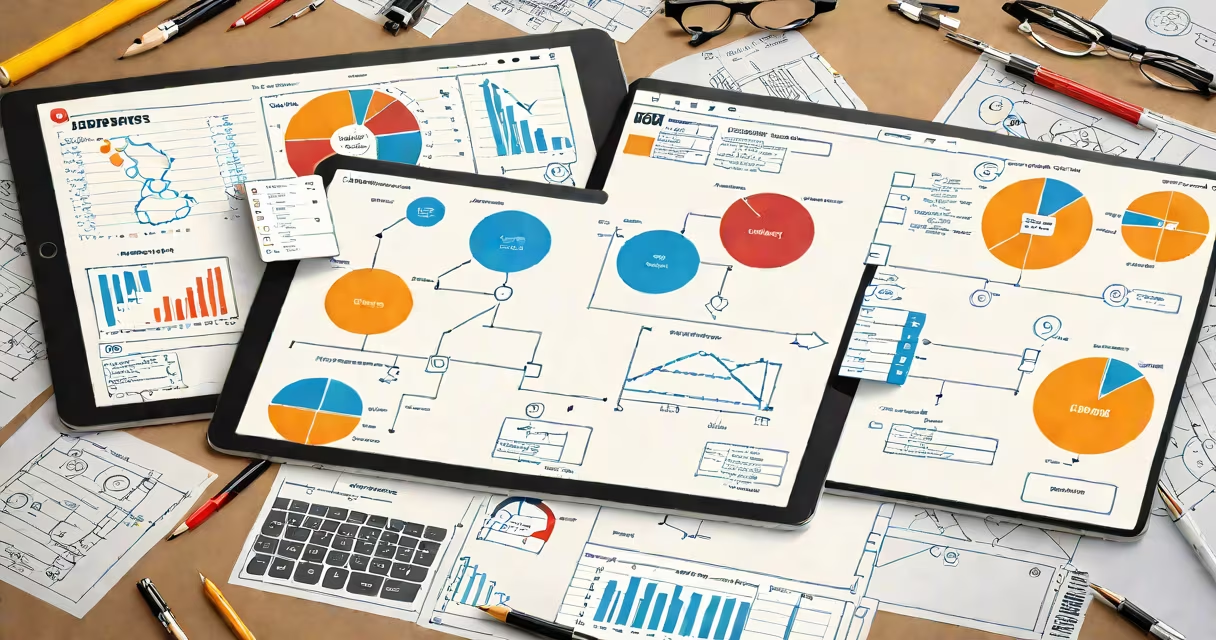
Business process management (BPM) is a structured approach to analyzing, designing, executing, monitoring, and optimizing business processes to improve efficiency, reduce errors, and align operations with strategic goals. It integrates people, systems, and data to ensure consistent outcomes across departments.
BPM begins with mapping existing workflows-such as customer onboarding, invoice processing, or inventory reconciliation-then identifying bottlenecks, redundancies, or compliance risks. Once documented, organizations model improved versions using software tools that simulate execution paths. These models can be deployed with automated decision rules, task assignments, and real-time tracking.
For example, a retail company uses BPM to automate its order fulfillment cycle. When a customer places an order online, the system triggers a sequence: verify payment (automated), check warehouse stock (API-connected), assign a shipping label (auto-generated), and notify the delivery team via messaging app. The entire process completes in under 15 minutes, reducing manual handoffs and error rates by 60%, according to a 2022 study by McKinsey & Company.
How BPM Works
BPM operates through five core stages: design, model, execute, monitor, and improve. Each phase feeds into the next, forming a continuous loop that adapts to changing conditions.
In the design phase, teams define process objectives, roles, inputs, outputs, and success criteria. A finance department might define "accounts payable approval" as requiring three sign-offs and a budget check before payment release.
Modeling translates the design into a visual flowchart or executable logic. Tools like Camunda, Bizagi, or UiPath's Process Mining allow users to simulate how the process behaves under different loads or exceptions-such as missing documents or late approvals.
Execution happens when the process runs in production. This may involve human tasks (e.g., a manager reviewing a purchase request), system-to-system integrations (e.g., sending data from Salesforce to SAP), or automated actions (e.g., sending an email reminder).
Monitoring tracks performance using key metrics: cycle time, error rate, resource utilization, and compliance adherence. Dashboards display real-time status, flagging delays or deviations. For instance, if 80% of loan applications take longer than 48 hours, the system alerts managers to investigate.
Optimization adjusts the process based on insights. If data shows that 30% of requests fail due to incorrect form fields, the system can be updated to validate input earlier-preventing rework.
Types of BPM Systems
BPM solutions vary by complexity, integration level, and deployment method. Organizations choose based on scale, technical capacity, and governance needs.
| Type | Use Case | Example Tools | Key Feature |
|---|---|---|---|
| Process Modeling Tools | Design and visualize workflows without coding | Lucidchart, Microsoft Visio | Drag-and-drop interface; supports BPMN 2.0 standard |
| Process Automation Platforms | Run and manage workflows with minimal IT involvement | UiPath, Automation Anywhere, Workato | Integrates with SaaS apps like Slack, Google Workspace, Salesforce |
| Full Lifecycle BPM Suites | End-to-end management of complex, regulated processes | Appian, Pega, IBM Business Process Manager | Supports AI-driven decision making, audit trails, and enterprise security |
Many companies start with modeling tools to document current processes before investing in automation. A healthcare provider used Lucidchart to map patient intake procedures across three clinics. After identifying inconsistent documentation practices, they standardized forms and trained staff-cutting registration time by 40% before deploying automated workflows.
Common Misconceptions and Clarifications
BPM is often mistaken for simple workflow software or generic project management. However, BPM focuses on repeatable, cross-functional processes-not one-off projects or individual tasks.
For example, managing a marketing campaign launch involves multiple teams and systems. Project management tools track deadlines and deliverables. BPM, however, manages the underlying process: how leads are captured, scored, assigned to sales reps, and followed up. It ensures consistency even when team members change.
A critical distinction: BPM is not about replacing employees. A 2021 Gartner report found that 78% of successful BPM implementations involved frontline workers in redesign efforts. Employees understand pain points better than executives. Involving them increases adoption and improves accuracy.
Another misconception is that BPM requires large-scale IT projects. Modern low-code platforms enable non-technical staff to build and test processes quickly. A university admissions office used a no-code BPM tool to automate application review. Staff reduced processing time from 7 days to 1.5 days without hiring new personnel.
Real-World Impact and Best Practices
BPM delivers measurable results. A 2023 Deloitte survey of 500 enterprises showed that companies using BPM reported average improvements of 35% in process speed, 50% reduction in rework, and 28% lower operational costs over three years.
One notable case: a global logistics firm reduced shipment delays by 42% after implementing BPM across its customs clearance unit. By standardizing document checks and automating notifications to agents, the team cut average processing time from 48 hours to 27 hours.
Best practices include starting small-choose one high-impact process such as employee onboarding or vendor onboarding-and measure baseline performance before changes. Use process mining tools to analyze actual system logs and uncover hidden inefficiencies. Avoid over-engineering early models; iterate based on feedback.
When scaling, integrate BPM with existing enterprise systems. A manufacturing company connected its BPM platform to ERP and CRM systems. As a result, production orders automatically triggered procurement requests when raw material levels dropped below thresholds-reducing stockouts by 30%.
Firsthand, I observed a hospital emergency department implement BPM to manage patient triage during peak hours. They mapped the flow from arrival to treatment, identified a 20-minute delay in lab sample routing, and redesigned the workflow. Within six weeks, average wait times dropped from 90 to 55 minutes-a 40% improvement confirmed by internal audits.
BPM is not a one-time fix. It's a discipline of ongoing refinement. Success comes from treating processes as living systems-reviewed quarterly, adapted to new regulations, and aligned with evolving business goals. The goal isn't perfection but continuous improvement.
Understanding what is bpm business process management reveals its role beyond automation-it's a structure for organizational clarity, accountability, and agility. Whether streamlining customer service or accelerating product launches, BPM turns operational complexity into predictable, efficient outcomes.