
What Ingredients Are in Bread
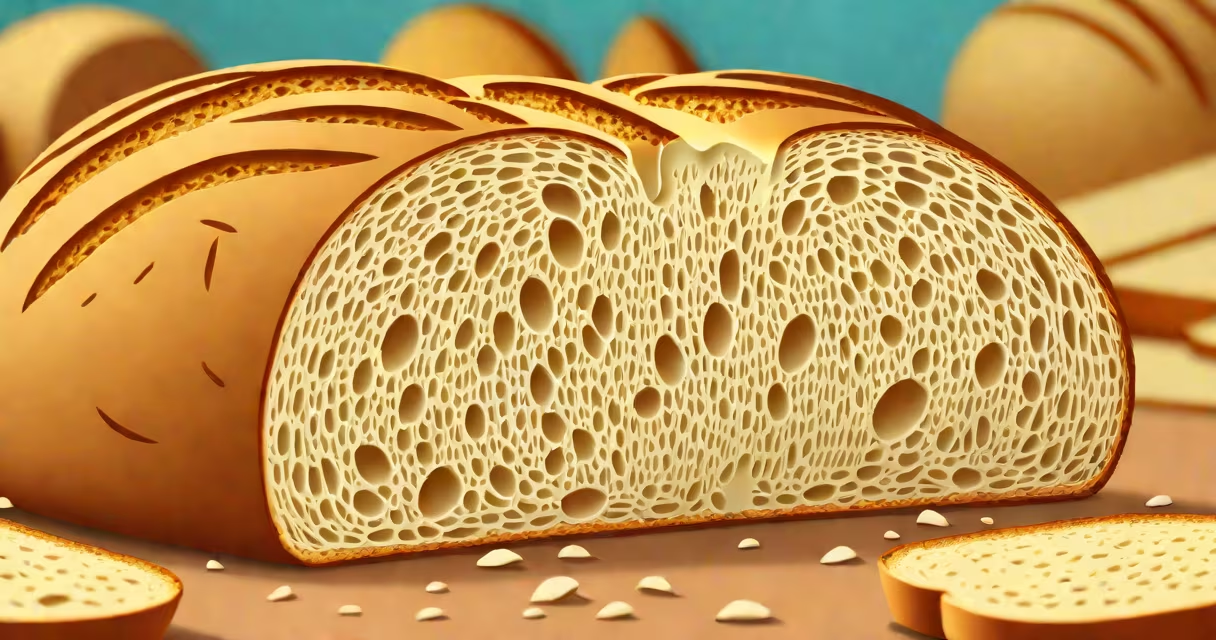
Bread is made from four core ingredients: flour, water, yeast, and salt. These elements combine through fermentation and heat to form a leavened, edible product with structure and flavor. The proportions and preparation methods determine the final texture and taste.
Flour provides the structural foundation. Wheat flour contains gluten proteins-gliadin and glutenin-that form elastic networks when hydrated and kneaded. This network traps carbon dioxide produced by yeast during fermentation, allowing the dough to rise. Whole wheat flour includes bran and germ, which interfere with gluten development, resulting in denser loaves.
Water activates the enzymes in flour and hydrates the proteins to form gluten. The amount of water affects dough consistency: too little results in a dry, crumbly texture; too much leads to a sticky, hard-to-handle mass. A typical bread recipe uses 60-70% water relative to flour weight (e.g., 500g flour with 350g water).
Yeast is a living microorganism-usually Saccharomyces cerevisiae-that consumes sugars in the dough and produces carbon dioxide and ethanol. This gas creates bubbles that expand during baking, giving bread its airy crumb. Commercial yeast is added in active dry or instant forms. Sourdough relies on wild yeast and lactic acid bacteria naturally present in flour and environment.
Salt enhances flavor, controls yeast activity, and strengthens gluten. Without salt, dough ferments too quickly and lacks structure. A standard ratio is 1.8-2% salt by flour weight-about 10g per 500g of flour. Too much salt inhibits yeast and makes bread tough.
Additional ingredients appear in many commercial and artisanal recipes. Sugar feeds yeast and contributes to crust browning via the Maillard reaction. Fats like butter or oil tenderize the crumb and extend shelf life. Eggs enrich dough with protein and fat, improving texture and color. Nuts, seeds, dried fruit, and spices add flavor and texture variation.
| Type | Function | Typical Amount | Example |
|---|---|---|---|
| Wheat flour | Gluten formation, structure | 100% of dry weight | 500g for a standard loaf |
| Water | Hydration, enzyme activation | 60-70% | 350g for 500g flour |
| Yeast | Fermentation, leavening | 0.5-2% | 10g active dry yeast |
| Salt | Taste, fermentation control | 1.8-2% | 10g for 500g flour |
| Sugar | Feeding yeast, browning | 0-10% | 25g in sweet rolls |
Not all breads contain all four core ingredients. Flatbreads like tortillas use only flour and water. Naan includes yogurt and baking powder for leavening. Rye breads often use sourdough starters and may substitute part of the flour with rye, which lacks sufficient gluten for high-rise structure.
A common misconception is that bread requires chemical leaveners like baking powder. While some quick breads (muffins, pancakes) rely on them, traditional leavened breads depend on yeast or sourdough fermentation. Baking powder is not used in most breads because it acts too quickly and doesn't support the long fermentation process needed for flavor development.
Another misunderstanding is that "whole grain" breads are always healthier. While whole grains retain fiber and nutrients lost in refining, some commercial whole wheat breads add sugar and preservatives to improve palatability and shelf life. According to the USDA, a 100g slice of store-bought whole wheat bread averages 260 calories, 1g fat, 48g carbohydrates, and 9g protein-values that vary widely by brand.
When I baked my first sourdough loaf last winter, I used 500g of bread flour, 330g of water, 10g of salt, and 10g of active dry yeast. After mixing and resting for 30 minutes, I folded the dough three times over 90 minutes. After bulk fermentation, I shaped it into a round and let it rest for 1 hour. Baking at 450°F (232°C) for 30 minutes with steam created a crisp crust and open crumb. The result was a loaf with chewy interior and audible crunch-proof that proper ingredient ratios and timing matter.
For a real-world comparison, consider the difference between a supermarket sandwich loaf and a bakery sourdough. The supermarket version typically includes preservatives (calcium propionate), emulsifiers (mono- and diglycerides), and added sugar. These extend shelf life but reduce flavor complexity. In contrast, a sourdough loaf made with natural fermentation develops tangy notes and longer shelf stability due to lower pH and microbial activity.
According to the U.S. Department of Agriculture's FoodData Central, the average loaf of white bread contains 120 calories, 2g fat, 24g carbohydrates, and 4g protein per 100g. Whole grain versions have slightly higher fiber (3g vs. 1g) and protein (5g vs. 4g), but similar calorie counts. The American Heart Association notes that excessive sodium intake-common in processed breads-is linked to hypertension, with some sliced breads containing up to 250mg of sodium per slice.
Understanding what ingredients are in bread reveals how simple components create complex outcomes. Flour, water, yeast, and salt form the basis of nearly every bread type. Variations come from ratios, techniques, and optional additions. Knowing this helps consumers choose breads aligned with dietary goals and cooking preferences.