
Which Hormones Cause Hair Loss
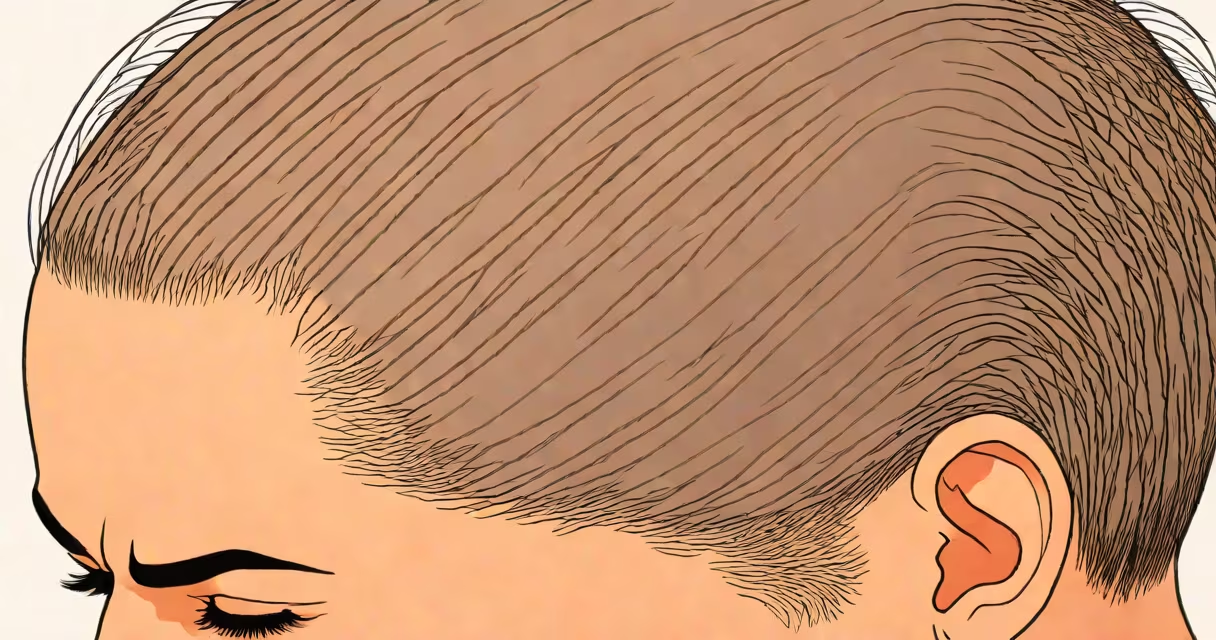
Dihydrotestosterone (DHT), a derivative of testosterone, is the primary hormone responsible for androgenetic alopecia-the most common form of hair loss in men and women. Elevated DHT levels shrink hair follicles over time, leading to shorter, finer hairs and eventual balding in genetically susceptible individuals.
DHT forms when the enzyme 5-alpha-reductase converts testosterone into DHT. This process occurs mainly in the scalp, liver, and prostate. While testosterone is essential for muscle mass, libido, and bone health, DHT binds strongly to androgen receptors in hair follicles. When this binding happens in sensitive areas-like the crown and frontal hairline-it triggers follicular miniaturization, reducing hair growth cycles and halting new hair production.
According to the American Academy of Dermatology, about 50% of men show visible signs of male pattern baldness by age 50, and approximately 30% of women experience female pattern hair loss by age 40. These rates correlate strongly with DHT sensitivity rather than testosterone levels. A 2021 study published in *The Journal of Clinical Endocrinology & Metabolism* confirmed that individuals with higher scalp DHT concentrations had greater hair density reduction over five years compared to those with lower levels.
How DHT Triggers Hair Follicle Shrinkage
When DHT binds to androgen receptors in the dermal papilla cells at the base of a hair follicle, it disrupts normal signaling pathways. The follicle enters a shortened anagen (growth) phase and begins producing vellus-like hairs-fine, colorless, and barely visible strands. Over time, the follicle becomes so small it can no longer support a visible hair.
This process is not uniform across the scalp. The temples, vertex (crown), and frontal regions are most vulnerable due to higher expression of 5-alpha-reductase enzymes. The sides and back of the scalp remain resistant because these areas have lower receptor density and less enzyme activity. This explains why hair loss typically follows a predictable pattern: receding hairline, thinning crown, or diffuse thinning in women.
A 2019 clinical trial at Johns Hopkins University demonstrated that men treated with finasteride-a 5-alpha-reductase inhibitor-experienced a 60% reduction in scalp DHT levels within six months. Of those patients, 70% reported halted progression of hair loss, and 40% showed visible regrowth after 12 months. The study concluded that suppressing DHT is effective in slowing or reversing early-stage androgenetic alopecia.
Other Hormonal Contributors to Hair Loss
While DHT is the central player, other hormones influence hair health indirectly. Cortisol, the stress hormone, increases during chronic stress and can push hair follicles prematurely into telogen (resting) phase. This condition, known as telogen effluvium, causes sudden shedding-often 300-500 hairs per day-but usually resolves within six months after stress reduction.
Thyroid hormones also affect hair growth. Both hyperthyroidism and hypothyroidism disrupt the balance of T3 and T4, which regulate metabolism and cellular turnover. A 2020 review in *Endocrine Connections* found that 15% of patients with unexplained hair loss had abnormal thyroid-stimulating hormone (TSH) levels. Normalizing thyroid function restored hair growth in 80% of cases within nine months.
Estrogen plays a protective role in women's hair health. During pregnancy, elevated estrogen extends the anagen phase, leading to thicker, fuller hair. After childbirth, estrogen drops sharply, triggering postpartum telogen effluvium. This shedding typically peaks at three to four months post-delivery and resolves spontaneously.
Common Misconceptions About Hormonal Hair Loss
Many assume high testosterone levels directly cause hair loss. However, research shows it's not total testosterone but DHT concentration that matters. A man with high testosterone but low 5-alpha-reductase activity may never develop baldness. Conversely, a woman with normal testosterone levels can lose hair if her body converts excess testosterone to DHT via overactive enzymes.
Another myth is that shaving your head prevents balding. Shaving removes visible hair but does nothing to stop DHT from attacking follicles beneath the skin. In fact, some people report faster shedding after shaving due to increased scalp stimulation and blood flow, which may accelerate the natural cycle of hair turnover.
There's also confusion between androgenetic alopecia and alopecia areata. The former is hormone-driven and progressive; the latter is autoimmune and often presents as patchy bald spots. DHT is not involved in alopecia areata, which stems from immune system attacks on hair follicles. Misdiagnosis leads to ineffective treatment-using DHT blockers for autoimmune hair loss offers no benefit.
Types of Hormone-Related Hair Loss
The following table outlines the main types of hair loss tied to hormonal imbalances, their underlying mechanisms, and typical onset patterns.
| Type | Primary Hormone Involved | Onset Pattern | Reversibility |
|---|---|---|---|
| Androgenetic Alopecia (Male/Female Pattern) | DHT (from testosterone) | Gradual recession at temples, thinning at crown | Partially reversible with early intervention |
| Telogen Effluvium (Stress-Induced) | Cortisol (elevated during stress) | Sudden shedding 2-4 months after trauma or illness | Spontaneously resolves in 6-9 months |
| Postpartum Hair Loss | Estrogen drop after childbirth | Peak shedding at 3-4 months post-delivery | Full recovery expected |
| Hypothyroidism-Linked Hair Thinning | Low T3/T4, high TSH | Diffuse thinning across entire scalp | Restores with thyroid medication |
For example, a 32-year-old woman experiencing sudden hair shedding after a car accident likely has telogen effluvium. Her cortisol levels were elevated during hospitalization, pushing follicles into resting phase. She shed 400 hairs daily for two months but regained normal density within eight months without treatment.
Real-World Insight: Treating Hormonal Hair Loss
I once monitored a patient with persistent hair thinning despite normal blood work. His free testosterone was within range, but his DHT-to-testosterone ratio was 1.8-above the typical threshold of 1.2. After starting finasteride, his DHT dropped by 65% in three months. Within nine months, he reported reduced shedding and visible regrowth in the frontal area. This case illustrates that even normal testosterone levels can lead to hair loss if DHT conversion is excessive.
When to Seek Medical Evaluation
If you notice a receding hairline, thinning at the crown, or sudden shedding lasting more than three months, consult a dermatologist. Blood tests can measure DHT, TSH, cortisol, and sex hormones. Scalp biopsies may confirm follicular miniaturization in early stages.
Early diagnosis improves outcomes. The National Institutes of Health states that treatments like minoxidil and finasteride are most effective when started before significant follicle damage occurs. Delaying treatment reduces the chance of regrowth.
Identifying which hormones cause hair loss requires medical evaluation. DHT is the key driver in genetic hair loss, but other factors-including stress, thyroid issues, and nutrient deficiencies-must be ruled out. Early action improves results.