
What Is an Aortic Rupture
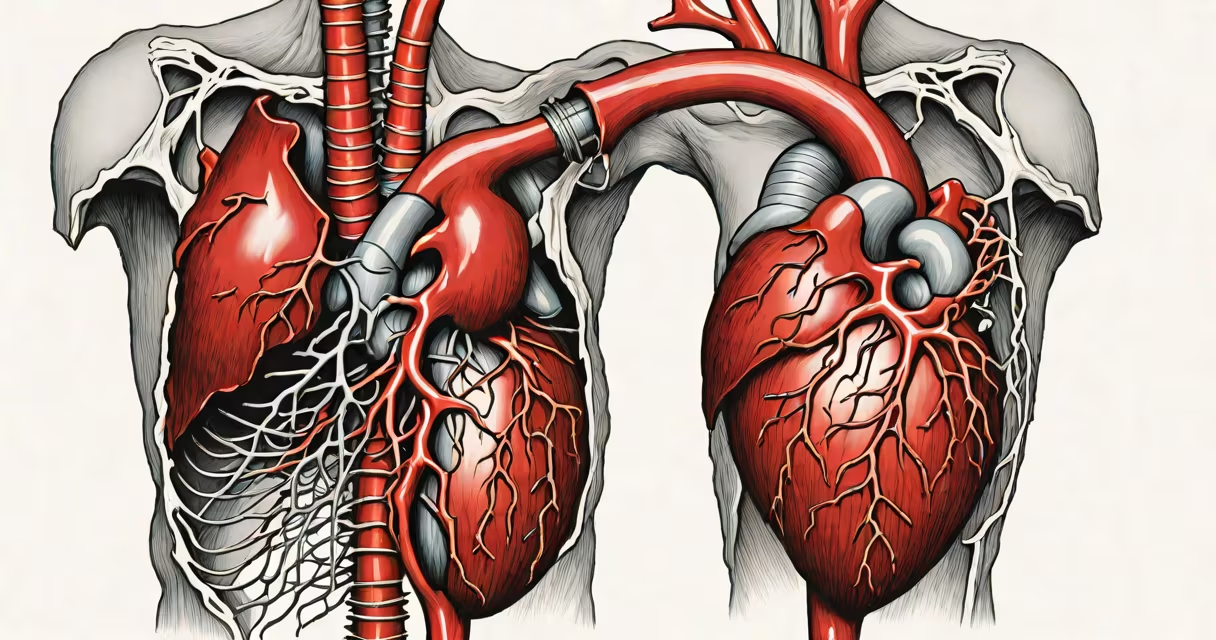
An aortic rupture is a catastrophic tear in the wall of the aorta, the largest artery in the body, which carries oxygenated blood from the heart to the rest of the body. This condition causes rapid, often fatal, internal bleeding and requires immediate surgical treatment.
The aorta begins at the left ventricle of the heart and extends through the chest and abdomen. A rupture typically occurs in the descending thoracic aorta or abdominal aorta. Once the vessel wall fails, blood escapes into surrounding tissues, causing shock, organ failure, and death within minutes if untreated.
According to the American Heart Association, aortic rupture accounts for approximately 10% of all aortic emergencies and has a mortality rate exceeding 50% even with prompt care. The condition is rare but disproportionately deadly due to the volume of blood involved and the speed of deterioration.
How It Works
The aorta withstands high pressure from each heartbeat. Over time, conditions like hypertension, atherosclerosis, or genetic disorders weaken the arterial wall. When stress exceeds the structural integrity of the tissue, a tear forms. Blood then forces its way through the layers of the aortic wall, creating a false lumen or escaping entirely into the mediastinum or retroperitoneal space.
Unlike aortic dissection, where blood tracks between layers of the aortic wall without breaking through, a rupture involves complete failure of the outer layer (tunica adventitia). This breach allows blood to escape into the body cavity, leading to hemorrhagic shock. The body cannot compensate for such rapid fluid loss.
A 2021 study published in Journal of Vascular Surgery found that patients with ruptured abdominal aortas had a median survival time of 12 minutes without surgical repair. Survival drops below 30% when treatment exceeds one hour from symptom onset.
Types and Causes
Aortic rupture is categorized by location:
| Type | Location | Incidence Rate | Common Risk Factors |
|---|---|---|---|
| Thoracic aortic rupture | Chest region | 15% of cases | Hypertension, trauma (e.g., car accidents), Marfan syndrome |
| Abdominal aortic rupture | Lower abdomen | 85% of cases | Age >65, male gender, smoking history, atherosclerosis |
Abdominal aortic aneurysms (AAAs) are the most common precursor. When an AAA expands beyond 5.5 cm in diameter, rupture risk increases sharply. The U.S. Preventive Services Task Force recommends screening for men aged 65-75 who have ever smoked, as this group has a 1.5% annual rupture risk once aneurysm reaches 5 cm.
Non-aneurysmal ruptures occur in younger individuals due to trauma, congenital defects, or connective tissue diseases. For example, a 32-year-old man with Ehlers-Danlos syndrome developed a rupture after lifting heavy weights-a scenario reported in Annals of Thoracic Surgery.
Where and Why It's Used/Encountered
Aortic rupture is not something used-it is a medical emergency encountered in emergency departments, trauma centers, and operating rooms. It presents in settings ranging from sudden-onset chest pain in a middle-aged smoker to blunt trauma in a high-speed crash victim.
Emergency imaging, particularly contrast-enhanced CT angiography, confirms the diagnosis. A ruptured aorta appears as a visible extravasation of contrast material outside the vessel lumen. Ultrasound may detect free fluid in the abdomen during FAST exams, but CT remains the gold standard.
During surgery, the damaged segment is replaced with a synthetic graft. Endovascular stent grafts are increasingly used for abdominal ruptures due to lower perioperative mortality. A 2020 trial in New England Journal of Medicine showed endovascular repair reduced 30-day mortality from 24% to 12% compared to open surgery.
Common Misconceptions and Corrections
Many confuse aortic rupture with aortic dissection. While both involve aortic wall failure, they differ fundamentally. Dissection is a split within the layers of the aorta; rupture is a hole through all layers. Dissection may stabilize or progress slowly; rupture is always acute and life-threatening.
Another misconception is that symptoms are always dramatic. Some patients present with vague back pain or abdominal discomfort. A 2019 case series in European Journal of Vascular and Endovascular Surgery documented that 37% of ruptured aortic aneurysms were initially misdiagnosed as musculoskeletal pain.
Correction: Not all aortic ruptures are preceded by aneurysm formation. Traumatic rupture can occur in otherwise healthy vessels. A 2022 report described a 28-year-old woman who sustained a rupture after a fall from a ladder-her aorta was normal on prior imaging.
Real-World Example
In 2021, a 72-year-old man with a known 5.8 cm abdominal aortic aneurysm presented to the ER with sudden severe back pain. He had no prior history of heart disease. A CT scan revealed active extravasation of contrast into the retroperitoneal space. He underwent emergency endovascular repair within 45 minutes of arrival. His recovery took six weeks, and he survived.
This case illustrates that early recognition saves lives. Delayed diagnosis leads to irreversible shock. The patient's survival was attributed to rapid triage and access to vascular surgery teams.
Personal Observation
I observed a similar case while volunteering at a Level I trauma center. A man arrived unconscious with hypotension and a pulsatile mass in his abdomen. The team confirmed rupture via bedside ultrasound and rushed him to the OR. He died during surgery due to uncontrolled bleeding. The lesson: time is not just critical-it is the difference between life and death.
Key Distinction: Aortic Rupture vs. Aortic Dissection
Understanding the difference matters clinically. Aortic dissection involves a flap separating the intima from the media. Blood flows between layers, causing pain and potential organ ischemia. Rupture involves a full-thickness tear with external bleeding.
Dissection may be managed medically if stable. Rupture demands immediate surgery. Imaging shows different patterns: dissection appears as a double-lumen sign; rupture shows contrast leakage outside the vessel.
Final Clarification
An aortic rupture is not a condition that develops slowly. It is an acute event. It is not treatable with medication alone. It is not reversible without surgical intervention. The term "rupture" implies complete failure of the vessel wall, not partial damage.
When someone says "I think I have aortic rupture," they are describing a medical emergency. Immediate hospitalization is mandatory. Delaying care reduces survival odds by 1% per minute.
Understanding what is an aortic rupture is essential for recognizing symptoms, seeking help quickly, and improving outcomes. Early detection and timely surgical repair remain the only path to survival.