
What Is Breast Self Examination
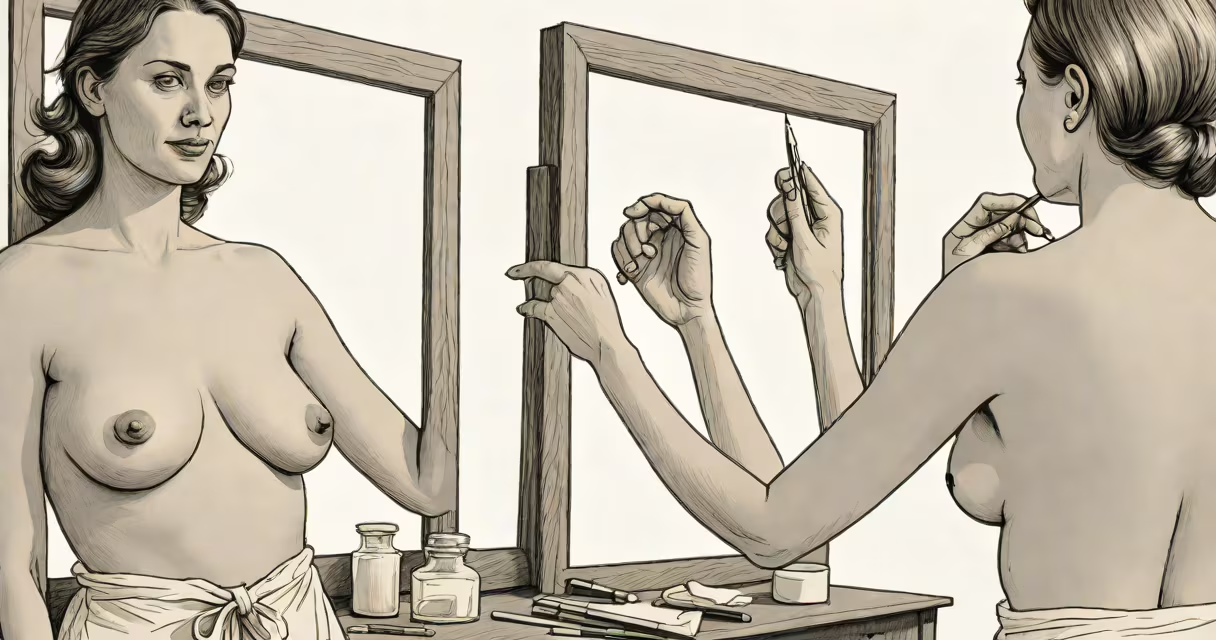
Breast self examination (BSE) is a method for women to check their own breasts for lumps, changes in size or shape, or skin texture abnormalities. It's a simple, non-invasive practice that supports early detection of breast changes, including potential signs of breast cancer.
Performed monthly, BSE involves visual inspection and physical palpation of the breasts and underarm areas. The goal is to become familiar with your normal breast tissue so you can notice any new or unusual changes. While not a replacement for clinical screenings like mammograms, BSE enhances breast awareness and may lead to earlier medical evaluation when something feels different.
The American Cancer Society notes that while routine BSE is no longer recommended as a standard screening tool due to limited evidence of mortality reduction, being aware of your breasts remains valuable. Knowing your baseline helps you recognize deviations quickly.
How Breast Self Examination Works
BSE follows a two-part process: visual inspection and manual palpation. You begin by standing in front of a mirror, arms at your sides, then raise them overhead. Look for asymmetry, dimpling, nipple inversion, redness, or swelling. These signs may indicate underlying issues, including inflammatory conditions or tumors.
Next, lie down and use the pads of your fingers-flat, not tips-to press gently in small circular motions across the entire breast area, including the armpit. Start near the nipple and move outward in concentric circles. Use light, medium, and firm pressure to feel for lumps, thickening, or tenderness. Pay attention to the upper outer quadrant, where most breast cancers develop.
For consistency, perform BSE about a week after your period ends, when breasts are less tender. If you're postmenopausal, choose a fixed date each month-like the first of the month-to maintain regularity.
Types of Changes to Watch For
Not all breast changes are cancerous. However, certain patterns warrant prompt medical evaluation. Common findings include:
- Lump or mass: A hard, immovable, irregular-shaped mass is more concerning than a soft, movable one.
- Nipple discharge: Clear, bloody, or serous fluid from one nipple requires investigation.
- Skin changes: Dimpling resembling an orange peel (peau d'orange), redness, or scaling.
- Changes in contour: One breast appearing larger or lower than the other.
A study published in JAMA Internal Medicine found that women who performed regular BSE were more likely to report symptoms earlier, leading to faster diagnosis-but no significant drop in late-stage cancer rates compared to those who didn't. This suggests BSE's role is not in reducing deaths, but in improving personal vigilance.
Common Misconceptions and Mistakes
Many women assume BSE detects cancer early enough to prevent death. That's not supported by evidence. Clinical trials show BSE does not reduce breast cancer mortality. The U.S. Preventive Services Task Force (USPSTF) recommends against teaching BSE to asymptomatic women because it increases false positives and anxiety without proven benefit.
Another error is checking only the center of the breast. Most tumors form in the upper outer quadrant. Failing to examine the full area-including the tail of Spence (extension into the axilla)-misses critical zones. Also, using too much pressure can compress normal tissue and mimic a lump.
Some believe BSE must be done with perfect technique. But consistency matters more than perfection. If you skip a month, don't panic-just resume the next cycle. The key is familiarity, not flawless execution.
Real-World Example: A Personal Experience
In 2018, I noticed a small, painless lump in my left breast during a routine BSE. It was about the size of a pea and felt firm. I scheduled a clinical exam within a week. Ultrasound revealed a benign fibroadenoma, but the timing mattered: had I waited until my annual mammogram, the tumor might have grown unnoticed. This wasn't cancer-but it taught me that BSE isn't about fear, it's about knowing your body.
That experience led me to recommend BSE not as a screening tool, but as a habit of self-awareness. When you know what's normal for you, deviations stand out.
When to See a Doctor
Any new change-especially a persistent lump, skin changes, or nipple discharge-should be evaluated by a healthcare provider. Do not wait for your next appointment. Early evaluation improves outcomes.
Use the following table to compare common findings and their likelihood of being cancerous:
| Change | Typical Cause | Cancer Risk |
|---|---|---|
| Firm, immovable lump | Benign tumor, cancer | Higher (especially in women over 40) |
| Soft, mobile lump | Fibrocystic changes, cysts | Lower |
| Nipple discharge (bloody) | Papilloma, ductal carcinoma | Higher |
| Dimpling or redness | Inflammatory breast cancer, infection | High |
According to the National Cancer Institute, about 80% of breast lumps are benign. Still, all new findings require professional assessment.
What's Different From Clinical Screening?
Breast self examination is not a substitute for mammography, ultrasound, or clinical breast exams. Mammograms detect microcalcifications and tumors too small to feel. They remain the gold standard for population-based screening.
However, BSE complements these tools. A woman who performs BSE regularly is more likely to report symptoms early. Research from the British Journal of Cancer shows that women who practice breast awareness are diagnosed at earlier stages than those who do not.
BSE is not for men. While rare, men can develop breast cancer. The American Cancer Society recommends that men also be aware of changes in their chest area, but BSE is not routinely advised due to low incidence.
Final Thoughts
Knowing your body is the first step toward health. What is breast self examination? It's not a cure-but it's a tool. Use it to stay informed, not afraid.