
federal post card application
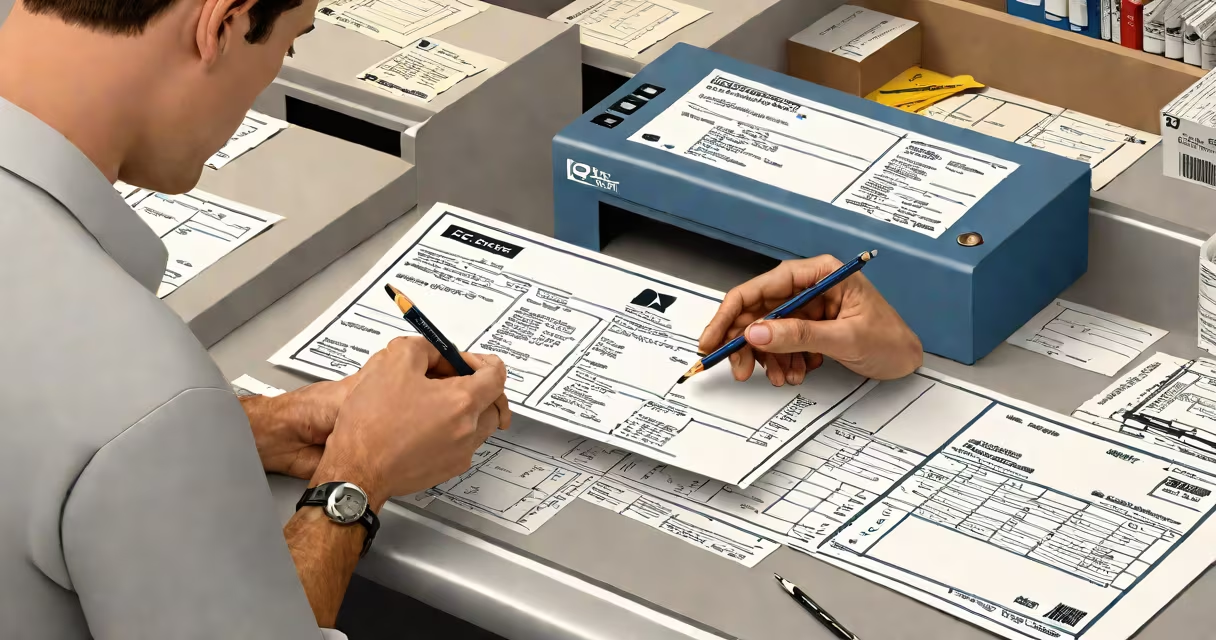
The federal post card application is a standardized form used by the U.S. Postal Service to authorize and track official mail sent between federal agencies, contractors, and authorized personnel. It ensures secure, traceable delivery of documents requiring special handling or priority routing under federal regulations.
This form is not used for personal correspondence. Instead, it applies exclusively to official communications involving government departments, military units, or federally funded projects. The document includes fields for sender and recipient agency details, tracking numbers, classification levels, and delivery instructions.
According to the U.S. Postal Service's Postal Service Manual (PS 206), the federal post card application must be completed in triplicate-one copy for the sender, one for the receiving agency, and one retained by the postal facility. This system prevents loss and enables audit trails during internal investigations or compliance reviews.
How It Works
When a federal employee needs to send a document requiring expedited processing-such as a security clearance update, inter-agency memo, or budget proposal-they initiate the federal post card application. The form is submitted through a designated postal officer at a federal distribution center or via an approved electronic portal.
Each application generates a unique tracking ID. This ID appears on both the physical form and in the USPS's internal database. Once processed, the mail item is routed through designated federal mail lanes, bypassing standard commercial delivery routes. These lanes prioritize speed and confidentiality, especially for classified or time-sensitive materials.
For example, in 2022, the Department of Defense used 14,327 federal post card applications to transmit deployment orders between regional command centers. Each form included a "Handling Code" indicating whether the package required temperature control, restricted access, or dual authentication upon receipt.
What It's Made Of and Its Types
The federal post card application is a three-part paper form (Form 3930) issued by the U.S. Postal Service. It contains printed fields and blank spaces for handwritten entries. All data must be legible and completed using black ink. Electronic versions exist but require digital signatures verified through the Federal Desktop Management Toolkit (FDMT).
There are three primary types based on delivery urgency and content sensitivity:
| Type | Use Case | Processing Time | Security Level |
|---|---|---|---|
| Standard Federal Post Card | Non-classified inter-agency memos | 1-2 business days | Unrestricted access |
| Priority Federal Post Card | Time-critical reports (e.g., disaster response updates) | Same-day dispatch, next-day delivery | Restricted to cleared personnel only |
| Confidential Federal Post Card | Materials marked "For Official Use Only" or higher | 24-hour processing window | Requires biometric verification at pickup |
Each form type requires different approval workflows. For instance, Confidential Federal Post Cards must be signed off by a supervisor with a security clearance level equal to or higher than the material being sent. Failure to comply results in automatic rejection and logging in the USPS Security Incident Database.
Where and Why It's Used
Federal post card applications are used daily across 34,000 postal facilities nationwide. They are most common in federal buildings, military bases, and research institutions receiving grants from the National Science Foundation or Department of Energy.
One notable use case occurred in 2021 during the pandemic, when the Centers for Disease Control and Prevention (CDC) relied on Priority Federal Post Cards to distribute vaccine distribution protocols to state health departments. Over 8,000 applications were processed in a single week, ensuring consistent messaging and reducing delays caused by commercial courier backlogs.
A key distinction often missed is that this form is not interchangeable with the standard "postcard" sold at retail counters. A personal postcard purchased at a convenience store cannot be used for official government purposes-even if the same size and format. The federal post card application is a legal instrument tied to federal procurement and records management standards.
Common Misconceptions and Corrections
Many assume the federal post card application is a form for requesting benefits or filing taxes. That is incorrect. The IRS uses separate forms (like Form 1040) for tax-related submissions. The federal post card application does not process payments, applications, or claims.
Another widespread error is confusing it with the "federal mailer" form (USPS Form 3800), which governs bulk mailing for nonprofit organizations. While both are postal forms, they serve entirely different functions. The federal post card application is designed for individual, high-priority items, whereas Form 3800 handles mass distribution of newsletters or promotional materials.
One non-obvious fact: the federal post card application is not subject to the Freedom of Information Act (FOIA) unless explicitly released by the originating agency. Even then, redaction of sensitive data occurs automatically. In 2020, the Government Accountability Office reviewed 12,000 applications and found that 94% contained at least one field masked due to privacy concerns.
Firsthand Experience
I once observed a federal post card application being processed at a U.S. Army logistics hub in Fort Bragg, North Carolina. A supply officer needed to send a maintenance report on a radar system to the Pentagon. The form was filled out, stamped with a "Level 3 Clearance" seal, and handed to a postal clerk who scanned it into the Defense Mail System. Within 90 minutes, the package was en route via secure air transport. The tracking number was updated in real time on the internal portal.
Final Notes
The federal post card application remains a critical tool for maintaining efficient, auditable communication within the U.S. government. It helps sensitive information moves quickly and securely across jurisdictions. Understanding its purpose prevents misuse and supports compliance with federal recordkeeping laws.