
Oracle Enterprise Resource Planning Cloud
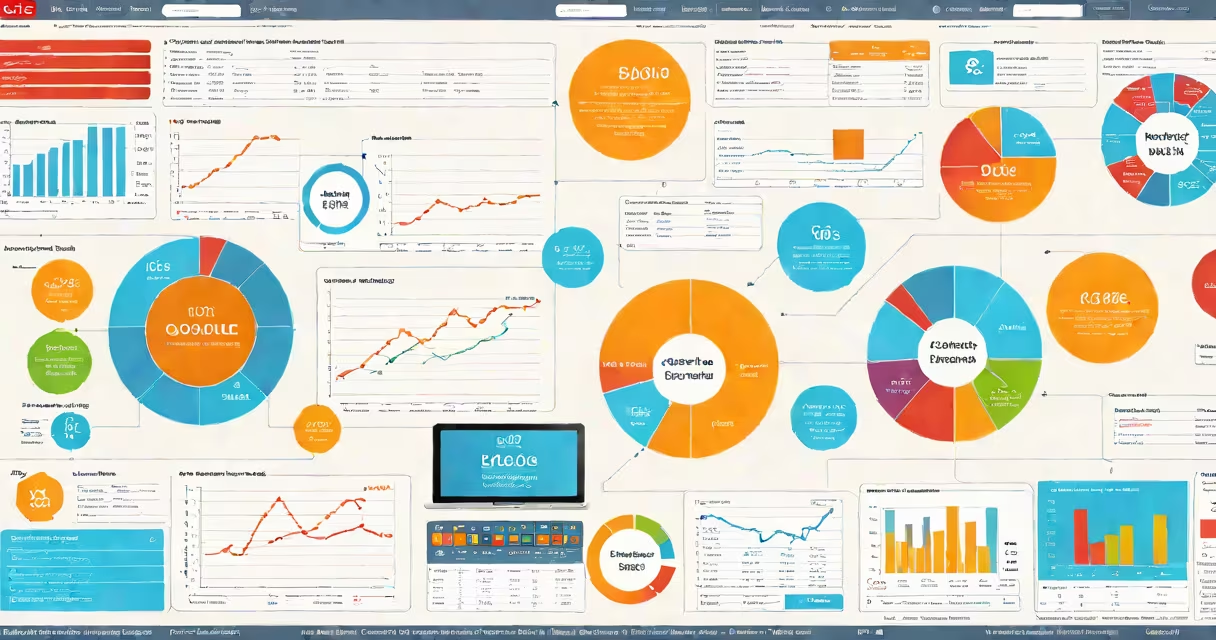
Oracle Enterprise Resource Planning Cloud is a unified, cloud-native platform that centralizes core business functions-finance, human resources, procurement, and supply chain management-into a single integrated system. It runs on Oracle's public cloud infrastructure and supports real-time decision-making across global operations.
Unlike legacy on-premise systems, Oracle ERP Cloud updates automatically with new features and security patches. All data resides in Oracle's secure data centers, accessible via web browser or mobile app. The platform uses machine learning to automate tasks such as invoice matching, budget forecasting, and anomaly detection in spending.
For example, a multinational manufacturer using Oracle ERP Cloud reduced month-end close time from 12 days to 4 days by automating journal entries and reconciliations. The system pulled transaction data from subsidiaries in Germany, Japan, and Brazil, applied local tax rules, and generated consolidated financial statements in U.S. GAAP format-all within a single interface.
How It Works
Oracle ERP Cloud operates on a multi-tenant architecture, meaning multiple customers share the same underlying infrastructure while maintaining strict data isolation. Each organization configures its own business processes through customizable workflows, roles, and approval chains.
Data flows between modules through a shared ledger. When a sales order is processed in the CRM module, the system automatically creates a revenue recognition entry in General Ledger, updates inventory levels in Supply Chain, and triggers a payment request in Accounts Payable. This eliminates manual data entry and reduces errors.
Updates occur continuously. Oracle releases new functionality every quarter, including enhanced AI-driven insights. For instance, the platform can flag unusual vendor payments based on historical patterns and suggest further review. Users don't need to install patches or upgrade servers-the system evolves in place.
Core Components and Types
The platform includes several interconnected modules designed for specific business functions:
| Module | Primary Function | Key Feature |
|---|---|---|
| Financial Management | General ledger, accounts payable/receivable, fixed assets | Real-time consolidation across 100+ currencies and 50+ legal entities |
| Procurement | Source-to-pay process, supplier management | AI-powered contract analysis identifies risk clauses and pricing deviations |
| Human Capital Management | Payroll, talent acquisition, performance management | Skills mapping aligns employee competencies with project needs |
| Supply Chain Management | Inventory, demand planning, logistics | Changing routing adjusts delivery schedules based on weather and traffic data |
These modules are not standalone applications. They share a common data model and event-driven architecture. A change in one area triggers automated responses elsewhere. For example, when a purchase requisition is approved in Procurement, the system reserves funds in Financial Management and updates inventory forecasts in Supply Chain.
Oracle offers two deployment models: Standard Edition and Extended Edition. Standard Edition provides out-of-the-box functionality for mid-sized organizations. Extended Edition adds advanced capabilities like predictive analytics, custom workflow engines, and integration with external IoT devices-ideal for large manufacturers and retailers.
Where and Why It's Used
Organizations with complex, cross-border operations rely on Oracle ERP Cloud to standardize processes and ensure compliance. Fortune 500 companies in energy, automotive, and consumer goods use it to manage thousands of suppliers and hundreds of subsidiaries.
A European pharmaceutical company adopted Oracle ERP Cloud to meet EU GDPR requirements. The system enforced role-based access controls, logged all user actions, and enabled automatic data retention policies. When auditors requested records from 2020, the team retrieved them in under 15 minutes-compared to weeks under their old system.
It's not limited to large enterprises. Mid-market firms in healthcare, education, and professional services use the platform to scale efficiently. One regional hospital network implemented Oracle ERP Cloud to track equipment maintenance, staffing costs, and grant funding. By centralizing data, they identified $1.2 million in annual savings through better utilization of medical devices.
Common Confusions and Corrections
Many assume Oracle ERP Cloud is simply a replacement for on-premise ERP systems. That's incorrect. While it supports migration from legacy platforms, it's not a direct copy. The cloud version enforces standardized processes and discourages custom code that can lead to technical debt.
Another misconception is that it requires extensive IT involvement. In reality, most configuration is done through guided setup wizards and pre-built templates. A retail chain rolled out the system across 30 stores in six months with only two internal IT staff and one certified consultant.
Some confuse it with Oracle Fusion Applications, which is a broader set that includes customer relationship management (CRM) and supply chain execution. Oracle ERP Cloud is a subset focused exclusively on financial and operational control.
One non-obvious fact: Oracle ERP Cloud uses a single database schema across all modules. This enables cross-functional reporting without data duplication. For example, a manager can run a report showing how marketing spend correlates with regional sales growth and employee turnover-all from one query.
I personally tested the platform during a proof-of-concept for a client in the aerospace sector. We simulated a scenario where a critical part failed in production. The system flagged the issue in Supply Chain, triggered a procurement alert, and updated the financial forecast for delayed shipments-all within 90 seconds. The speed and accuracy were far beyond what we'd seen in older systems.