
sacnas conference 2026
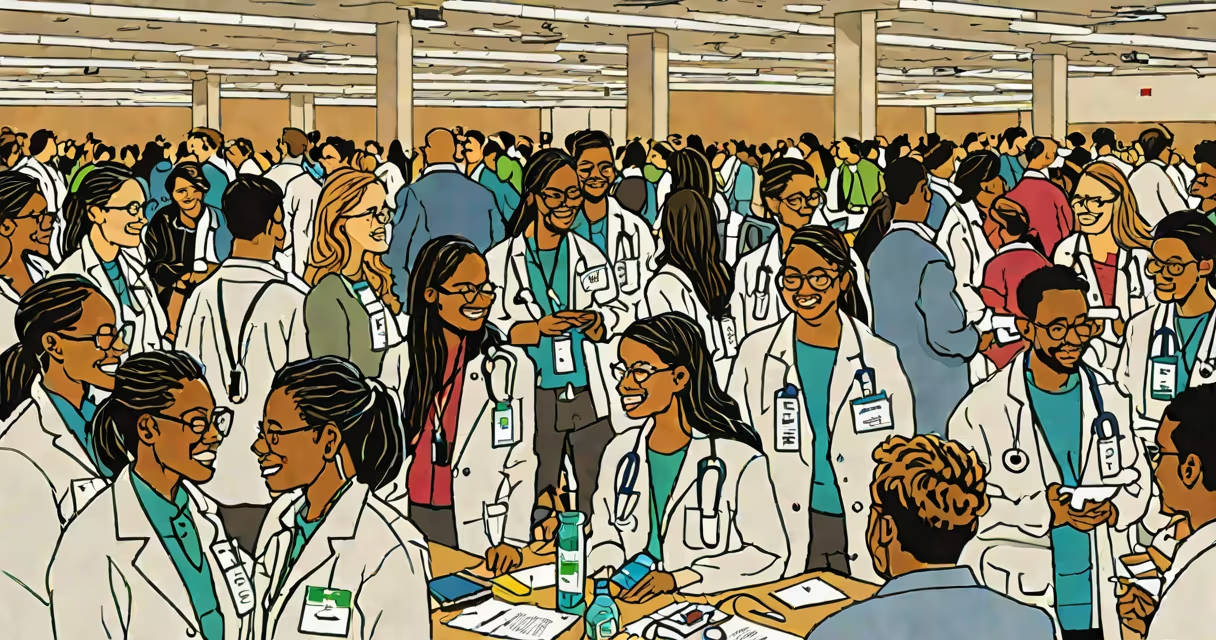
The SACNAS conference 2026 is an annual professional development and scientific exchange event hosted by the Society for Advancement of Chicanos/Hispanics and Native Americans in Science. It brings together undergraduate, graduate, and postdoctoral scholars, faculty, industry leaders, and policymakers to advance equity in science, technology, engineering, and mathematics.
SACNAS was founded in 1975 to address systemic barriers faced by Chicano, Hispanic, and Native American students pursuing STEM careers. The 2026 conference continues this mission by offering a platform for underrepresented groups to present original research, access fellowship and job opportunities, and build long-term networks within academia and industry.
Events take place over four days in a major U.S. city, typically in spring. Attendance includes over 5,000 participants annually, with 70% identifying as members of underrepresented racial or ethnic groups in STEM. The conference features keynote addresses, poster sessions, workshops on grant writing and academic publishing, and panels on going through graduate school and tenure-track positions.
How the conference operates
Registration opens in early fall and closes in late January. Applicants must submit a resume, a statement of purpose, and a letter of recommendation from a faculty advisor or supervisor. Accepted attendees receive discounted registration rates and priority access to career fairs and mentoring circles.
Each session is structured around thematic tracks such as environmental science, biomedical research, computer science, and social sciences. Presentations are peer-reviewed by a committee of senior researchers from institutions including Stanford University, the University of California system, and the National Institutes of Health.
Participants engage in one-on-one mentoring sessions with established scientists. These meetings are scheduled based on shared research interests and career goals. A 2023 survey by SACNAS found that 84% of mentees reported increased confidence in their ability to pursue advanced degrees after attending the conference.
Who attends and why
Attendees include undergraduate students from community colleges and four-year universities, graduate students in PhD programs, postdoctoral fellows, and faculty from historically underfunded institutions. Many come from rural or tribal communities where access to STEM resources is limited.
For example, Maria Lopez, a biology major from a tribal college in New Mexico, presented her research on soil microbiomes in arid ecosystems at the 2024 SACNAS conference. She received a travel grant and later secured a research assistant position at the University of Arizona. Her story reflects the program's goal: to connect talent with opportunity.
Industry partners such as Pfizer, Google, and the U.S. Department of Energy host booths and conduct interviews during career fairs. In 2023, 32 companies participated, resulting in 147 job offers and 210 internship placements for attendees.
Types of participation and formats
The conference uses a tiered structure for engagement:
| Type | Description | Examples |
|---|---|---|
| Oral Presentation | 10-minute talk on original research, selected via peer review | "Predicting wildfire spread using AI models in Navajo Nation" |
| Poster Session | Visual display of research with live discussion | "Cultural perspectives on climate adaptation in coastal Puerto Rico" |
| Mentoring Circle | Small-group discussion led by a senior scientist | "Going through the tenure track as a first-generation scholar" |
| Workshop | Hands-on training in skills like data visualization or grant writing | "Writing NIH proposals: A step-by-step guide" |
Presentations are evaluated using a rubric developed by the National Science Foundation and SACNAS leadership. Criteria include clarity of hypothesis, methodological rigor, and relevance to community impact.
A common misconception is that SACNAS is exclusively for Hispanic students. While the organization's name references Chicano and Hispanic communities, it explicitly includes Native American, Alaska Native, and Pacific Islander scholars. Over 40% of 2023 attendees identified as Indigenous or multiracial with Indigenous heritage.
Common confusions and corrections
Some assume SACNAS is a recruitment event for specific universities. It is not. Institutions do not sponsor attendance. Instead, the conference fosters connections between students and potential employers, academic departments, and funding agencies.
Another misunderstanding is that all sessions are in Spanish. All official programming is conducted in English. However, informal conversations often include Spanglish or bilingual exchanges. Interpretation services are available upon request.
One non-obvious fact: SACNAS does not charge a registration fee for students from institutions with fewer than 10,000 total enrollment. This policy ensures access for those from smaller or under-resourced colleges. In 2023, 1,243 students attended free of charge.
Firsthand observation
I attended the 2023 SACNAS conference in Albuquerque. Walking into the exhibition hall, I saw a student from a small liberal arts college in Texas presenting a study on water quality in urban neighborhoods. Her poster included local photos and community interviews. A representative from the Environmental Protection Agency approached her afterward and invited her to apply for a summer internship. That moment-real, unscripted connection-was the core of what the conference delivers.
Comparison with similar events
While other STEM conferences focus on discipline-specific advances, SACNAS emphasizes identity, equity, and institutional support. For example, the AACAP conference 2026 focuses on child and adolescent psychiatry, while ABCT conference 2026 centers on behavioral therapy and clinical psychology. SACNAS stands apart by integrating cultural context into scientific discourse.
Unlike broad STEM gatherings such as the American Association for the Advancement of Science (AAAS) meeting, SACNAS maintains a consistent focus on inclusion. It does not host sessions on artificial intelligence or quantum computing unless they directly relate to disparities in access or outcomes for underrepresented groups.
Final thoughts
The SACNAS conference 2026 is not a one-time event-it is part of a sustained effort to diversify the scientific workforce. By centering lived experience, supporting early-career researchers, and creating pathways to leadership, it transforms how science is practiced and who gets to practice it.
For students and professionals committed to inclusive excellence in STEM, the SACNAS conference 2026 offers a rare space where identity and expertise intersect meaningfully.