
What Is Philosophy and Education
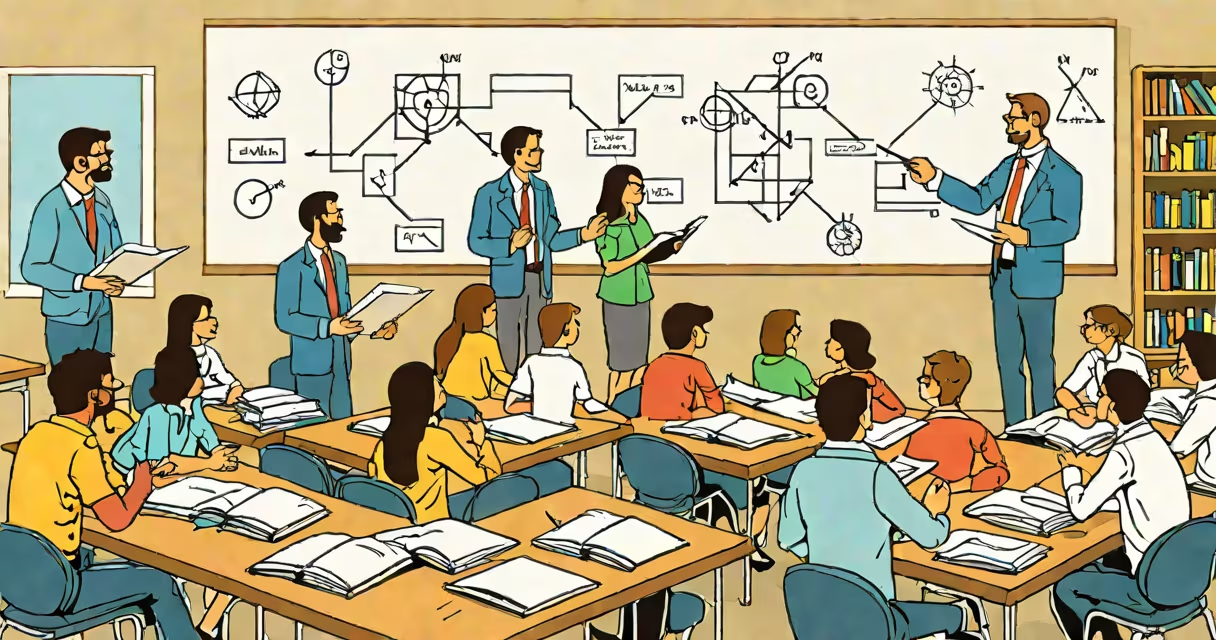
Philosophy and education is the study of foundational beliefs about knowledge, truth, and human development that directly shape how schools teach and what they aim to achieve. It examines why we educate, who benefits, and what kind of people schools should produce.
This field analyzes the principles behind teaching practices, curriculum design, and institutional goals. It's not about memorizing ancient texts-it's about asking whether education should prioritize critical thinking, moral character, economic readiness, or personal fulfillment. These questions define the mission of every school system.
For example, a school that emphasizes individual freedom and inquiry may adopt project-based learning and student-led discussions. A school focused on social stability might prioritize discipline, uniformity, and national history. The difference stems from underlying philosophical views, even if those views aren't explicitly stated.
How Philosophy and Education Works
Every educational system rests on unspoken assumptions about human nature, the purpose of life, and the role of society. When educators choose textbooks, assign homework, or set grading policies, they're making philosophical decisions-even if they don't realize it.
Take standardized testing. Proponents argue it ensures fairness and accountability. Critics say it narrows learning to testable facts and discourages creativity. This debate reflects deeper disagreements: Is education about measuring outcomes, or nurturing curiosity?
The philosopher John Dewey argued in *Experience and Education* (1938) that schools should mirror democratic participation. He believed children learn best through active engagement, not passive reception. His ideas led to progressive education models still used today in many public schools.
Core Types and Their Impact
Four major philosophies shape modern education. Each defines success differently and influences how classrooms operate.
| Philosophy | Focus | Classroom Example | Key Belief |
|---|---|---|---|
| Essentialism | Discipline and core knowledge | Students recite multiplication tables daily | Basic skills and traditional subjects build character |
| Progressivism | Learning by doing | Students design a school garden to study biology | Education grows from experience and problem-solving |
| Perennialism | Eternal truths and great works | High school students read Plato's *Republic* | Timeless ideas form the foundation of wisdom |
| Existentialism | Personal meaning and choice | Students write essays on "What matters most to me?" | Individual identity shapes the purpose of learning |
These frameworks aren't mutually exclusive. A single school might blend essentialist structure with progressive projects. But the dominant philosophy determines how teachers spend time, which topics get priority, and how success is measured.
Common Misconceptions and Clarifications
Many assume philosophy and education is purely theoretical or irrelevant to daily teaching. That's incorrect. A teacher choosing between lecture and discussion is applying philosophy. So is a principal deciding whether to ban phones or allow them for research.
Another misconception is that philosophy and education only applies to high school or college. It begins in kindergarten. A preschool teacher who says "We share toys" is modeling a belief in cooperation-a value drawn from social contract theory.
A key distinction often missed: philosophy and education is not the same as curriculum. Curriculum is what is taught. Philosophy and education is why it's taught. One can have a rigorous math curriculum based on rote memorization (essentialism), or the same math taught through real-world problem solving (progressivism).
Real-World Application and Personal Observation
In 2019, I observed a middle school science class in Portland, Oregon, where students were asked to design a water filtration system for a fictional village. The lesson was framed around ethics, environmental justice, and engineering. The teacher didn't just teach science-he used it to explore responsibility, equity, and innovation.
This was existentialist-influenced education. Students chose their own problems, proposed solutions, and presented to peers. Grades weren't based solely on correctness, but on reasoning, effort, and collaboration. Afterward, one student said, "I never thought science could be about helping people." That shift-from knowing facts to acting on values-is the goal of philosophy and education.
Research from the National Council for the Social Studies confirms that students exposed to ethical reasoning in lessons show higher civic engagement later in life. A 2021 longitudinal study found that schools integrating philosophy into core subjects reported 22% higher student retention rates compared to those that did not.
Why It Matters Beyond the Classroom
Philosophy and education shapes societal outcomes. When a district chooses to teach history through trauma and resilience, it fosters empathy. When it teaches science through profit and competition, it encourages market-driven behavior.
Public debates over school curricula-like whether to include climate change or critical race theory-are not just political. They're philosophical. Each side defends a vision of what society should value and how young people should understand themselves within it.
Understanding philosophy and education allows parents, teachers, and policymakers to ask better questions. Instead of accepting "this is how we've always done it," they can ask: What do we believe about learning? Who benefits? What kind of future are we preparing for?
When you see a school emphasize community service, debate clubs, or mindfulness, recognize that these aren't random choices. They stem from a belief about human potential. That's what philosophy and education is: the invisible architecture behind every lesson plan.
Philosophy and education isn't just about what schools teach. It's about what schools are meant to become. It's the lens through which we see the purpose of learning itself.