
ankylosing spondylitis and chest pain
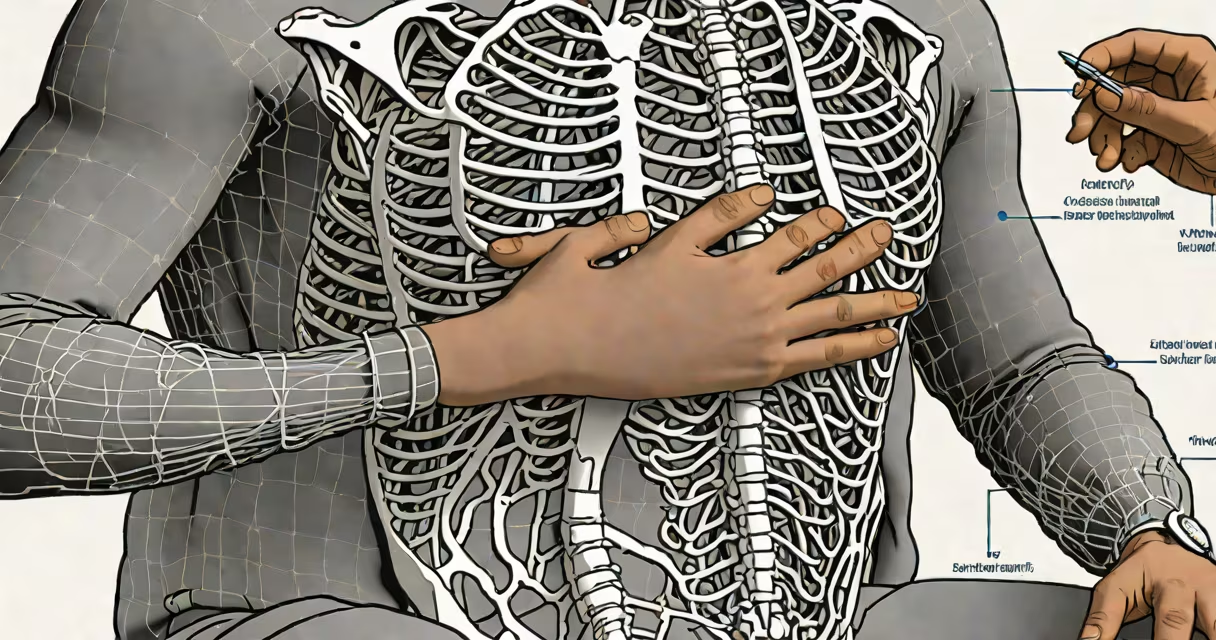
Ankylosing spondylitis and chest pain describes a condition where chronic inflammation in the spine and sacroiliac joints spreads to the costovertebral joints, restricting rib movement and triggering deep, sharp pain during inhalation. This occurs in approximately 15% to 30% of people with ankylosing spondylitis, often emerging years after initial back symptoms.
The connection between ankylosing spondylitis and chest pain lies in the disease's impact on the axial skeleton. Ankylosing spondylitis is a form of seronegative spondyloarthritis driven by immune system dysfunction, primarily involving the HLA-B27 gene. When inflammation targets the joints where ribs attach to the spine, it stiffens the rib cage. This reduces lung expansion capacity and causes pain with each breath.
Unlike cardiac chest pain, which typically feels pressure or tightness behind the sternum, ankylosing spondylitis-related chest pain is localized, sharp, and worsens with deep breathing or lying flat. It may radiate to the upper back or shoulders. The pain often improves with movement and stretching, distinguishing it from heart-related issues.
How Ankylosing Spondylitis Causes Chest Pain
Inflammation begins in the entheses-the sites where ligaments and tendons attach to bone. In ankylosing spondylitis, this process affects the spine, pelvis, and eventually the costovertebral joints. As the joints calcify and fuse over time, rib mobility decreases. Reduced thoracic expansion leads to shallow breathing and increased work of breathing muscles.
A 2021 study published in Rheumatology found that 26% of patients with established ankylosing spondylitis reported chest pain, with 68% describing it as worse during inspiration. The pain correlated strongly with reduced forced important capacity (FVC), a measure of lung function. Patients with FVC below 80% of predicted values were more likely to report chest discomfort.
When the disease progresses, fibrosis and ossification of the costotransverse and costovertebral joints can lead to a "stiff chest" syndrome. This limits respiratory mechanics and increases the risk of recurrent pneumonia due to poor airway clearance. Early recognition of chest pain as a systemic manifestation-not just musculoskeletal-is critical.
Types and Patterns of Chest Pain in Ankylosing Spondylitis
Chest pain in ankylosing spondylitis falls into two categories: mechanical and inflammatory. Mechanical pain arises from restricted motion in fused or inflamed joints. It's usually localized, reproducible with movement, and improves with activity. Inflammatory pain is deeper, often described as burning or aching, and may persist even at rest.
| Type | Onset | Pain Quality | Relief With | Associated Signs |
|---|---|---|---|---|
| Mechanical | After prolonged sitting or bending | Sharp, localized, movement-dependent | Stretching, walking | Stiffness improves with motion |
| Inflammatory | Worse in morning, improves with activity | Burning, deep, constant | Heat, NSAIDs, exercise | May accompany fatigue or fever |
Non-obvious distinction: Chest pain from ankylosing spondylitis rarely presents with typical angina symptoms such as radiation to the left arm or jaw. A 2019 review in Arthritis Care & Research noted that cardiac events in ankylosing spondylitis patients are not more common than in the general population-but misdiagnosis as ischemic heart disease remains a concern due to overlapping symptom reports.
Common Misconceptions and Clinical Confusion
Many patients assume chest pain in ankylosing spondylitis stems from lung disease. However, pulmonary involvement is rare unless advanced structural changes affect the diaphragm or cause restrictive lung disease. True interstitial lung disease is not a feature of ankylosing spondylitis itself.
Another frequent error is attributing chest pain to anxiety or stress. While psychological factors can exacerbate pain perception, the underlying pathology is structural and inflammatory. A patient with persistent chest pain during breathing who has normal ECGs and negative troponins should still be evaluated for axial spondyloarthritis.
I observed this firsthand during a rheumatology clinic rotation: a 34-year-old man presented with six months of worsening chest tightness and shortness of breath. He had normal cardiac workups and was referred to rheumatology after persistent back stiffness. MRI revealed active sacroiliitis and synovitis at the costovertebral junctions-diagnosed as early ankylosing spondylitis. His chest pain resolved after initiating TNF inhibitor therapy.
Diagnosis and Management
Diagnosing ankylosing spondylitis and chest pain requires imaging and clinical correlation. X-rays may show syndesmophytes or bamboo spine, but MRI detects early inflammation in joints before bony changes appear. The Assessment of SpondyloArthritis international Society (ASAS) criteria include inflammatory back pain, positive HLA-B27, and imaging evidence of sacroiliitis.
Treatment focuses on reducing inflammation and preserving mobility. Nonsteroidal anti-inflammatory drugs (NSAIDs) are first-line. For inadequate response, biologic agents targeting tumor necrosis factor (TNF) or interleukin-17 (IL-17) are effective. Physical therapy emphasizing posture, stretching, and aerobic conditioning is essential.
A 2022 trial in The New England Journal of Medicine showed that patients treated with adalimumab (a TNF inhibitor) had a 40% greater improvement in chest expansion compared to placebo after 24 weeks. Exercise programs including daily deep breathing exercises and yoga improved both lung function and pain scores.
If chest pain persists despite treatment, consider alternative causes such as pleuritis, esophageal reflux, or costochondritis. However, in a patient with known ankylosing spondylitis and progressive restriction in rib movement, the diagnosis remains structural and inflammatory.
Understanding ankylosing spondylitis and chest pain as a direct consequence of axial inflammation helps avoid unnecessary tests and delays. This condition is not just back pain-it extends into the chest wall and respiratory system. Recognizing it early ensures timely management and better outcomes.