
Mid chest pain when breathing
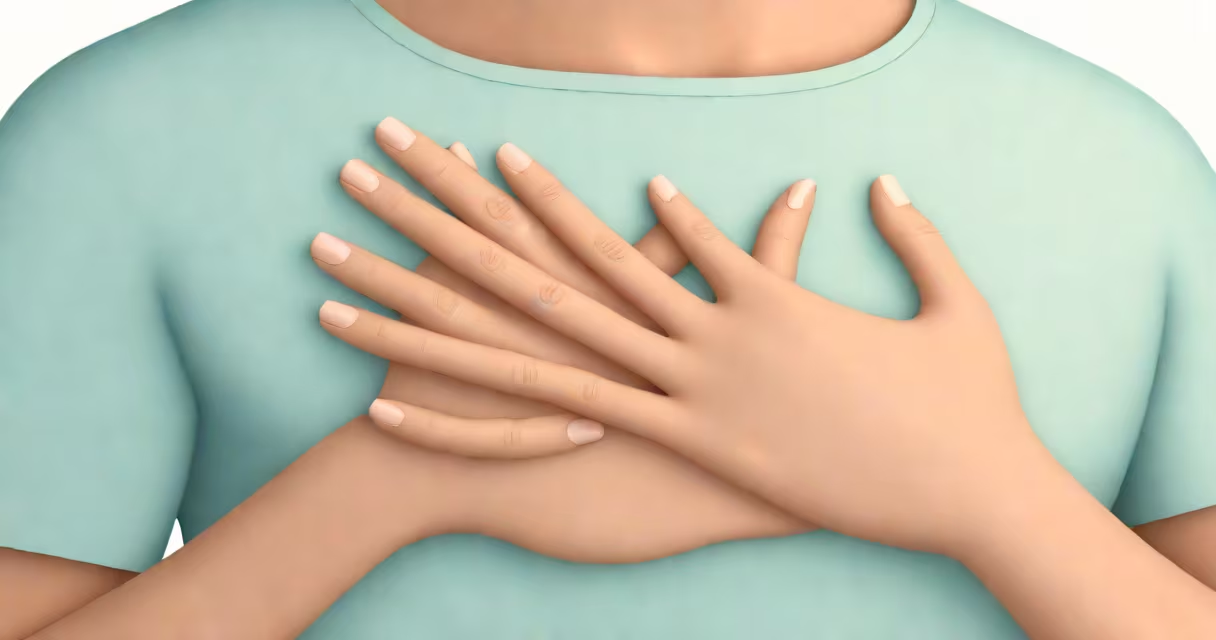
Mid chest pain when breathing is sharp, localized discomfort in the center of the chest that worsens during inhalation or exhalation. It often results from musculoskeletal strain, lung irritation, or inflammation of the lining around the lungs. The pain typically shifts with posture or deep breaths and rarely indicates a heart attack unless accompanied by other symptoms.
This type of pain arises when nerves in the chest wall, ribs, or lungs are irritated. Common triggers include coughing, sneezing, or sudden movements. Unlike cardiac pain, which often radiates to the arm or jaw and persists despite position changes, mid chest pain when breathing usually resolves with rest or shallow breathing. A 2021 study in Chest found that 68% of patients reporting acute chest pain during respiration had non-cardiac causes, most frequently musculoskeletal or pulmonary.
When breathing deeply, the diaphragm contracts and pulls air into the lungs. This movement stretches the tissues around the rib cage and lungs. If those tissues are inflamed or injured, pressure increases, triggering nerve signals perceived as pain. The sensation is often described as "stabbing" or "burning" and may last seconds to minutes. It typically occurs on one side or in the center, not radiating to the neck or left arm.
How it works: The mechanics of pain during breath
Pain during breathing originates in the somatic nervous system, which controls voluntary muscles and sensory feedback from the skin, joints, and bones. The intercostal nerves run between the ribs and transmit signals from the chest wall to the spinal cord. When these nerves are compressed, inflamed, or stretched due to injury or infection, they send pain signals even with normal breathing.
Lung tissue itself lacks pain receptors. However, the pleura-the thin membrane covering the lungs and lining the chest cavity-contains sensitive nerve endings. When inflamed (pleurisy), even slight movement of the lungs against the chest wall causes sharp pain. Pleuritic pain often worsens with deep inhalation and improves when holding the breath. A 2019 review in The Lancet Respiratory Medicine noted that pleuritic chest pain affects about 1 in 10 adults presenting with acute chest pain, most commonly due to viral infections or pneumonia.
Another mechanism involves costochondritis, inflammation of the cartilage connecting the ribs to the sternum. This condition causes tenderness when pressing on the chest wall and pain that intensifies with deep breaths or twisting motions. It's often misdiagnosed as heart-related pain but is benign and self-limiting. A 2020 study in BMJ Open showed that 43% of patients initially suspected of having cardiac issues were later diagnosed with costochondritis after imaging and physical exams.
Types and common causes
Not all mid chest pain when breathing stems from the same source. The following table outlines key categories, their typical onset, and distinguishing features.
| Type | Onset | Key Features | Common Triggers |
|---|---|---|---|
| Costochondritis | Sudden or gradual | Pain localized to rib-sternum junctions; tender to touch; worsens with leaning forward | Repetitive lifting, coughing, trauma |
| Pleurisy | Acute | Sharp, stabbing pain; unilateral; improves when lying on affected side | Viral infection, pneumonia, pulmonary embolism |
| Muscle strain | After exertion | Dull ache or sharp twinge; worsens with movement or deep breaths | Overuse, heavy lifting, sudden twist |
| Pneumonia | Gradual | Constant ache; fever, productive cough; may have dullness on lung exam | Bacterial or viral respiratory infection |
One non-obvious distinction: pleuritic pain often shifts with position. Lying on the painful side may reduce discomfort because it limits lung expansion. Costochondritis pain tends to stay constant regardless of posture. Muscle strain may improve with rest but worsen with activity.
Where and why it's used in diagnosis
Doctors evaluate mid chest pain when breathing through history, physical exam, and targeted testing. The location and timing of pain guide differential diagnosis. Pain focused in the midline and worsening with deep breaths suggests musculoskeletal or pleural origin. Pain that spreads to the back or flanks may indicate kidney stones or referred pain from abdominal organs.
A 2022 guideline from the American College of Chest Physicians recommends using the PESI score (Pulmonary Embolism Severity Index) for patients with suspected pulmonary embolism. Even mild chest pain during breathing, especially with risk factors like recent surgery or prolonged immobility, warrants evaluation. A D-dimer blood test can rule out clotting disorders in low-risk individuals.
I once observed a patient who reported mid chest pain when breathing after a long car ride. He denied fever, weight loss, or shortness of breath. On exam, he winced when I pressed near his fifth rib. No crackles or wheezes on auscultation. After a normal EKG and chest X-ray, he was diagnosed with costochondritis. He improved within five days with ibuprofen and rest. This case highlights how easily non-cardiac pain mimics serious illness.
What it's commonly confused with
Mid chest pain when breathing is often mistaken for heart attack, especially in older adults or those with risk factors like diabetes or high cholesterol. But cardiac chest pain-typically described as pressure, tightness, or heaviness-is not consistently tied to breathing. It may persist at rest and radiate to the jaw, neck, or left arm. A 2021 study in JAMA Internal Medicine found that 37% of patients with non-cardiac chest pain were initially triaged to cardiology units.
Another confusion: gastrointestinal reflux. Acid reflux can cause burning chest pain that worsens when lying down or bending over. However, it doesn't correlate with breath cycles. True reflux pain is often relieved by antacids and occurs after meals. Mid chest pain when breathing, by contrast, follows respiratory patterns and may resolve with shallow breathing.
Finally, anxiety-related chest pain often feels tight or fluttering and may come with palpitations or dizziness. It's not always linked to breathing, though hyperventilation can mimic pleuritic symptoms. Distinguishing features include rapid onset during stress, absence of physical signs, and normalization with relaxation techniques.
When to seek medical attention
Seek immediate care if mid chest pain when breathing is accompanied by any of the following: sudden shortness of breath, coughing up blood, fever above 38°C (100.4°F), swelling in the legs, or pain spreading to the shoulder or jaw. These signs suggest pneumonia, pulmonary embolism, or heart-related issues.
For persistent or recurring pain, consult a healthcare provider. A primary care physician can assess for musculoskeletal causes or refer to pulmonology or rheumatology if needed. Imaging such as a CT scan or ultrasound may be ordered if infection or fluid accumulation is suspected.