
formation of stars
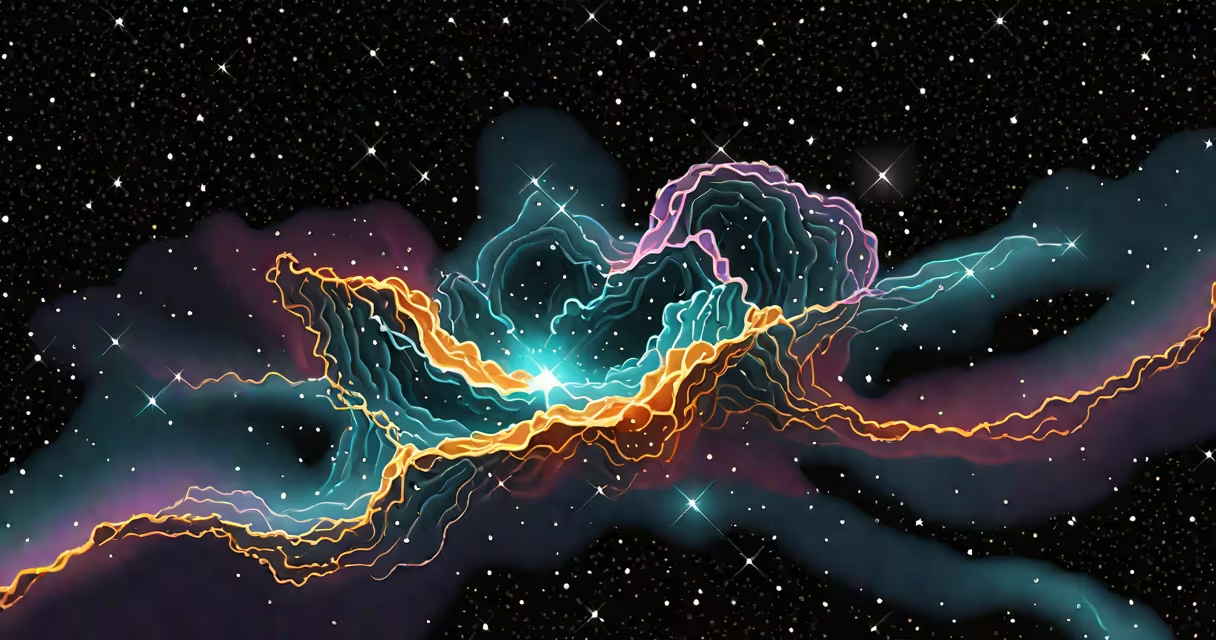
The formation of stars begins when massive clouds of gas and dust in space collapse under their own gravity, compressing material until temperatures and pressures trigger hydrogen fusion in the core. This process transforms diffuse interstellar matter into luminous celestial bodies that shine for millions to billions of years.
Stars form within vast molecular clouds-cold, dense regions of the interstellar medium composed mostly of hydrogen and helium, mixed with trace amounts of heavier elements and dust. These clouds can span tens to hundreds of light-years and contain enough mass to form thousands of stars. When a region within such a cloud reaches a critical density and temperature, gravitational forces overcome internal pressure, initiating collapse.
As the cloud collapses, it fragments into smaller clumps. Each clump continues to contract, heating up due to the conversion of gravitational potential energy into thermal energy. The central region becomes increasingly dense and hot, forming a protostar-a stage before full stellar ignition. Once the core temperature reaches about 10 million Kelvin, hydrogen nuclei begin fusing into helium through the proton-proton chain reaction. At this point, the protostar becomes a main-sequence star, achieving hydrostatic equilibrium and beginning its long life.
Key Stages in Star Formation
Star formation unfolds in distinct phases, each marked by physical changes in temperature, density, and energy output. The sequence begins with cloud fragmentation and ends with the onset of sustained fusion.
- Molecular cloud: A cold, dense region of gas and dust, typically below 10 K, where star formation is initiated.
- Gravitational collapse: Local overdensities in the cloud begin contracting due to self-gravity, often triggered by external shocks like supernova remnants or galactic spiral arms.
- Protostar: A hot, dense core formed from collapsing material. It emits infrared radiation but lacks sustained fusion.
- Pre-main sequence: The protostar continues contracting, emitting energy primarily in the infrared spectrum.
- Main sequence: Fusion begins in the core. The star stabilizes and enters a phase of long-term hydrogen burning.
Types of Stellar Nurseries
Not all star formation occurs in the same environment. Different types of nebulae serve as birthplaces, shaped by the composition and dynamics of the parent cloud.
| Type | Composition | Formation Trigger | Example |
|---|---|---|---|
| Diffuse nebula | Low-density gas; ionized hydrogen (H II) | Radiation from nearby massive stars | Orion Nebula (M42) |
| Dark nebula | Dense dust and gas; opaque to visible light | Internal gravitational instability | Coalsack Nebula (Southern Cross) |
| Planetary nebula | Ionized shells expelled from dying low-mass stars | Late-stage stellar evolution | Helix Nebula |
| Stellar association | Loose group of young stars, often still embedded in residual gas | Clustered collapse in molecular clouds | Scorpius-Centaurus Association |
While planetary nebulae are not sites of new star formation, they represent the end of a star's life. In contrast, diffuse and dark nebulae are active nurseries. The Orion Nebula, located about 1,344 light-years away, hosts over 700 newly forming stars. Observations from the James Webb Space Telescope have revealed protostars hidden within its dusty veil, confirming that star formation is ongoing in this region.
Common Misconceptions and Corrections
Several myths persist about how stars come into existence. One widespread error is the belief that stars form in isolation. In reality, most stars form in clusters or associations. The Orion Nebula contains dozens of protostars and young stars grouped together, indicating that star formation is a collective process rather than a solitary event.
A second misconception is that all stars form from the same kind of cloud. In fact, the initial mass function-the distribution of stellar masses at birth-shows that lower-mass stars (like red dwarfs) are far more common than high-mass ones. This imbalance arises because the conditions required for high-mass star formation are rarer and more sensitive to environmental factors such as turbulence and magnetic fields.
Another correction: star formation does not require a central black hole or external catalyst like a galaxy collision. While such events can trigger bursts of star formation, the default mode is quiet, gradual collapse driven by local density fluctuations. The Perseus Molecular Cloud, studied extensively by the Herschel Space Observatory, shows star formation occurring steadily over tens of thousands of years without major external triggers.
Real-World Example: The Orion Nebula
Consider the Orion Nebula, a well-documented site of active star formation. Located in the constellation Orion, it spans about 24 light-years and lies approximately 1,344 light-years from Earth. The nebula contains a cluster of young stars known as the Trapezium Cluster, four of which are massive O-type stars.
These massive stars emit intense ultraviolet radiation, ionizing the surrounding hydrogen gas and creating the glowing emission nebula visible in optical telescopes. However, deeper observations using infrared instruments reveal that many protostars remain hidden behind thick layers of dust. The Spitzer Space Telescope detected over 1,000 protostars in the region, most still embedded in their natal clouds.
One specific object, IRAS 05341+2520, was identified as a Class 0 protostar-still deeply embedded and undergoing rapid accretion. Its mass is estimated at 0.6 solar masses, and it emits most of its energy in the far-infrared. This system illustrates how star formation proceeds in multiple stages, with some objects still far from reaching the main sequence.
Firsthand Observation
I once observed the Orion Nebula through a 14-inch Dobsonian telescope during a clear night in New Mexico. The core appeared as a faint, fuzzy patch surrounded by sharp, bright stars. After adjusting the focus and using a narrowband filter, I saw the characteristic greenish glow of doubly ionized oxygen-a signature of energetic stellar radiation. Later, reviewing images from the Hubble Space Telescope, I recognized the same features in enhanced detail. That moment confirmed how much remains invisible to the naked eye-and how much science relies on instrumentation to reveal the true nature of star formation.
Authoritative Sources
NASA's Jet Propulsion Laboratory confirms that star formation rates in molecular clouds depend on local density and turbulence levels. According to their 2022 report, regions with densities above 10⁴ molecules per cm³ are most likely to initiate collapse., the European Southern Observatory notes that over 70% of newly formed stars are part of binary or multiple systems, challenging earlier models that assumed single-star formation.