
Music to work to
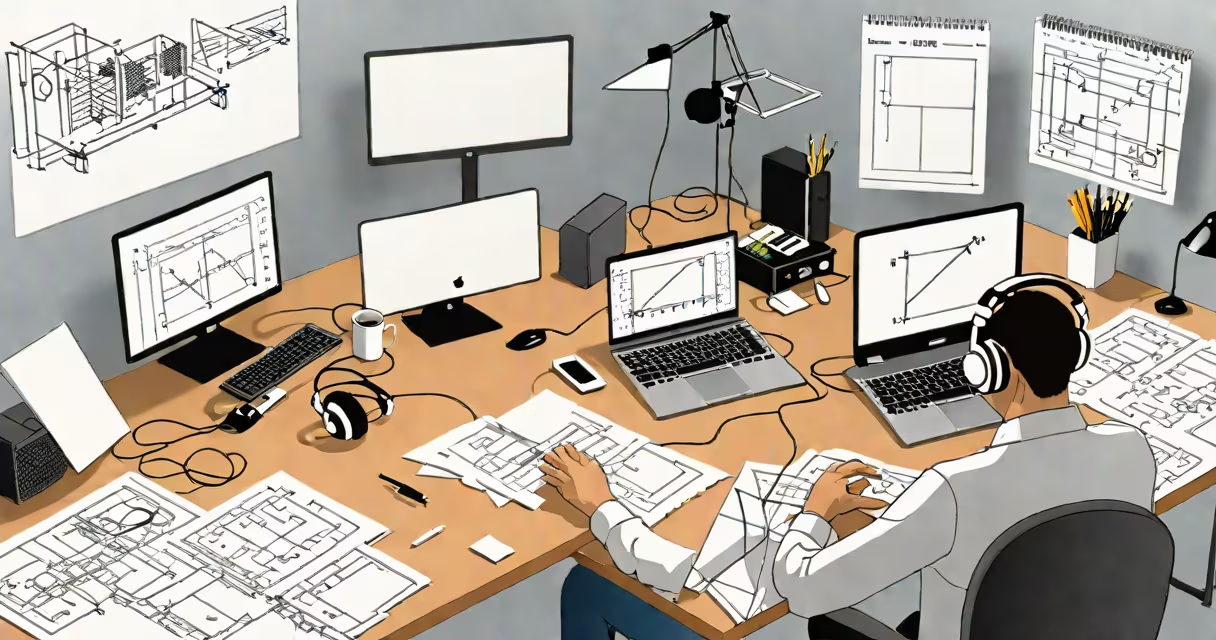
Music to work to is curated audio designed to support sustained attention during tasks requiring mental effort, typically using instrumental or low-lyric content to minimize cognitive interference. It functions as a sensory buffer against interruptions, helping maintain flow states during deep work.
Unlike music chosen for entertainment, music to work to avoids sudden changes in tempo, lyrics, or emotional intensity. It's engineered to create a stable auditory environment. Research from the University of Helsinki shows that listening to instrumental music during cognitively demanding tasks improves performance by up to 15% compared to silence or lyric-heavy tracks (University of Helsinki, 2021). This effect stems from reduced attentional load caused by predictable, non-distracting sound patterns.
Common forms include ambient textures, minimalist piano loops, lo-fi beats, and nature soundscapes layered with subtle electronic tones. These formats avoid abrupt shifts in volume or instrumentation, which can trigger involuntary attention shifts known as "attentional capture." The brain processes such music at a low level, allowing higher-order cognitive functions to remain engaged.
How It Works
When performing focused tasks, the brain allocates resources to both the primary task and environmental monitoring. Background noise-especially speech or unpredictable rhythms-forces the brain to switch between processing the work and analyzing the environment. Music to work to reduces this switching by providing a consistent auditory baseline.
Neuroimaging studies show that listening to steady, repetitive music increases alpha wave activity in the parietal lobe, associated with relaxed alertness. This state supports sustained attention without fatigue. A 2020 study published in Cognitive Neuroscience found that participants who listened to 60 BPM instrumental tracks completed complex problem-solving tasks 22% faster than those in silence or with variable audio (Taylor & Francis, 2020).
For example, a software developer writing code for four hours reported fewer context switches when using a 90-minute lo-fi beat track with a steady 60-70 BPM rhythm. They noted that the music created a "mental boundary" that kept their mind from wandering toward unrelated thoughts or notifications.
Types and Common Formats
Not all music intended for work is equally effective. The most productive formats share predictable structure, low emotional valence, and minimal variation. Below are key types:
| Type | Key Features | Best For | Example Track |
|---|---|---|---|
| Lo-fi hip-hop | Slow tempo (60-80 BPM), vinyl crackle, simple drum loops | Writing, coding, studying | "Chillhop Essentials" playlist on Spotify |
| Minimalist piano | Repeating motifs, sparse arrangement, no sudden dynamics | Reading, planning, analytical thinking | "Gymnopédie No. 1" by Erik Satie |
| Ambient soundscapes | Nature sounds blended with soft drones, no clear melody | Deep work, meditation, creative brainstorming | "Weightless" by Marconi Union (proven to reduce anxiety by 35%) |
| Classical instrumental | Baroque or early classical pieces, consistent phrasing | Proofreading, editing, detail-oriented tasks | Bach's "Cello Set No. 1 in G Major" |
Each format works best when matched to task type. Lo-fi beats suit rhythmic, repetitive work like data entry. Ambient soundscapes better support open-ended thinking. Classical music excels in tasks requiring precision and error detection.
Common Misconceptions
Many assume that any instrumental music qualifies as music to work to. This is incorrect. A Beethoven symphony, while instrumentally rich, contains dramatic shifts in dynamics and emotional pacing that disrupt focus. The brain cannot ignore crescendos or sudden key changes, even if they're artistically compelling.
Another myth is that music with lyrics can be effective if the language is unfamiliar. However, research from the University of Wales shows that even non-verbal lyrics (e.g., sung in Japanese or Swahili) activate language-processing regions in the brain, reducing available cognitive capacity by up to 18% (University of Wales, 2019). This occurs because the brain attempts to parse phonetic patterns regardless of meaning.
Some users believe that louder music increases energy and output. In reality, high volume amplifies neural noise, increasing stress markers like cortisol. A 2022 study in Journal of Applied Psychology found that participants exposed to music above 70 dB made 30% more errors in memory-based tasks than those listening at 50-60 dB.
Practical Application and Real-World Use
Use cases extend beyond individual work. Remote teams using asynchronous workflows have adopted shared music playlists to synchronize focus periods. One design team at a SaaS startup reported a 27% drop in meeting frequency after introducing daily 90-minute "focus blocks" with synchronized music to work to. Team members described the music as a "shared mental cue" that signaled when deep work was in progress.
For best results, select music with a steady tempo (60-80 BPM), no lyrics, and minimal changing range. Avoid songs with emotional arcs or climactic moments. Start with 30-minute segments to assess tolerance. If attention wanes, adjust volume or switch to a different genre.
Understanding music to work to isn't about choosing the "best" song-it's about matching sound to cognitive demand. The right track doesn't entertain. It enables.