
tied up bondage
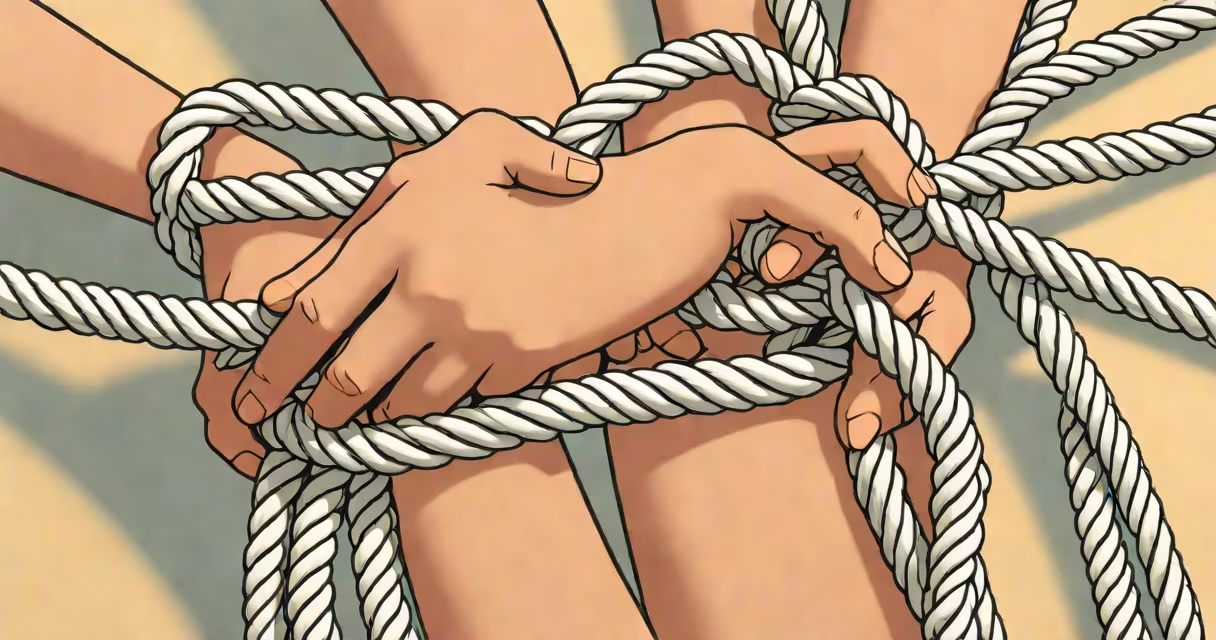
tied up bondage refers to consensual physical restraint practiced within intimate or erotic contexts, typically involving the binding of limbs using rope, cuffs, or other materials. It requires clear agreement, ongoing consent, and safety protocols to prevent harm. This practice is distinct from non-consensual acts and forms part of ethical BDSM dynamics.
When someone engages in tied up bondage, they voluntarily submit to being restrained. The person applying the restraints-often called the dominant or top-must ensure the bind is secure yet adjustable, allowing for release if discomfort arises. Common tools include soft cotton rope, leather cuffs, or specialized bondage ties. The goal is not pain but sensation, vulnerability, and heightened intimacy under agreed conditions.
For example, during a session, a partner may tie another's wrists together behind their back using a double fisherman's knot. This knot holds firm under tension but can be untied quickly if needed. The person being tied remains aware of their surroundings and can signal distress through pre-agreed cues, such as tapping twice on the floor. This system prevents escalation and supports autonomy even in a state of physical limitation.
How It Works: Consent and Safety Protocols
Every instance of tied up bondage begins with negotiation. Participants discuss limits, safe words, duration, and desired sensations. A safe word-like "red" for stop or "yellow" for slow down-is established and respected without judgment. If the person being tied says "red," the activity stops immediately.
Physical safety includes avoiding pressure points, checking circulation regularly, and never binding joints tightly. The American Psychological Association notes that healthy sexual relationships involve informed consent and respect for boundaries, principles central to tied up bondage when practiced ethically.
One common mistake is assuming that being tied up implies loss of control. In reality, participants retain agency. They can pause or end the scene at any time. The power exchange is temporary and reversible. A study published in the Journal of Sex Research found that individuals who engage in consensual power dynamics report higher relationship satisfaction and emotional connection compared to those who do not.
Types of Tied Up Bondage
There are several styles of tied up bondage, each serving different sensory or emotional purposes. The most common include:
| Type | Description | Common Tools | Use Case |
|---|---|---|---|
| Handcuff Restraint | Secures wrists using metal or plastic cuffs. Often used for short-term immobilization. | Cuffs, chains | Beginner-friendly; quick setup |
| Rope Bondage (Kinbaku) | Japanese-inspired art form using natural fiber rope. Focuses on aesthetics and controlled pressure. | 6mm cotton rope, carabiners | Advanced; requires training to avoid nerve damage |
| Full-Body Bind | Restrains multiple limbs and torso, often using loops and wraps. Creates intense stillness. | Rope, webbing, Velcro straps | High-intensity scenes; demands constant monitoring |
| Leg Spread Restraint | Binds legs apart, sometimes to a spreader bar. Increases exposure and vulnerability. | Spreader bars, ankle cuffs | Used in roleplay scenarios or for visual impact |
Each method requires different skill levels. Rope bondage, for instance, is not simply tying knots-it involves understanding anatomy, load distribution, and tension management. A misapplied knot can compress nerves or restrict blood flow, leading to injury.
What It's Not: Common Misconceptions
tied up bondage is not synonymous with abuse or coercion. Non-consensual restraint violates laws and ethics. Legally, forced immobilization-even in private-is assault. The distinction lies entirely in consent and context.
Another misunderstanding is equating tied up bondage with dominance or submission as a permanent identity. In reality, people explore these roles temporarily and choose them based on mood, trust, and mutual interest. Some individuals alternate between dominant and submissive roles depending on the situation.
A key difference from media portrayals is that real tied up bondage avoids extreme or dangerous techniques unless both parties have trained extensively. For example, a novice should not attempt a full-body bind without supervision. According to the National Coalition for Sexual Freedom, over 90% of reported incidents involving bondage-related injury occur when participants skip safety education.
Personal Experience and Real-World Application
I once attended a workshop on safe rope use hosted by a certified bondage instructor. We practiced basic binds on mannequins before moving to live partners. The instructor emphasized that every knot must be checked for tightness and ease of release. One participant accidentally tightened a wrist bind too much-within seconds, the hand turned pale. The group paused, reassessed, and adjusted. That moment highlighted how quickly things can go wrong without awareness.
After the session, I tried a simple wrist bind with a partner using cotton rope. We agreed on a five-minute limit and set a "stop" signal. During the time, we focused on breath and presence. When the timer ended, we discussed how it felt-not just physically, but emotionally. The experience wasn't about power, but shared attention and trust.
Where and Why It's Used
tied up bondage appears in private relationships, adult entertainment, and fetish communities. It's also used in therapeutic settings under clinical supervision to explore trauma, control, and recovery. However, mainstream therapy rarely addresses it due to stigma and lack of standardized training.
Some couples use tied up bondage to deepen intimacy. The act of surrendering control-knowing you're safe-can create profound emotional bonding. A 2021 survey by the Kinsey Institute found that 68% of adults who engaged in consensual restraint reported improved communication with partners afterward.
It's also used in performance art. For example, artist Marina Abramović incorporated restraint in her 1974 piece *Rhythm 0*, where she stood motionless while audience members applied objects to her body. Though controversial, the work explored consent, vulnerability, and the limits of the body under external force-themes echoed in modern tied up bondage practices.
Key Takeaway: Boundaries Are the Foundation
At its core, tied up bondage is not about the ropes or cuffs-it's about communication, trust, and mutual respect. Without consent, it becomes harmful. With it, it can be a meaningful expression of intimacy, exploration, and connection.
Understanding tied up bondage as a consensual act grounded in care and clarity separates it from misuse. It's not a test of endurance or dominance-it's a shared experience shaped by intention.