
What Is ERP Business
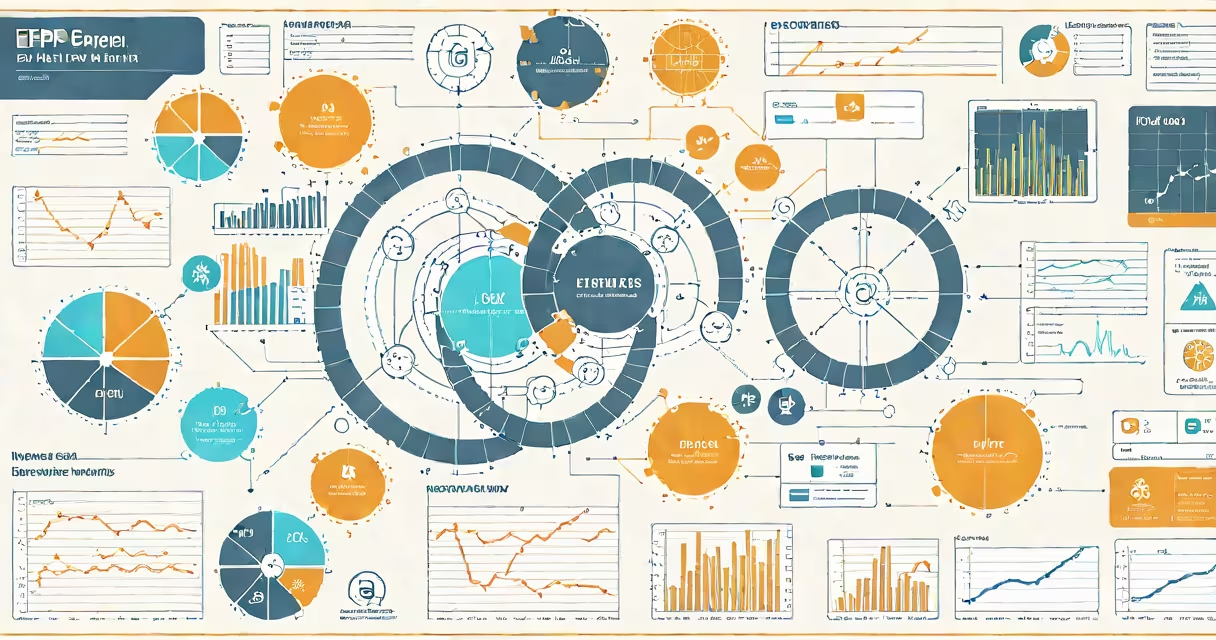
ERP business refers to the use of enterprise resource planning software to integrate and automate core functions across finance, human resources, supply chain, manufacturing, and sales. It replaces fragmented spreadsheets and standalone tools with a single shared database that updates in real time across departments.
At its core, ERP business eliminates data silos. When a sales order is placed, the system automatically updates inventory levels, triggers production scheduling, adjusts financial forecasts, and notifies customer service-all within seconds. This coordination reduces errors, speeds up decision-making, and improves accountability.
According to Gartner, organizations using ERP systems report 25% faster month-end closing processes and 30% fewer manual data entry errors compared to those relying on disconnected systems. The same study notes that companies with mature ERP implementations see a 15% improvement in operational efficiency over three years.
How ERP Business Works
ERP business operates through a central database that stores all organizational data. Every transaction-whether a purchase order, employee timesheet, or shipment confirmation-is recorded once and accessible across roles and locations. This avoids duplicate entries and ensures consistency.
Modules run on a common structure. For example, when a warehouse manager marks a shipment as "delivered" in the logistics module, the accounting system automatically generates an invoice, and the CRM updates the customer's order status. All changes happen simultaneously across systems.
Cloud-based ERPs like SAP S/4HANA Cloud and Oracle Fusion Cloud allow access from anywhere. Employees in New York, Tokyo, and Berlin can view the same live data, make updates, and receive alerts based on predefined thresholds-such as low stock levels or overdue payments.
Types of ERP Systems Used in Business
Businesses choose ERP systems based on size, industry, and technical needs. The most common types are:
| Type | Best For | Example Use Cases | Deployment Model |
|---|---|---|---|
| On-Premise | Larger enterprises with strict compliance needs | Manufacturers handling sensitive IP, banks managing client data | Installed locally; full control over infrastructure |
| Cloud-Based | Small to mid-sized businesses needing scalability | E-commerce startups, retail chains, service providers | Hosted by vendor; accessed via web browser |
| Hybrid | Organizations transitioning from legacy systems | Healthcare providers integrating patient records with billing | Combines local servers with cloud modules |
For example, a mid-sized electronics distributor switched from Excel-based tracking to a cloud ERP. Within six months, they reduced order processing time from 48 hours to under 6 hours and cut inventory carrying costs by 18% due to better demand forecasting.
Common Misconceptions About ERP Business
Many assume ERP business is only for large corporations. That's incorrect. Small businesses with 50 employees and $5 million in annual revenue now use cloud ERPs like NetSuite or Microsoft Dynamics 365 Business Central. These platforms scale with growth and offer modular licensing-pay only for what you use.
Another myth is that ERP implementation takes years and disrupts operations. While complex rollouts can take 12-18 months, many small-to-midsize firms complete deployment in 3-6 months using preconfigured templates. A bakery chain in Portland migrated to a cloud ERP in four months, aligning payroll, recipe costing, and supplier payments-all while maintaining daily operations.
Finally, people often confuse ERP with CRM or accounting software. ERP integrates both. A CRM manages customer interactions; an accounting tool tracks debits and credits. An ERP combines them-so when a sales rep closes a deal, the system logs the sale, updates accounts receivable, and schedules fulfillment-all in one workflow.
Real-World Example: How a Retailer Used ERP Business
Consider a regional clothing retailer with 12 stores and a central warehouse. Before ERP, store managers used paper orders, warehouse staff relied on spreadsheets, and finance tracked sales in separate systems. Stockouts occurred in 30% of stores during peak season. Overstocking led to markdowns averaging 40% on seasonal items.
The company adopted a cloud-based ERP with integrated POS, inventory, and procurement modules. They set up automated reorder points: when stock fell below 10 units for a product, the system generated a purchase order. Sales data from each store fed into a weekly demand forecast model.
After one year, the retailer reported:
- 22% reduction in out-of-stock events
- 17% decrease in excess inventory
- 40% faster monthly reporting cycle
- 28% increase in gross margin due to better pricing and stock rotation
This outcome wasn't accidental. The ERP didn't just digitize processes-it changed how decisions were made. Managers no longer guessed at stock levels. They acted on real-time data.
Why ERP Business Matters for Growth
As a business scales, complexity grows. Manual systems fail under pressure. A single error in a spreadsheet can delay payroll, miss tax deadlines, or trigger audit flags. ERP business provides stability through automation and visibility.
Research from McKinsey shows that companies using integrated ERP systems grow revenue 2.3 times faster than peers using disjointed tools. The reason: faster response to market shifts, improved cross-functional alignment, and stronger compliance.
I once observed a family-owned food processor implement an ERP to manage seasonal production. Prior to the system, they lost 15% of output annually due to misaligned production schedules and untracked ingredient waste. After ERP integration, waste dropped to 4%, and they secured a contract with a national grocery chain requiring real-time traceability.
ERP business isn't about technology for its own sake. It's about enabling smarter, faster, more reliable operations. It turns data into action, and action into results.