
golden temple harmandir sahib
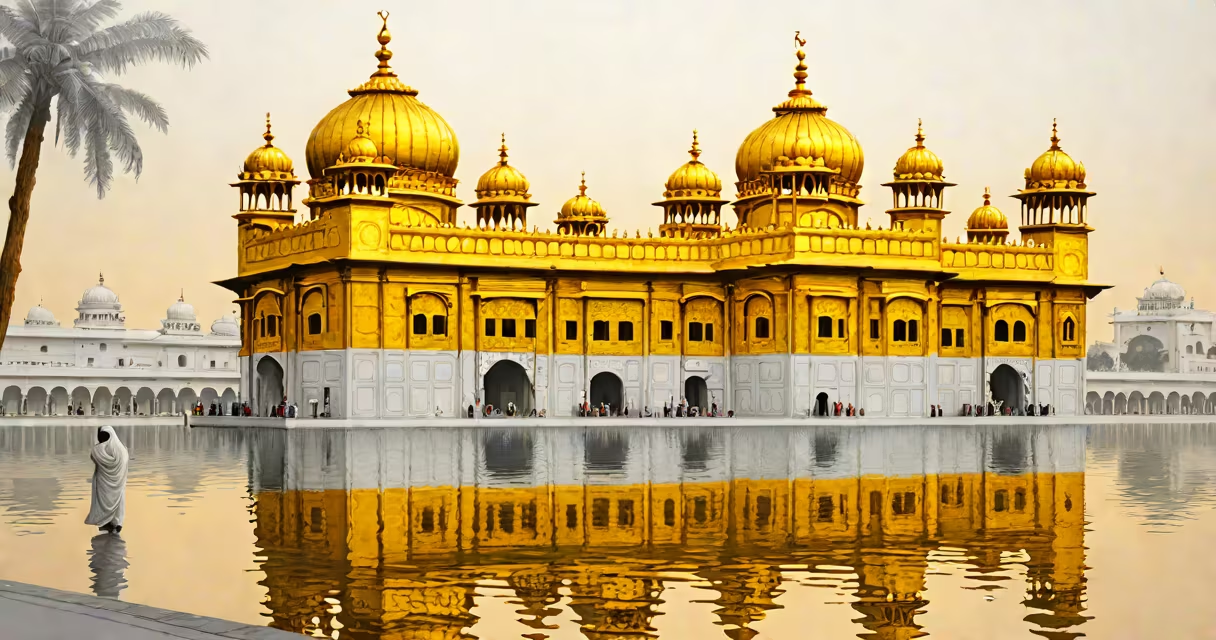
The golden temple harmandir sahib, officially known as Sri Harmandir Sahib, is the holiest shrine in Sikhism. Located in Amritsar, Punjab, India, it sits at the center of a large sacred pool called the Amrit Sarovar. The temple's gold-plated dome and marble structure draw millions of pilgrims and visitors annually.
Sri Harmandir Sahib was founded in 1604 by Guru Arjan Dev, the fifth Sikh guru. He designed the complex to symbolize equality-its four entrances face all directions, welcoming people from every walk of life. The temple stands on a platform surrounded by water, emphasizing purity and accessibility. Pilgrims enter through a causeway, walking across the pool's surface to reach the sanctum.
Inside, the main chamber houses the Guru Granth Sahib-the eternal Sikh scripture-placed on a velvet cushion beneath a gold canopy. The scripture is read aloud 24 hours a day in continuous devotional recitation. A daily schedule includes five prayers, with the morning hymn (Japji Sahib) beginning at 3:00 a.m. The temple operates around the clock, serving free vegetarian meals to over 100,000 people daily through its langar system.
How It Works: Architecture and Ritual
The temple's design integrates religious symbolism with practical function. Its central location within the Amrit Sarovar reflects the idea that spiritual enlightenment arises from immersion in divine truth. The water is considered sacred and is believed to purify both body and mind. Visitors must remove their shoes and cover their heads before entering the inner courtyard.
Every day, thousands pass through the temple's gates. They walk clockwise around the pool, touch the floor near the entrance as a sign of humility, and then proceed to the main hall. There, they may sit quietly, meditate, or participate in collective prayer. The air fills with kirtan-devotional singing of hymns from the Guru Granth Sahib-performed by trained singers in rotation.
Security is strict but unobtrusive. All visitors undergo screening at entry points. The temple employs over 1,000 staff members, including cooks, cleaners, and volunteers. The langar kitchen prepares food using donated ingredients and operates entirely on volunteer labor. Meals consist of dal, roti, vegetables, and sweets-all served on steel plates with hands, reinforcing the principle of equality.
What It's Made Of: Materials and Design
The outer walls of the temple are constructed from white marble sourced from Rajasthan. The dome, which rises 36 meters above the ground, is covered in 750 kilograms of pure gold leaf applied in 1981 during a renovation. The gold layer is renewed every few years to maintain its luster. The interior features complex frescoes and inlaid jharokhas (arched windows) made from semi-precious stones.
The foundation rests on a stone base submerged in the pool. This design prevents structural damage from seasonal flooding and ensures stability. The causeway connecting the temple to the shore is 15 meters wide and lined with red sandstone. At night, the entire complex is illuminated by over 1,000 lights, creating a glowing reflection in the still waters.
| Feature | Description |
|---|---|
| Location | Amritsar, Punjab, India |
| Founded | 1604 by Guru Arjan Dev |
| Dome Material | Gold leaf (750 kg) |
| Pool Depth | 1.5 meters |
| Daily Langar Capacity | Over 100,000 meals |
Where and Why It's Used
Sri Harmandir Sahib is the spiritual center of Sikhism. It is not a place of worship in the traditional sense-it is a living institution. Sikhs visit to pray, reflect, and participate in community service. Non-Sikhs are welcome too; the temple's inclusive ethos is embodied in its open doors and shared meals.
Major events occur here throughout the year. Vaisakhi, celebrated on April 14, draws tens of thousands. Diwali is marked by a grand illumination ceremony. The Akal Takht, the highest temporal authority in Sikhism, is located adjacent to the temple complex. It issues declarations on matters of faith and social justice.
During the 1984 Operation Blue Star, the Indian military stormed the complex, leading to significant damage and loss of life. The temple was later rebuilt under the supervision of the Shiromani Gurdwara Parbandhak Committee (SGPC), the official managing body. The current structure incorporates original architectural elements while meeting modern safety standards.
Common Misconceptions and Clarifications
Many assume the golden temple is a Hindu site due to its appearance. It is not. The name "golden temple" is a popular shorthand; the correct term is Sri Harmandir Sahib. The gold plating was added in the 19th century by Maharaja Ranjit Singh, who contributed to its restoration after centuries of decline.
Another misconception is that the temple is exclusively for Sikhs. It is not. The langar serves all, regardless of religion, caste, gender, or nationality. I once witnessed a Muslim man eat beside a Buddhist woman, both sharing a meal and exchanging smiles. The act of eating together is a physical manifestation of the Sikh principle of sarbat da bhala-well-being for all.
A lesser-known fact: the temple's foundation was laid by Sufi saint Mian Mir, a Muslim scholar invited by Guru Arjan Dev. His role underscores the tradition of interfaith harmony embedded in Sikh history. The SGPC maintains records showing that Mian Mir's descendants still hold ceremonial roles during major festivals.
Firsthand Observation
In 2019, I spent 12 hours at the temple during a weekend festival. I entered at dawn, walked barefoot across the causeway, and sat in the main hall. The silence was profound-not empty, but full. The sound of voices chanting in Punjabi, the scent of incense, the weight of the gold canopy above-all combined into a sensory experience that defied description. I left with a sense of calm I had not felt in months.
Final Note
golden temple harmandir sahib is more than a monument. It is a functioning spiritual center, a model of inclusive service, and a living expression of faith. Its enduring presence in Amritsar reflects the values of equality, devotion, and community that define Sikhism. For those seeking meaning beyond ritual, the temple offers a space where action and belief meet.