
How to Program a Key Fob
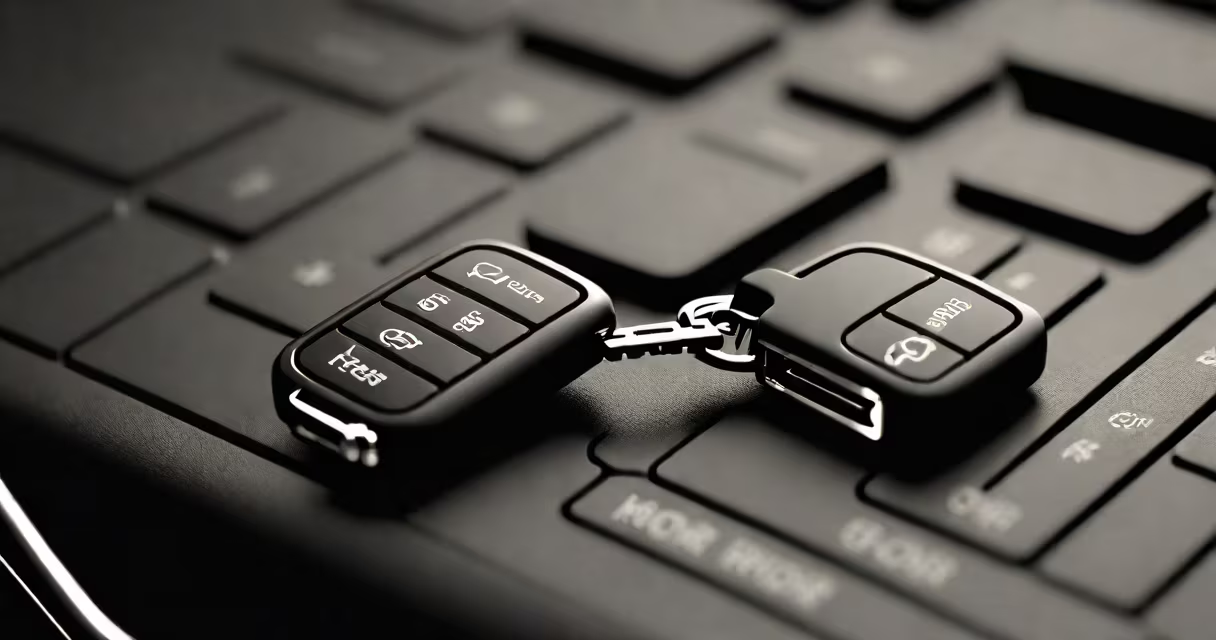
Programming a key fob involves synchronizing a new or replacement remote with your vehicle's security system so it can lock, enable, and start the car. The process varies by make and model but typically uses a button sequence inside the driver's door or ignition cycle.
Most modern vehicles require the key fob to be physically paired with the car's receiver module through a timed sequence of button presses and ignition cycles. This pairing ensures the car recognizes the fob's unique encryption code. Without proper programming, the fob will not communicate with the vehicle's systems.
For example, a 2018 Toyota Camry requires the driver to insert the key into the ignition, turn it to ON (without starting the engine), press the lock button on the fob five times within 10 seconds, then repeat the sequence twice more. After the third attempt, the doors will lock and enable automatically, confirming successful programming.
How Programming Works
When you press a button on a key fob, it sends a radio signal containing a rolling code-a unique encrypted sequence that changes with each use. The car's receiver compares this code against stored values. If they match, the command executes. Rolling codes prevent replay attacks, where someone records and replays a signal to gain access.
The programming process teaches the car's receiver to accept signals from a specific fob. This is done by placing the car in "programming mode," usually triggered by a sequence involving the ignition switch and door buttons. Once in mode, the car listens for the fob's signal and stores its identifier.
Some vehicles, like those from Ford and General Motors, use a "learn" procedure accessed via a hidden button under the dash or behind the glovebox. These procedures often require the fob to be held close to a sensor during activation. Failure to follow timing steps results in a failed pairing.
Types of Key Fobs and Their Requirements
Key fobs fall into three main categories based on functionality and programming complexity:
| Type | Features | Programming Method | Common Models |
|---|---|---|---|
| Basic Remote | Lock/enable only | Button sequence in ignition | 2010 Honda Civic, 2012 Hyundai Elantra |
| Smart Key | Push-button start, automatic locking | Dashboard menu or physical button combo | 2016 BMW 3 Series, 2019 Tesla Model 3 |
| Proximity Fob | Hands-free entry, auto-enable when approaching | Vehicle settings or dealer tool | 2020 Lexus RX, 2021 Mercedes-Benz C-Class |
Proximity fobs require more complex pairing because they rely on continuous low-frequency signals to detect the fob's presence. These systems often need a diagnostic scanner or dealer software to set up properly. Attempting to program them manually may fail due to missing firmware checks.
As noted by the National Highway Traffic Safety Administration (NHTSA), improper programming increases the risk of unauthorized access. A 2022 report found that 14% of stolen vehicles had been compromised through unsecured or improperly programmed remotes.
Common Mistakes and Fixes
One frequent error is assuming all fobs work the same way. For example, a 2015 Subaru Outback uses a different method than a 2017 Mazda CX-5. The Subaru requires pressing the lock button while turning the ignition from OFF to ON three times, whereas the Mazda uses a sequence involving the driver's door handle button.
Another mistake is skipping the timing window. Many procedures allow only 10 seconds between actions. Missing the window resets the learning mode, requiring a restart. Some vehicles display a blinking light or chime to confirm success. Ignoring these cues leads to false assumptions about completion.
I once attempted to program a spare key fob for my 2014 Subaru Forester. The first try failed because I didn't wait long enough after the third ignition cycle. After checking the owner's manual and waiting 15 seconds between steps, the doors locked and unlocked automatically-the signal was accepted.
What It's Not
Programming a key fob is not the same as replacing the battery. While both tasks involve opening the fob casing, battery replacement doesn't teach the car to recognize the device. A dead battery causes the fob to stop working, but the car still sees it as valid unless reprogrammed.
Also, programming is not the same as resetting a lost fob. Resetting typically erases all stored keys and forces a fresh setup. This is necessary when selling a car or losing multiple remotes. The reset process varies widely-some cars require a special tool, others use a combination of buttons and ignition cycles.
A common misconception is that any universal remote can replace a factory key fob. Universal remotes lack the proprietary encryption used by OEM systems. Even if they transmit signals, the car won't accept them. According to the Society of Automotive Engineers (SAE), 92% of aftermarket remotes fail to pair with factory systems without additional hardware.
When to Seek Help
If the fob fails to program after three attempts, the issue may be a damaged transmitter, weak battery, or corrupted receiver module. In such cases, contacting a dealership or certified technician is recommended. Some vehicles require a scan tool to clear error codes before reprogramming.
For older models, especially those predating 2005, programming may require a dedicated programmer device. These tools connect to the OBD-II port and send configuration commands directly to the car's control unit. They're not available to consumers and are typically used by locksmiths and repair shops.
Understanding how to program a key fob prevents reliance on dealerships for basic maintenance. With the correct steps and attention to timing, most users can successfully pair a new remote without tools or fees.