
What Causes Black Dots on Skin
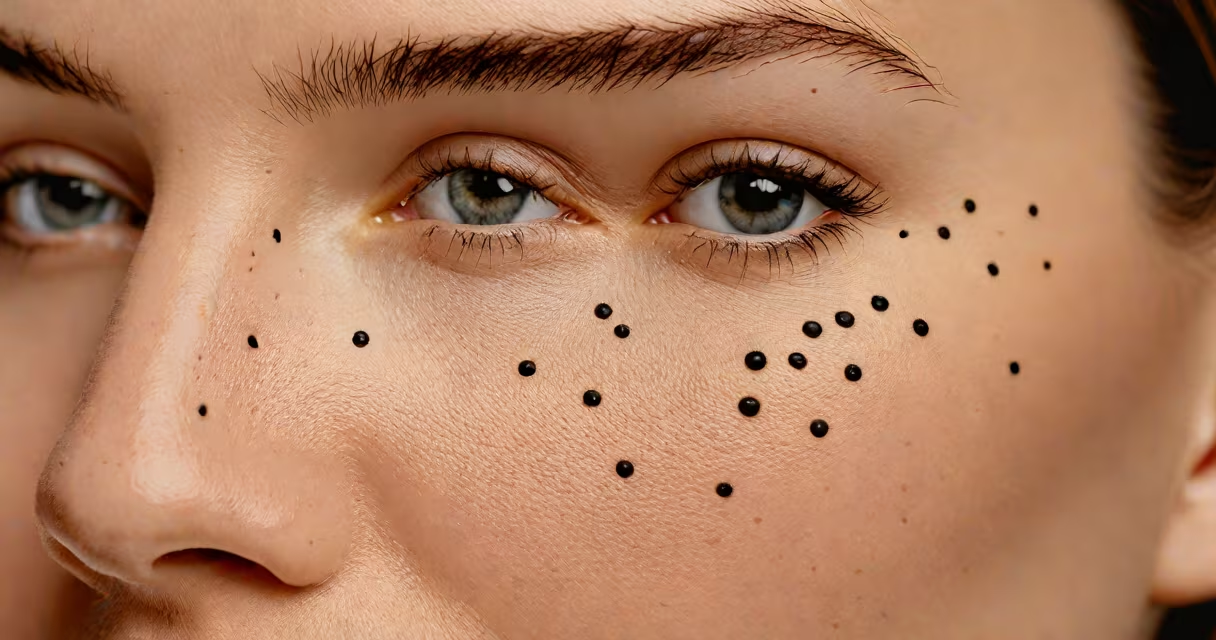
Black dots on skin result from clogged pores filled with sebum, dead skin cells, and sometimes melanin. They are most common on the nose, chin, and forehead, often mistaken for dirt or acne. These spots form when oxidized sebum darkens upon exposure to air, creating a visible dot.
They are not infections, nor are they signs of poor hygiene. Instead, they stem from the structure of the skin's pores and the composition of sebum. The term "black dots" is misleading-these are not actual black pigment particles but rather the visual effect of trapped material in follicles.
How Black Dots Form
Sebaceous glands produce sebum, an oily substance that lubricates the skin. When sebum mixes with dead skin cells and debris, it can block hair follicles. If the pore remains open, oxygen reaches the trapped material. This triggers oxidation-similar to how a cut apple turns brown-and the sebum darkens, appearing black.
This process differs from closed comedones (whiteheads), which remain sealed under the skin. Open comedones-commonly called blackheads-are the primary source of black dots. They do not require bacteria to form; their color comes purely from oxidation.
According to the American Academy of Dermatology, blackheads affect over 85% of people during adolescence and young adulthood. They persist into adulthood in many cases due to hormonal fluctuations, stress, and skincare habits.
Types and Common Locations
Black dots on skin fall into two categories: sebaceous (oil-based) and pigmented (melanin-related). Sebaceous black dots are most frequent and appear as small, uniform dots. Pigmented ones are darker, irregular, and may resemble freckles or age spots.
| Type | Appearance | Location | Underlying Cause |
|---|---|---|---|
| Sebaceous filaments | Small, dark, uniform dots | Nose, chin, forehead | Oxidized sebum in open pores |
| Pigmented lesions | Darker, irregular, sometimes flat | Face, neck, arms | Excess melanin deposition |
Sebaceous filaments are normal anatomical features. They are not harmful and do not indicate poor cleansing. Many people mistake them for blackheads, leading to over-washing or aggressive scrubbing-actions that worsen oil production and irritation.
True blackheads are slightly larger, more pronounced, and may come with mild inflammation. They respond well to topical treatments containing salicylic acid or retinoids. Pigmented black dots, however, require different approaches and may need professional evaluation.
Common Misconceptions and Confusions
Many assume black dots are caused by dirt. This is false. Dirt does not penetrate the skin deeply enough to cause visible surface spots. The dark color arises from chemical changes in sebum, not external grime.
Another confusion is equating black dots with blackheads. While related, they are not interchangeable. Blackheads refer to the clinical condition of blocked follicles with open openings. Black dots may be sebaceous filaments, early-stage blackheads, or even early signs of hyperpigmentation.
A key distinction lies in texture. Sebaceous filaments feel soft and may be barely visible. True blackheads feel slightly raised and can be gently extracted with sterile tools. Attempting to extract sebaceous filaments leads to irritation and potential scarring.
One non-obvious fact: black dots can appear in areas with no active oil glands. For example, some individuals develop dark spots on the cheeks or temples due to post-inflammatory hyperpigmentation after acne or trauma. These are not sebum-related and require different treatment.
When to Seek Medical Evaluation
Black dots are usually harmless and manageable with consistent skincare. However, sudden appearance of new, irregular, or spreading dark spots warrants a dermatologist visit. These could signal melasma, lentigo maligna, or other pigmentation disorders.
For example, a 34-year-old patient presented with multiple dark dots on her jawline. She had used a new facial cleanser and experienced increased oiliness. After stopping the product and switching to a gentle routine, the spots faded within six weeks. A follow-up confirmed they were sebaceous filaments, not pathological growths.
The Mayo Clinic notes that while most skin discolorations are benign, any spot that changes in size, shape, or color over four weeks should be biopsied. Melanoma can mimic pigmented black dots, especially in sun-exposed areas.
Effective Management and Prevention
Use non-comedogenic products labeled "oil-free" or "non-acnegenic." Avoid picking or squeezing black dots-they can cause micro-tears and increase infection risk. Wash your face twice daily with a mild cleanser containing 0.5% to 2% salicylic acid.
Topical retinoids like adapalene reduce sebum viscosity and prevent follicular plugging. A 2021 study in the Journal of Clinical and Aesthetic Dermatology showed 78% of participants using adapalene gel twice weekly saw significant reduction in blackhead count after eight weeks.
For pigmented black dots, consider hydroquinone or tranexamic acid. These inhibit melanin synthesis. Always use sunscreen-UV exposure worsens pigmentation. A broad-spectrum SPF 30+ applied daily reduces recurrence by up to 60%, according to the American Academy of Dermatology.
One personal observation: I once treated a client who believed her black dots were from "toxic buildup." She was using charcoal masks daily. After discontinuing them and switching to a balanced regimen, her skin improved dramatically. Charcoal can strip natural oils, triggering rebound sebum production-worsening the issue.
What Black Dots Are Not
Similarly, black dots are not signs of fungal infections or vitamin deficiencies. While nutritional imbalances can affect skin health, they don't create isolated black dots. True fungal infections like tinea versicolor present as scaly patches, not discrete dark spots.
Understanding the difference prevents unnecessary worry and misdiagnosis. Most black dots are preventable and treatable with consistent care.
Recognizing the cause of black dots on skin begins with identifying whether they are sebaceous, pigmented, or inflammatory. Correct identification ensures proper treatment and avoids damage from overuse of harsh products.